
neurons
Neurons
-
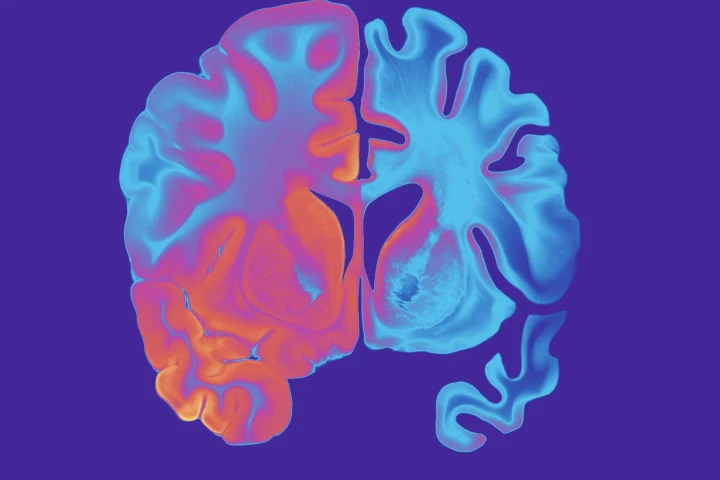 Some brains seem to defy Alzheimer's. This phenomenon, known as cognitive resilience, is one of the most intriguing puzzles in neuroscience today.
 -
 New research from Harvard Medical School has overturned the traditional picture of the nose's neurons, finding a hidden cartography in the seeming randomness.
 -
 In the US, 6,000 women enter menopause every day, or 1.3 million in a year. Now, a study sheds light on the brain connectivity changes that happen in this phase, paving the way to finally understanding and ideally treating midlife cognitive decline.
 -
 Scientists have identified a new way to supercharge obesity drug semaglutide by targeting key neurons. It could dramatically boost GLP-1 weight-loss power and prevent the dreaded plateaus that not even this "wonder drug" has been able to circumvent.
 -
 If you've wondered why you procrastinate with doing your taxes early or starting mundane jobs, it's not because you dislike them. New research has uncovered a specific pathway in the brain that slams the brakes on investing energy in these tasks.
 -
 In a breakthrough, scientists have discovered that a variant in one gene can cause mental illnesses – something previously believed to only be the result of several variants working together. What's more, these conditions often develop in childhood.
 -
 In a major brain science breakthrough, researchers discovered a nerve signaling mechanism that takes place outside the cell, flipping on a 'pain switch.' This could shed light on a path to safer pain medication without the usual side effects.
 -
 Scientists have made history with a device that successfully eavesdrops on the neuronal chatter between the brain and the gut, furthering our understanding of its intrinsic interconnectedness – and how it drives health and disease throughout the body.
 -
 US brain-computer-interface startup Paradromics is establishing itself as a major player in the neural-device space, with the Food and Drug Administration green-lighting a human trial to test its ability in restoring speech to people with paralysis.
 -
 Groundbreaking research has uncovered three gene variants that increase the risk of attention-deficit/hyperactivity disorder by up to 15 times. It's a remarkable finding, considering that thousands of mutations only come with a nominal elevated risk.
 -
 One of the brain’s biggest benefits from exercise – the birth of new neurons – may not even require any movement. Instead, the beneficial “packages” circulating in the blood after working out can be successfully transferred to others.
 -
 New research has found that the loss of social memory – recognizing friends and family – in Alzheimer's disease (AD) could come down to specific structures around brain cells. And targeting this delicate scaffolding may potentially prevent this heartbreaking stage in cognitive decline.
Load More