
Science
The latest in science news, from the depths of space to the quantum realm.
Latest Science News
-
 While cost-of-living pressures have an impact on consumer behavior, one business appears to be booming: the vasectomy industry. And spearheading the societal shift are young men, who are driving the increase in those choosing to get the snip.
 -
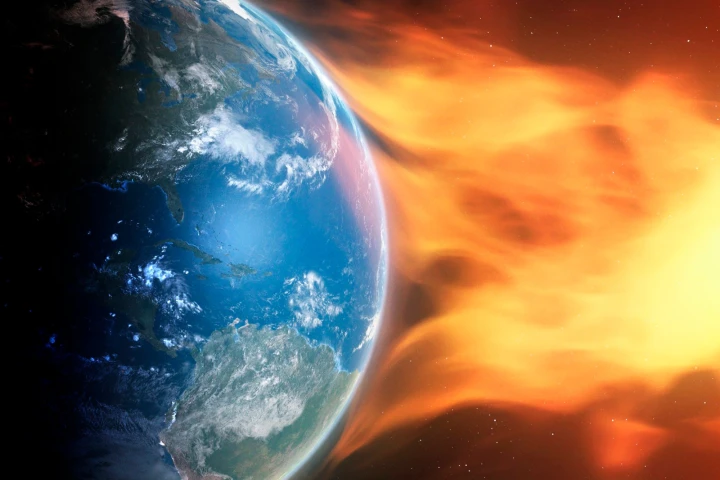 A theorized limit to our planet’s response to geomagnetic storms may be the product of a statistical illusion, researchers claim, revealing that the extent of damage from the most extreme solar events could be greater than we ever imagined.
 -
 A re-evaluation of 4,000-year-old skeletal remains that include a family of six sibling princesses has revealed signs of illness and physical wear and tear that point to proficiency in weapons.
 -
 The unearthing of 2,000-year-old boards has given historians a new insight into an ancient game akin to chess that was played much earlier, by everyone from royals to commoners in society – before it seemingly vanished from society.
 -
 A new study shows that a material's “thermal history” is critical in shaping how its chemistry evolves in complex systems such as nuclear debris.
 -
 From a snake's venomous fangs to the sharp spines that cover a cactus, puncture tools can be found right across the animal kingdom. While they come in all shapes and sizes, there's a fascinating force driving their diverse designs.
 -
 A new study proposes a likely suspect: Little Red Dots, which were discovered by the James Webb Telescope a few years ago.
 -
 It seems we may not be the only ones to experience what has come to be called an “uncanny valley” – rhesus macaques also treat semi-realistic avatars of themselves with no small amount of suspicion.
 -
 The arrival of Dolly the sheep sparked predictions of a sci-fi future filled with cloned pets, cloned humans and even resurrected extinct animals like the woolly mammoth. But the reality of cloning has turned out to be much more complicated.
 -
 About a kilometer deep beneath the ocean surface, where sunlight disappears and food becomes scarce, lives a giant creature that can wait out starvation and survive more than five years without eating.
Load More