
Brain Health
The human brain and mind remain among the most complex and powerful mysteries of nature. Here, we focus on the latest brain science, research, therapies and practical ideas, covering a range of brain-related conditions, from Alzheimer's disease and dementia to ADHD and the Autism spectrum, as well as depression, anxiety, mental health, learning and memory.
Top News
-
 Scientists have uncovered an intriguing link between infection and brain health, finding that a common bacterium may advance cognitive decline. It's the latest evidence suggesting that bacteria and infections play a key role in destroying our brains.
 -
 In a landmark shift in how mental health conditions are treated in the near future, the US Food and Drug Administration has approved the first at-home brain-stimulation device that can rapidly relieve moderate to severe depression symptoms.
 -
 Boosting levels of a certain molecule that declines with age restored the function of hundreds of brain genes and reversed memory loss in Alzheimer’s disease models, fixing the RNA splicing errors that drive damage to critical neurons.
Load More
Latest News
-
 It sounds like harmless fun, letting users “buy” food, clothes or other products with no real-world cost, since most of these apps are free. But even when an app or website costs you nothing, they help advertisers better target you in real life.
 -
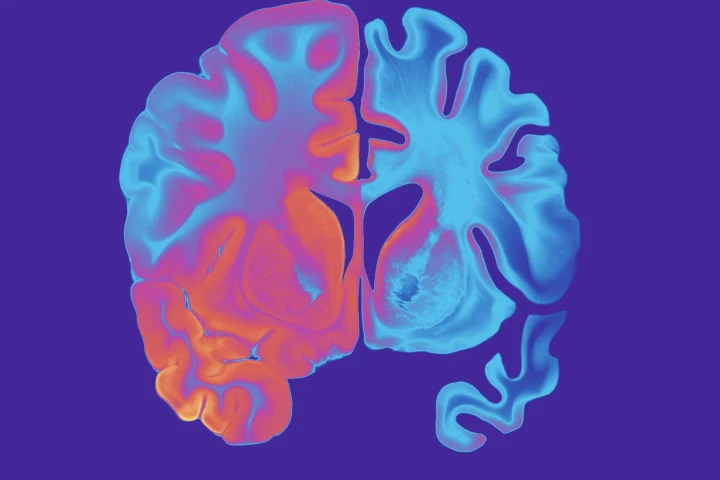 Some brains seem to defy Alzheimer's. This phenomenon, known as cognitive resilience, is one of the most intriguing puzzles in neuroscience today.
 -
 Scientists have discovered a neural mechanism that shapes our aversion to individuals we have experienced as a threat, opening the door to understanding how our brain drives dislike in others. It could help us treat conditions such as social anxiety.
 -
 A common virus has been used to trigger Parkinson’s-like brain damage and movement problems in mice, giving scientists a new way to study how viral infections may contribute to the disease.
 -
 The US Drug Enforcement Administration will temporarily classify an over-the-counter supplement likened to heroin as a Schedule I substance under the Controlled Substances Act, in an effort to counter an emerging health crisis across the country.
 -
 Becoming more forgetful and feeling slower in your thinking is normal in older age. But when these changes are more than you’d expect for your age it might be a sign of mild cognitive impairment. So does that mean you’ll soon develop dementia?
 -
 Glucose levels have been linked with the accelerated aging of the human brain in a new study by researchers in China, highlighting the benefits of healthy eating and exercise early in life to keep your brain fighting fit in old age.
 -
 Elevated levels of GDF15 in the peripheral blood were associated with dementia risk in a recent study, with researchers arguing the chemical could serve as a handy biomarker for future cognitive decline.
 -
 Some estimates suggest up to one in 30 people may be affected by developmental topographical disorientation (DTD). This condition has been described as a lifelong inability to orient oneself – even in extremely familiar surroundings.
 -
 Five weeks of walking around with poles in each hand could have a surprising effect on anyone with moderate depressive symptoms. What's more, it's also a low-impact workout that can suit people who are otherwise lacking energy or motivation.
 -
 A new study has uncovered evidence of “synaptic down-selection” as we sleep, suggesting our nightly shut-eye is a perfect opportunity to prune back any neurological hedges that went wild during the day.
 -
 If you've ever wonder why you remember surprise events more vividly than the predictable, new research has uncovered how the brain encodes novel information in more detail than the familiar, allocating energy away from what it already knows.
 -
 University of California, San Francisco (UCSF) scientists have developed a form of neurological pacemaker that adapts in real time to a patient’s walking and could address one of the most disabling and hard-to-treat symptoms of Parkinson’s disease.
 -
 Definium Therapeutics has announced the strong Phase 3 results of its single-dosed lysergide drug DT120 in treating adults with major depressive disorder. It met its main goal and all key secondary efficacy endpoints in the first trial of its kind.
 -
 People taking fish-oil supplements in an effort to shield their brain from Alzheimer's disease might be better off investing that money in their diet, with a two-year study finding that omega-3 pills offer no protection from cognitive decline.
Load More