
Nanomaterials
-
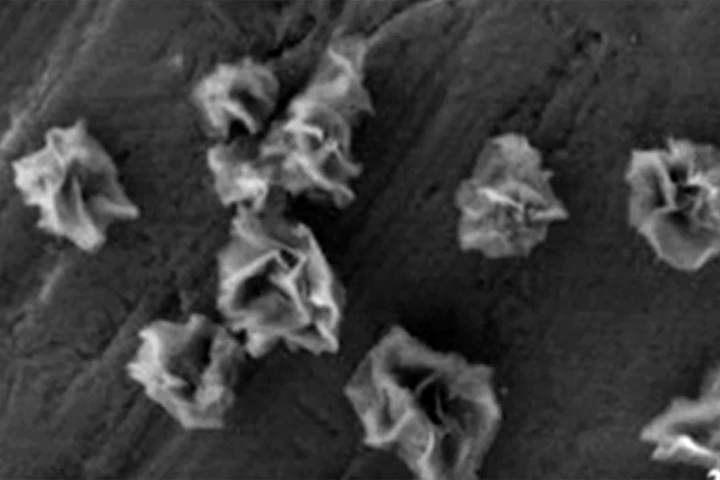 Metallic nanoflowers may be the next frontier in brain health, reducing oxidative stress, protecting mitochondria, and even extending lifespan in lab models. A new study shows they hold “incredible potential” as neuroprotective agents.
 -
 A platinum fiddle that's just 35 microns in length and 13 microns in width is believed to be the world's smallest violin, measuring just a fraction of a microscopic tardigrade. But before you get too excited, there's one little twist …
 -
 In a move that echoes a sci-fi series, researchers have developed a material that was able to not only stimulate nerves in rodents, but reconnect them as well. The finding could lead to injectable particles that take the place of larger implants.
 -
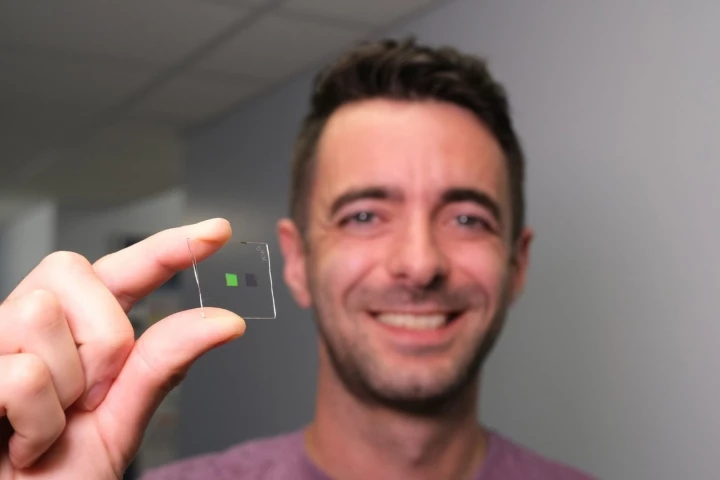 A tiny artificial tongue which can identify individual whiskies by taste has been invented by a team of Scottish engineers . The device could mean big things for drink makers wanting to ensure a consistent product, and protect their precious brands from counterfeiters at the same time.
 -
 Researchers at the University of California, Riverside have found a way to use viruses to build gold nanobeads, which can then be used to purify water and could eventually help cut the cost and time required to produce electronic components.
 -
 A team from Texas A&M University has created a novel injectable bandage that blends a commonly used food thickening agent with nanoparticles. The result is an injectable hydrogel than can rapidly stop bleeding and potentially promote wound healing.
 -
 The field of nanotechnology is still in its nascent stages but recent innovations are increasingly making this sci-fi world a reality. New research has demonstrated a robot made of a single strand of DNA explore a molecular surface, pick up targeted molecules, and move them to another location.
 -
 A team of MIT engineers has potentially revolutionized the process of dialysis by creating a new membrane from graphene that is able to filter nanometer-sized molecules from solutions up to 10 times faster than current dialysis systems.
 -
 The strength of spinach isn't only in its nutrients, but also in its ability to be hacked to function as a sensor able to detect things like explosives, according to researchers at the Massachusetts Institute of Technology.
 -
 A new conductive, transparent, and stretchable nanomaterial that folds up like an accordion could one day be applied to the development of flexible electronics and wearable sensors, as well as stretchable displays.
 -
 Using nanometer-size metamaterials, researchers at Missouri University of Science and Technology have developed a technique to print images that uses the manipulation of light, rather than the application of ink, to produce colors.
 -
 Though a long accepted tenet in physics, no experiment has ever directly observed the wave/particle duality of light. Now researchers at the École polytechnique fédérale de Lausanne (EPFL) in Switzerland claim to have captured a photograph of light as both waves and particles in the same image.
Load More