
honeybees
-
 Beekeepers in many regions are having a hard time of it, as their honeybees struggle to find enough pollen. Scientists are now addressing that problem with a new nutritional supplement which is described as being like "a PowerBar for bees."
 -
 Manuka honey reduced breast cancer cell growth by 84% without harming healthy cells or causing major side effects, according to preliminary studies. The findings open the door to developing a natural, non-toxic supplementary, or potentially stand-alone, anticancer treatment.
 -
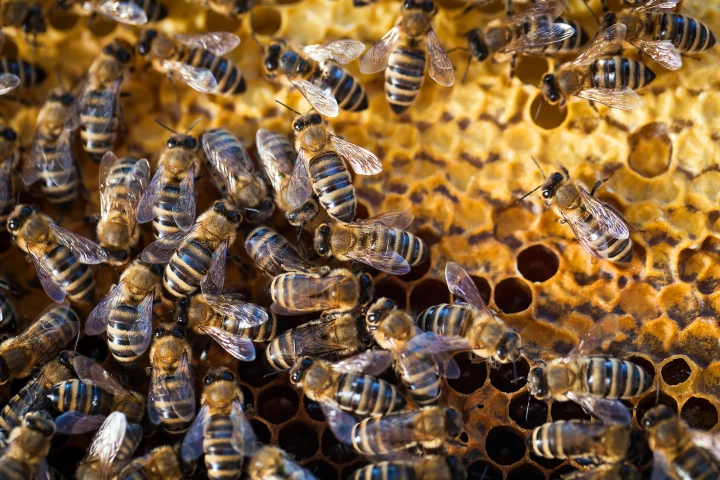 Checking on bee health is normally an invasive process that risks harming the colony, particularly the queen. Now, researchers have found that a new method, when combined with sound recording, can let beekeepers see just how healthy their honey-makers are.
 -
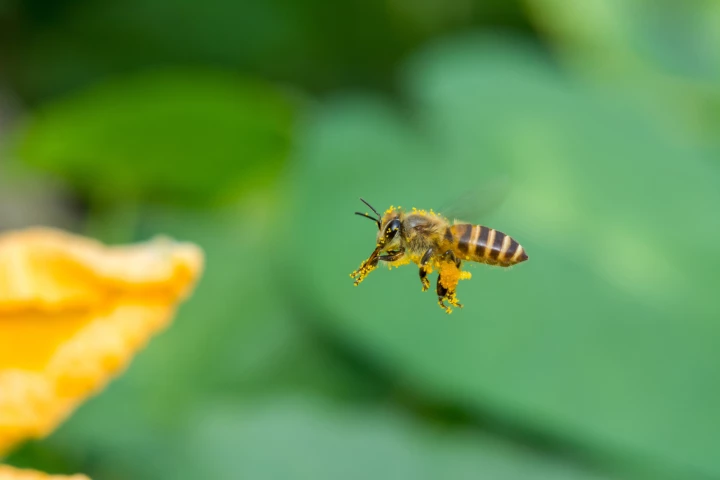 Scientists have enlisted a new kind of helper to monitor the microbiomes of cities: the honeybee. Analyzing the debris from their hives has revealed much about what's happening at the microorganism level in cities around the world.
 -
 It is believed that parasitic varroa mites may be one of the main causes of colony collapse disorder, which is decimating honeybee colonies. There may be hope, however, as a new chemical has been found to eradicate the mites without harming the bees.
 -
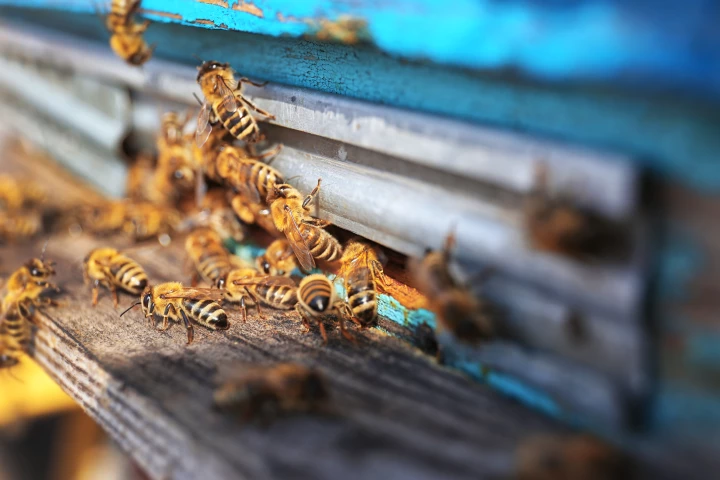 Although the causes of colony collapse disorder aren't entirely understood, pyrethroid pesticides appear to be one of the main culprits. Thanks to a new technique, it should now be easier to detect these chemicals in the honey of affected beehives.
 -
 A groundbreaking discovery made by scientists in Australia has demonstrated how an ingredient in honeybee venom can be used as an “extremely potent” weapon against breast cancer, with a synthetic version found to be similarly effective.
 -
 Honeybee numbers are falling to colony collapse disorder (CCD), which has devastating implications for global ecosystems and agriculture. But now, researchers have engineered bacteria that can help bees fend off two of the main causes of CCD.
 -
 A collective of eco-technologists has designed open-source beehives to help encourage bee populations and fight Colony Collapse Disorder. Sensors track the movements, moods and geo-location of the bees.