
Computers
-
 A platinum fiddle that's just 35 microns in length and 13 microns in width is believed to be the world's smallest violin, measuring just a fraction of a microscopic tardigrade. But before you get too excited, there's one little twist …
 -
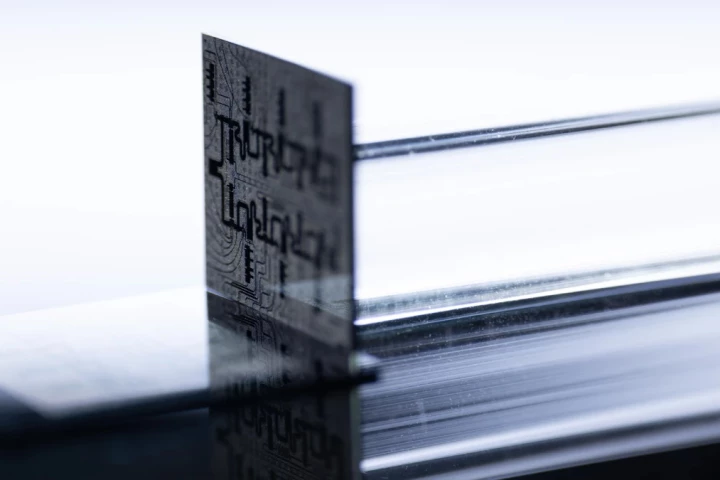 Amazon has unveiled its first quantum computing chip today, after four years in the making. Dubbed Ocelot, it uses 'cat qubits' for improved error correction, and could lead to cheaper practical quantum computing in the years to come.
 -
 The eggplant emoji may be more famous in the digital world than in real life, but it's not the case for most organisms. Biologists have made the case for 'animal underdogs' to have better emoji presence to aid real-life conservation and biodiversity.
 -
 With more than 1,000 bacterial species, the gut microbiome is an untapped resource of disease-fighting power. Now, scientists have found a way to rank crucial members of this 'microscopic multicultural community', which has massive medical potential.
 -
 Random numbers are crucial for computing, but our current algorithms aren’t truly random. Researchers at Brown University have now found a way to tap into the fluctuations of skyrmions to generate millions of truly random numbers per second.
 -
 Most of us can give Pi to four or five digits, but Swiss scientists have broken the world record. It took three and a half months and a data center’s worth of computer equipment, but the researchers calculated Pi to a staggering 62.8 trillion digits.
 -
 Teams tasked with managing tsunami risks may soon have a powerful new tool at their disposal, in the form of a new AI model that enables near real-time predictions of how these events will shape the flooding of coastal areas.
 -
 Google has announced that it has achieved “quantum supremacy,” the point where a quantum computer successfully performs an operation considered impossible for traditional computers. But rival IBM disagrees that this has been achieved at all.
 -
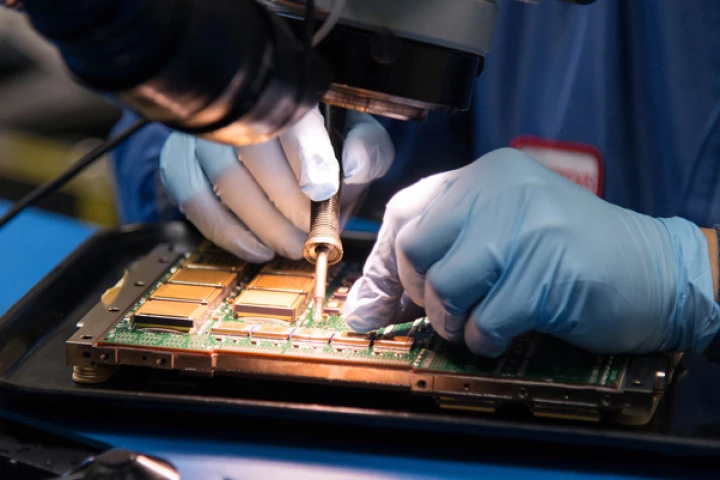 Space is a very hostile place for electronics, so BAE Systems is rolling out its new RAD5545 single-board computer designed to survive the hard radiation in space while providing "exponential improvements" over the company's previous RAD750 SBC in terms of size, speed, and power-efficiency.
 -
 As a ransomware threat spreads around the world disrupting hospitals and corporations, the impact of governments hoarding software exploits and organizations running on old operating systems has never been more dramatic.
 -
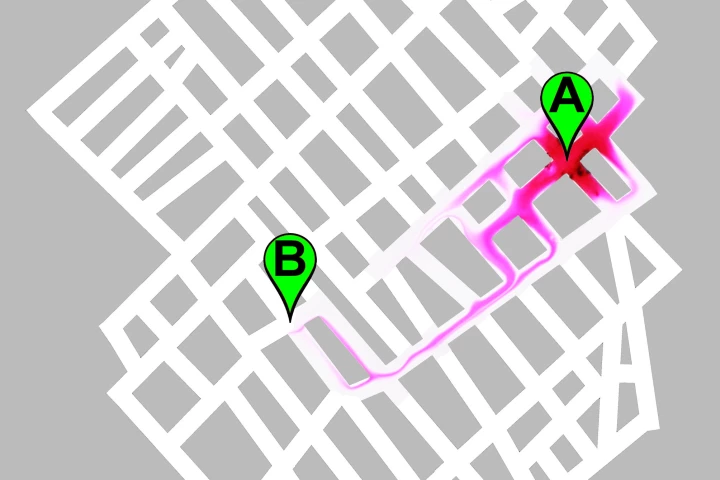 If you’re going out for pizza in Budapest, which would you choose to get you there; a smartphone with GPS or a drop of gel on a little maze? According to Empa, the gel might be your better bet because it's a chemical computer capable of navigating a maze faster than a satnav.
 -
 Science Museum's new permanent exhibit, "Information Age: Six Networks That Changed Our World" was recently opened by Queen Elizabeth II when she sent the first tweet by a British monarch.
Load More