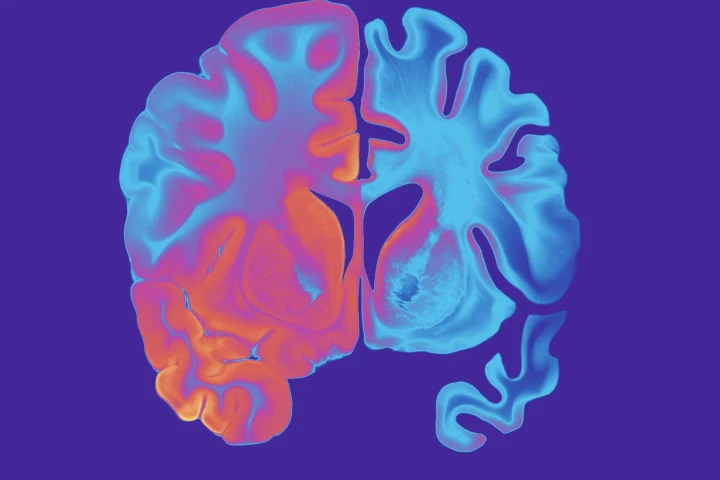




At various facilities around the world, hundreds of brains wait in a cryopreserved state in the hopes that one day, death from a terminal illness may be considered a transient condition.
Whether these frozen blocks of grey matter retain enough integrity to reignite a conscious mind is a matter of debate. As technology progresses, however, a surprising number of doctors believe we may one day achieve the critical level of preservation needed for the dead to be woken.
A survey conducted by researchers from Monash University in Australia, the European Biostasis Foundation in Switzerland, and Apex Neuroscience in the US found nearly 30% of American-registered physicians think it’s somewhat plausible that we’ll invent the ideal conditions for a brain to retain enough neural information to function well after death.
Even among the 70% of medical providers who were sceptical that we’d ever grant return tickets from the hereafter, there was room to assist terminally ill patients who nonetheless desired neurological preservation.
Most of those surveyed – nearly 60% – saw no conflict between compassionate care and supporting actions that preserved the body. Half of the physicians were comfortable with their patients electing for their brains to be preserved, and around 44% supported initiating preservation before cardiac arrest.
Yet for a few, the line between patient desires for a return and care for their health in this life was one they weren’t willing to cross.
Scientists have been putting dying bodies on ice since the 1960s with the intention of returning them to life once medical technology catches up with our expectations.
Unfortunately, the very process of freezing tissues can physically disrupt their structures and functions to the point of no return. At best, valuable connections can be lost. At worst, whole cells are obliterated, popped like tiny balloons as their liquid contents expand.
While some ponder ways to repair the damage, others search for better methods to stabilize delicate tissues before they are put into stasis.
There are, on occasion, good reasons for optimism.
A study published in 2024 demonstrated a new method of preserving human brain tissue that didn’t break up the neural architecture or disrupt its functionality.
Earlier this year, neurological activity was observed in sections of mouse brains after they had been turned into a glass-like state using a process of vitrification. While it’s far from a return from death, the findings demonstrate that functionality isn’t necessarily destroyed in preserved cells.
To individuals diagnosed with a life-ending illness, eternity on ice may seem little different from other forms of funerary custom. If there’s any hope of buying a little more time on this mortal coil, it seems fair to try.
Physicians, however, are tasked with extending this life as much as possible.
To better understand their perspective, Monash neuroscientist Ariel Zeleznikow-Johnston, European Biostasis Foundation board president Emil F. Kendziorra, and Apex Neuroscience physician-scientist Andrew T. McKenzie asked 150 primary care physicians and 184 other medical specialists a series of questions.
From their answers, they found a mix of views on how to balance patient care for the here and now with practices that ensured their brains could be in the best state for preservation after cardiac arrest.
While most were willing to prescribe anti-coagulants to improve the quality of preservation, for example, around one in five doctors were concerned about conflicts between optimal standards of care between living and preserved states.
“A lot of physician hesitancy may come from simple unfamiliarity with the scientific basis of modern preservation methods,” says Zeleznikow-Johnston, who led the study.
“The doctors who have actually thought about this – and who regularly sit with dying patients – tend to be more receptive, not less.”
This research was published in PLOS One
Source: Scimex
Fact-checked by: Bronwyn Thompson