
University of Surrey
-
 Not getting enough vitamin D can weaken bones, teeth, and muscles by interfering with calcium absorption. Now there's another reason to avoid a serious D deficiency: it can make respiratory tract infections much worse, according to a new study.
 -
 Current evidence suggests many organisms will struggle to keep pace with a changing climate. However, unlucky for us, some pathogens may thrive – including, as this new study suggests, the bugs that cause the common diarrhea illness campylobacteriosis.
 -
 Diabetes patients who are sick of daily insulin shots may soon only have to inject themselves once a week. A year-long phase 3 clinical trial has shown that a weekly form of the hormone is just as effective in managing the disease as the daily form.
 -
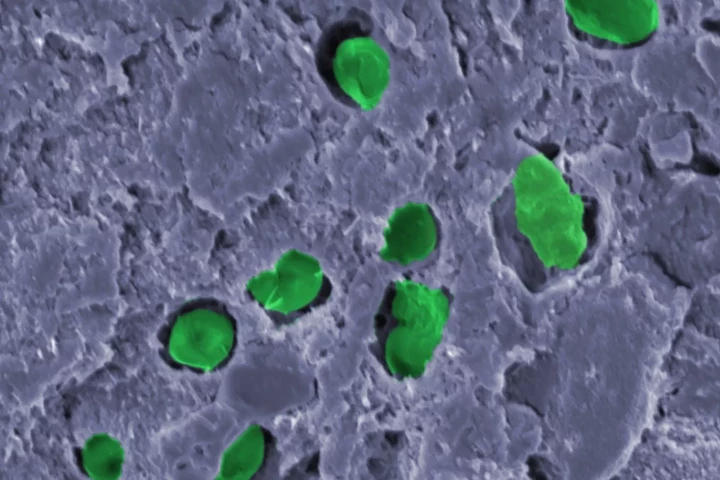 Researchers have created a paint containing living cyanobacteria that produces oxygen and can capture carbon dioxide. The bacteria’s ability to withstand extreme environments means the paint could even be used in outer space.
 -
 When someone is using antipsychotic drugs, it's important that they take the correct dosage, and that they don't abruptly stop taking the medication. Soon, a fingerprint sweat test could be used to check that such people are following instructions.
 -
 The machinery at municipal recycling facilities often gets jammed up with the adhesives utilized on items such as jar labels and boxes. That may cease to be the case in the not-too-distant future, however, thanks to a new degradable adhesive.
 -
 DNA mutates regularly, for better or worse, driving both evolution and disease. Researchers at the University of Surrey have now found evidence that some of these spontaneous mutations could be caused by the spooky realm of quantum mechanics.
 -
 A study investigating the impact of vitamin D on gene expression has found significant differences between vitamin D2 and vitamin D3 supplements. The findings indicate vitamin D3 may be more effective at strengthening the immune system compared to D2.
 -
 A new study has discovered administering an antibiotic with a specific compound found in green tea can effectively kill a notoriously antibiotic resistant bacteria.
 -
 A new AI diagnostic method, using a neural network, can accurately identify congestive heart failure instantly by checking ECG data from just one heartbeat.
 -
 Researchers have performed the first ever analysis of circadian rhythms within fat cells, finding they appear to have body clocks of their own and use them to share the heavy lifting throughout the day.
 -
 If you have high blood pressure, then you likely already know that it's the leading cause of stroke, and a major risk factor for cardiovascular disease. So, besides things like medication, diet changes and exercise, what can be done to reduce it? Well, exposure to blue light may help.
Load More