
United Nations
-
 The 2025 World Happiness Report is out and it's not good news for the US. While the top four happiest countries are no shock – Scandinavia and Iceland – the US is becoming unhappier by the year, slipping to its lowest spot on the table ever.
 -
 At the time of writing, there were an estimated 8,123,518,311 living humans on Earth – roughly the most there has ever been. But as fertility and birth rates continue to freefall, the numerical peak of humanity is quickly approaching.
 -
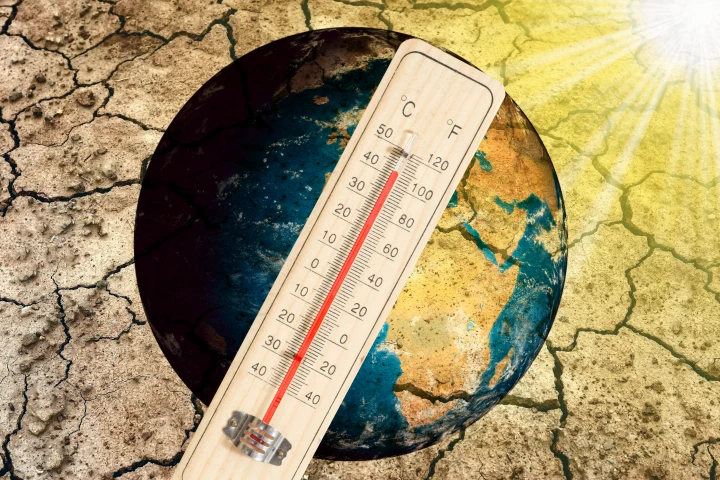 Coming as no surprise to the millions who sweltered through a Northern Hemisphere summer, the season that has just passed was Earth’s hottest since records began in 1880. The steamy baton is expected to now be passed on to the Southern Hemisphere.
 -
 In what is being hailed as an historic moment for the environment, world leaders at the UN’s Biodiversity Conference COP15 in Montreal have reached an agreement to ramp up protections of the planet’s precious natural ecosystems.
 -
 The frequency of natural disasters over the past two decades is almost double that of the 1980-1999 period, a new report from the UN has revealed, with extreme weather events driven by climate change accounting for a large portion of the uptick.
 -
 A new UN report, the Greenhouse Gas Bulletin, says that in 2018, the globally-averaged concentration of carbon dioxide (CO2) in the atmosphere was 407.8 parts per million (ppm), a new record high that hasn’t been seen in millions of years.
 -
 The latest global population report from the UN estimates the world's population will peak at 10.9 billion by the end of the century. The vast majority of population growth is expected to come from sub-Saharan Africa, with declining population growth predicted in Asia, Europe and Latin America.
 -
 Around 30 years ago, the world came together to mend a widening hole in the Earth’s ozone layer, which plays a very important role in shielding us from ultraviolet rays. A new report has revealed that this long-term healing strategy is continuing to pay dividends.