
Tel Aviv University
-
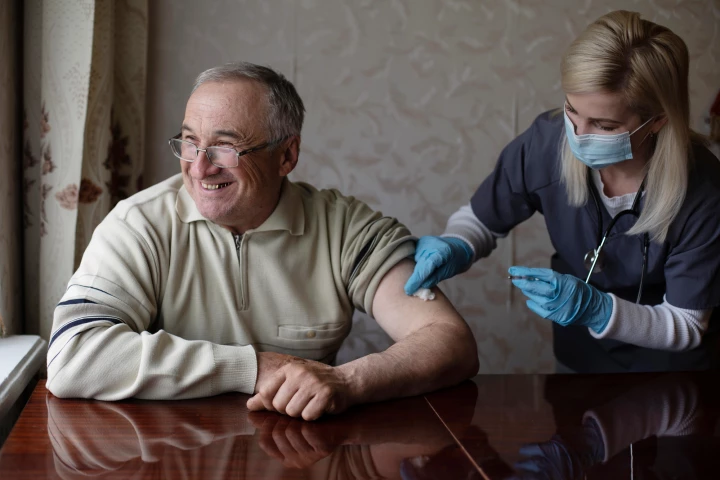 Instead of focusing on your sore arm after your next vaccine, you might want to think good thoughts. A new study that trained people in the power of positive thinking showed that the practice can significantly boost antibodies created by the jab.
 -
 RNA therapies are emerging as a promising treatment for cancer. Now, scientists at Tel Aviv University have demonstrated a way to use RNA drugs to treat multiple myeloma, a hard-to-reach cancer that forms deep in bone tissue.
 -
 Scientists have developed a new potential treatment for cancer that works in a similar way to the COVID-19 vaccines. The technique involves delivering mRNA molecules to cancer cells and tricking them into producing toxic proteins that kill the tumors.
 -
 If a plant is stressed but no one hears it, does it still make a sound? Researchers say yes, it certainly does, although it emits a popping noise in a range too high for us – but not for other animals – to hear.
 -
 While we've heard about a number of "electronic noses," the devices are rarely as sensitive as their natural counterparts. That's why Israeli scientists have taken a new approach, by incorporating a locust antenna into an odor-identifying robot.
 -
 Wind energy is often thought of as "clean" but, in fact, the technology has the blood of thousands (if not millions) of bats on its hands. A new drone-mounted system shows promise in rerouting some bats above the turbine blades and away from danger.
 -
 Scientists have discovered the earliest evidence of cooking food through controlled use of fire, dating back 780,000 years. An archeological site in Israel contains fish remains that, on closer examination, show clear signs of having been cooked.
 -
 While bone injuries such as fractures typically heal on their own, large sections of missing bone often never grow back, requiring bone transplants from other parts of the body. A new hydrogel, however, could help change that.
 -
 In what is being described as a world-first, scientists in Israel have reportedly grown spinal cord implants utilizing tissue extracted from human volunteers. Those implants were then used to restore walking abilities to previously paralyzed mice.
 -
 When someone injures a nerve in a body part such as a finger, it's not uncommon for that part to end up with a permanently decreased sense of touch. A self-powered implantable sensor, however, could one day restore sensitivity to such injured areas.
 -
 When we think of camouflage, it’s usually a visual pattern. But how do you hide from a predator that uses sound to find food, like a bat? If you’re a firefly, it turns out you might resort to a cacophony of ultrasound that acts like “musical armor.”
 -
 An Israel-based startup is developing a laboratory method for producing milk without a cow or any other even-toed ungulate. Imagindairy is looking at ways to use bioengineered yeast cells to produce milk proteins for milk and cheese products.
Load More