
Synthesis
-
 From raw eggs at the crack of dawn to whey shakes after workouts – there's a whole lot of advice about the best way to optimize your muscle growth. Has new research settled the debate once and for all, or will it spark even more?
 -
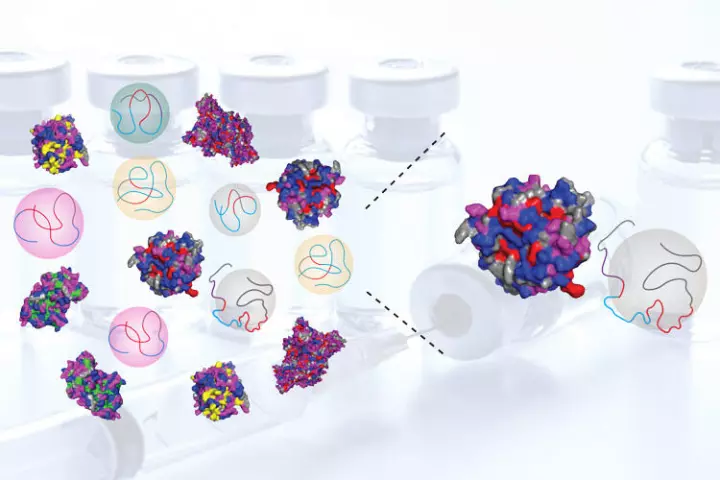 Can we take shortcuts on nature’s blueprint and make more efficient synthetic proteins? A new study finds simple combos of synthetic building blocks can make for protein alternatives that work just as well as, or even better than, the real thing.
 -
 With psilocybin on the cusp of becoming a clinically validated and approved medicine, scientists are exploring new ways to produce the chemical. Now a team has presented a novel method of producing the psychedelic chemical using common yeast.
 -
 Thirty years ago a molecule with incredible anti-cancer properties was discovered. But it was so structurally complex scientists were unable to synthesize it in large quantities. Now a team has made a breakthrough, achieving total synthesis of volumes large enough to proceed to clinical trials.
 -
 A team of chemists from the University of California, Davis, recently demonstrated a new synthetic analogue of cannabidiol (CBD) may be just as effective for medicinal uses as its naturally extracted counterpart. This synthetic CBD compound also promises to be easier, cheaper and faster to produce.
 -
 Scientists have, for the first time, investigated the pharmacological effects of a compound found in a rare moss called liverwort. The compound closely resembles that of THC, but exhibits less of a psychoactive effect with potentially better anti-inflammatory properties.
 -
 Scientists have accidentally created a new material thought for more than 100 years to be impossible. A single gram of Upsalite has a surface area of 800 sq m, equivalent to the sail of a megayacht.