
Smell
-
 For millions, losing their sense of smell reshapes daily life. Once damaged, the system is difficult to restore. That challenge led researchers to stop asking how to fix smell, and start asking whether its information might reach the brain another way.
 -
 For the first time, scientists have found that smell and taste are inseparable much earlier in the brain than we'd thought. Odors can actually be coded as tastes in the primary taste cortex, overturning decades of assumptions as to how flavor is built.
 -
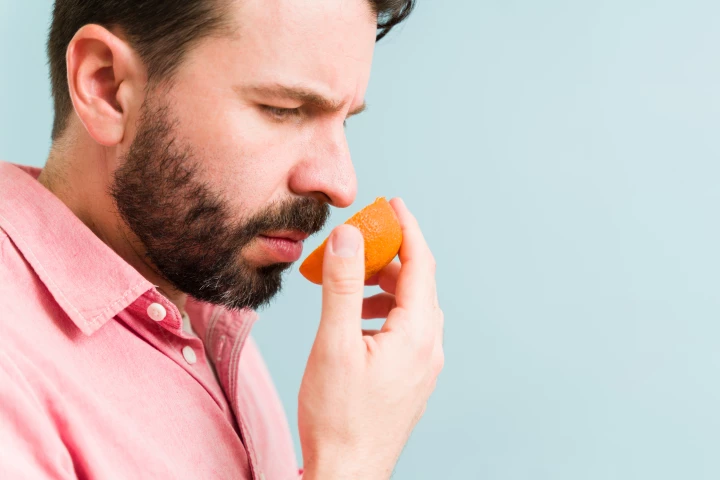 A loss of smell can be one of the earliest warning signs of Alzheimer’s disease, but the cause of this sensory change have been unclear. Now, a study reveals that the problem may not lie in the nose or olfactory bulb itself, as previously thought.
 -
 We know what they look like, and even sound like, but there’s one question you might not have pondered: what do ancient Egyptian mummies smell like? Whether you wanted to know or not, scientists have now given us an answer.
 -
 You might not hear it, but rodents are known to speak to each other in voices so high-pitched that human ears can’t pick them up. Now scientists have found that these vocalizations might have a second purpose – they help them smell better.
 -
 Two dogs in a small study were able to correctly identify what breath smelled like when it was linked to a memory of trauma. The finding might allow dogs to be even better friends when it comes to helping PTSD sufferers cope with their conditions.
 -
 A new study led by researchers in Germany has for the first time compared the chemical composition of body odor between teenagers and infants, homing in on the exact compounds that make babies smell like flowers and teens smell like sweaty goats.
 -
 When we’re sick, we produce compounds that waft around us that dogs can smell. Over the years, the number of diseases that dogs can detect has grown. Here are eight diseases that our furry friends are particularly good at sniffing out.
 -
 Our ancestors probably didn’t smell good, but did they smell well? A new study has grown odor receptors from Neanderthals and Denisovans, and tested their sensitivities to different smells compared to modern humans.
 -
 While we've heard about a number of "electronic noses," the devices are rarely as sensitive as their natural counterparts. That's why Israeli scientists have taken a new approach, by incorporating a locust antenna into an odor-identifying robot.
 -
 A new study is presenting evidence suggesting viral infections in the olfactory system can accelerate the progression of Alzheimer's disease. The research looked at the relationship between markers of infections and neurodegeneration in the hippocampus.
 -
 Having been domesticated many thousands of years ago, dogs have evolved to become highly attuned to human behavior, but a study from scientists at Queen's University Belfast has taken this concept into new terrain.
Load More