
Security
-
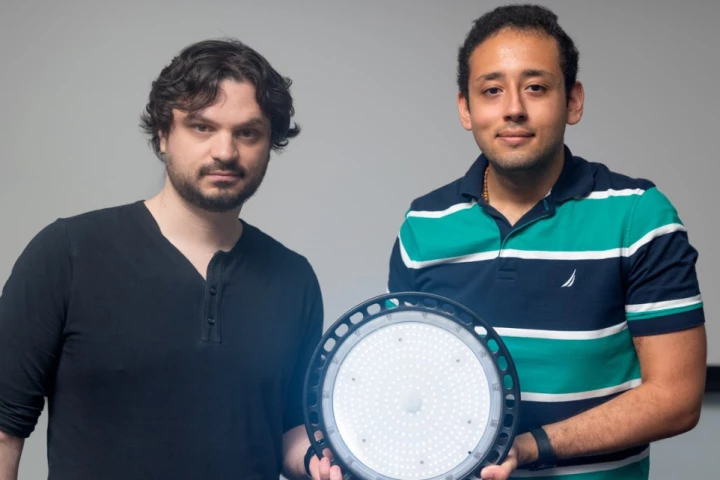 Thanks to advances in generative AI, seeing video of an event is no longer proof that it really happened. There could be new hope on the horizon, however, in the form of a system that watermarks videos using fluctuations in the on-location lighting.
 -
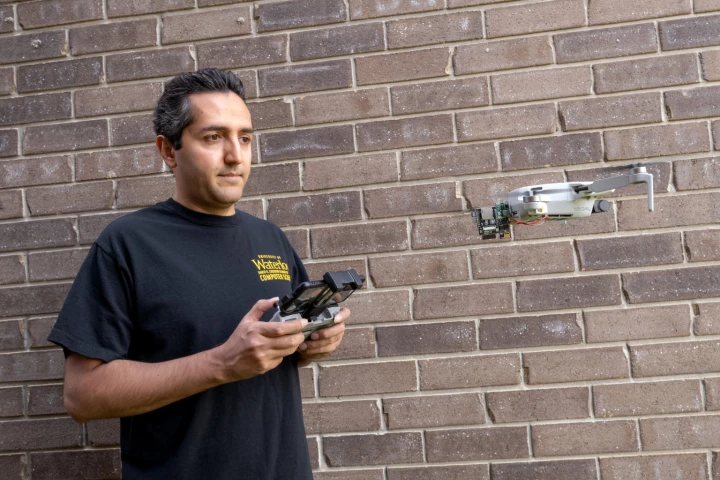 If someone were planning on burglarizing a building, it would help if they knew where valuable gadgets such as smart TVs were located. A drone equipped with a cheap "Wi-Peep" device could allow them to do so, by seeing through the building's walls.
 -
 Cyborg locusts could soon be used to detect explosives. In a new study, locusts were able to smell different amounts of explosive chemicals in the air to track down a bomb, and these detections can be picked up by reading their brain waves.
 -
 DNA security is a looming problem that scientists and researchers are only just starting to grapple with. A team at Stanford has now developed a way to "cloak" irrelevant genomic information, allowing scientists to access key data without revealing an individual's broader genome sequence.
 -
 Suicide bombers are a tactic that is effectively deployed all too often. One entrepreneur is looking to help reveal such threats with a detector that scans subjects for shrapnel commonly used in suicide vests and explosives.
 -
 Security holograms can currently take days to create, using expensive equipment. That could be about to change, however, as scientists have developed a hologram production method that utilizes a regular inkjet printer.
 -
 Most fingerprint scanners are usually effective, although they can fail to read prints that have been flattened by age or damaged, plus they can be fooled by gelatine casts of fingerprints. That’s why scientists have developed a more reliable scanner, that looks below the skin's surface.
 -
 A new fingerprint scanner that could find its way to our smartphones borrows from sophisticated medical equipment to deliver more accurate, 3D ultrasonic scanning.
 -
 A team of researchers at the University of Utah has integrated carbon nanotubes into a prototype explosives sensor. It can also detect illegal drugs and toxic chemicals such as nerve gas, reportedly doing so better than currently-used technologies.
 -
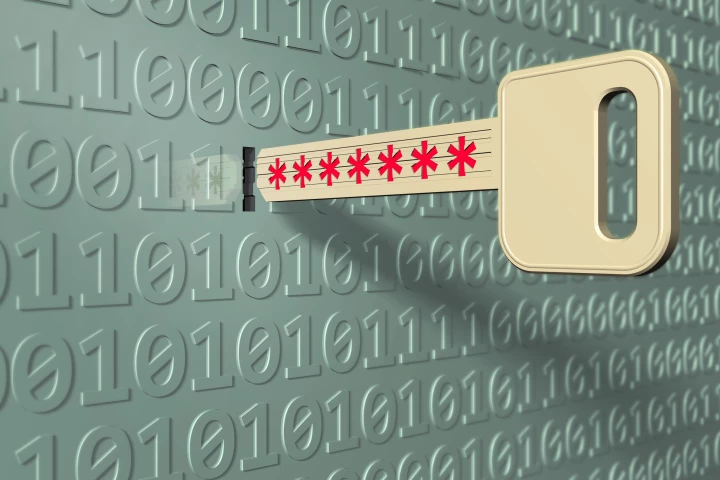 Researchers at Lancaster University, UK have taken a hint from the way the human lungs and heart constantly communicate with each other, to devise an innovative, highly flexible encryption algorithm that they claim can't be broken using the traditional methods of cyberattack.
 -
 We all know to look out for viruses that can be spread over the internet, or by sharing files between computers. Now, however, scientists have shown that special viruses could move between wireless access points using existing Wi-Fi networks.
 -
 Remotely hacking a pacemaker or insulin pump should be impossible, but sadly it isn't. It puts the millions of people who use wireless medical implants at risk. Researchers at Rice University believe they have a solution: a touch-based device that will use a person's own heartbeat as a password.
Load More