
Sandia Labs
-
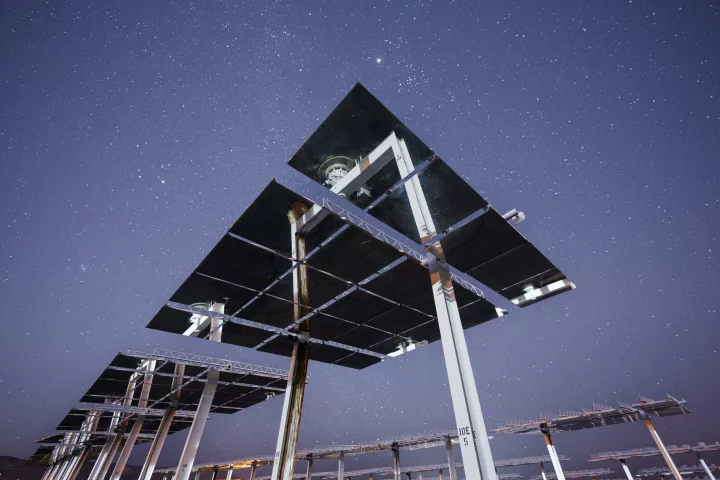 To keep solar power stations from getting lazy, Sandia National Laboratories scientist John Sandusky is looking to give heliostat mirrors a side hustle. At the National Solar Thermal Test Facility he's experimenting with getting them to hunt for asteroids at night.
 -
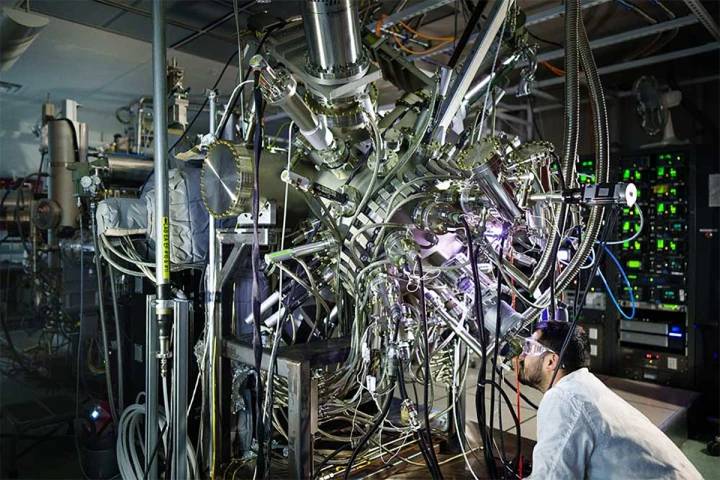 Under specific conditions, lasers can cool things down – and that might just be what we need to tackle way-too-toasty data centers. A new technology called laser-based photonic cooling can target tiny hotspots on chips to zap heat away.
 -
 Asteroids can devastate the planet in an instant – just ask the dinosaurs. Scientists at Sandia National Laboratories have now demonstrated a proof of concept method to deflect a potential Earthbound asteroid using a blast of X-rays.
 -
 Scientists have developed a way to produce a web of quantum entangled photons using a far more simple setup than usual. The key is a precisely patterned surface 100 times thinner than paper, which could replace a roomful of optical equipment.
 -
 To keep the lights on in NASA's Artemis human lunar outpost, Sandia National Laboratories is developing electrical micro-grids to handle the power distribution from the Moon base's mini nuclear reactors to the various living and support facilities.
 -
 Researchers have created synthetic red blood cells that have all of the useful properties of the real thing, plus a few new tricks. These new cells could be put to work carrying oxygen or drugs through the body, sensing toxins, and other tasks.
 -
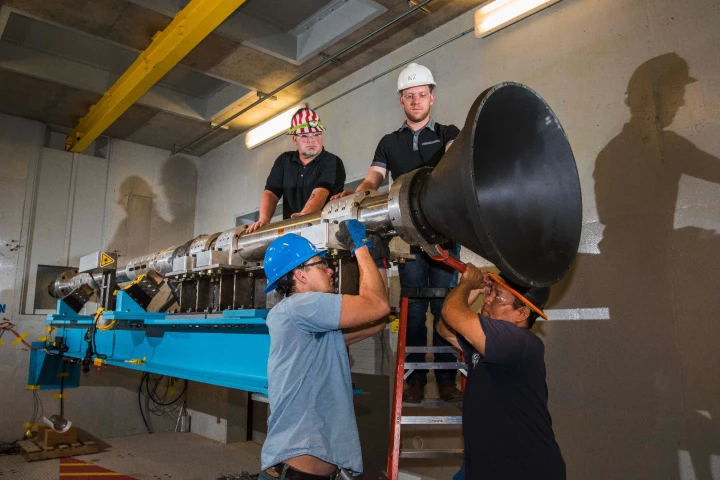 Sandia National Laboratories is up to big things. After having recently replicated the energy found around black holes, the facility has just delivered proof of concept for a method of testing rocket parts using a 60-foot-long (18 m) compressed nitrogen gun that makes the process greener and safer.
 -
 Using the most powerful X-ray-generating machine on the planet, researchers have reproduced what happens to matter just before it is devoured by a black hole. Their findings show that a long-standing theory regarding the giant gravitational sinkholes may be completely wrong.
 -
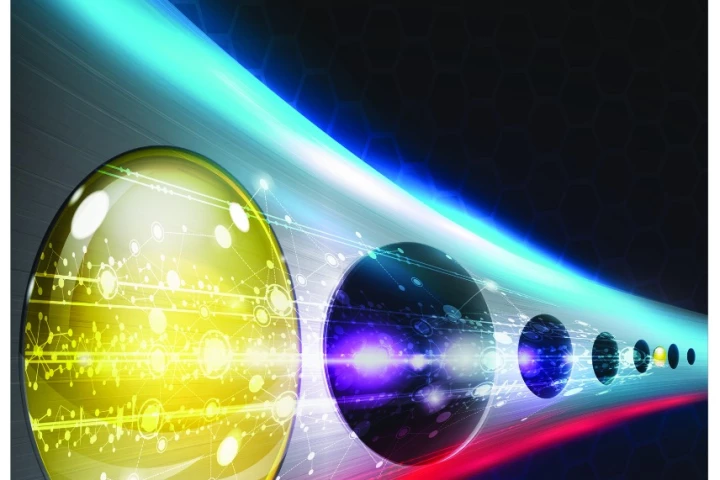 In one more step on the road to a functional quantum computer, researchers at Harvard University and Sandia Ion Beam Laboratory claim to have created the very first "bridge" that could effectively link strings of quantum computers together in a single networked unit.
 -
 Capturing carbon emissions at the source is an important weapon in the fight against climate change. Now scientists have developed an efficient low-cost technique that makes use of an ultra-thin membrane, like a bubble, to filter CO2 out of flue gas.
 -
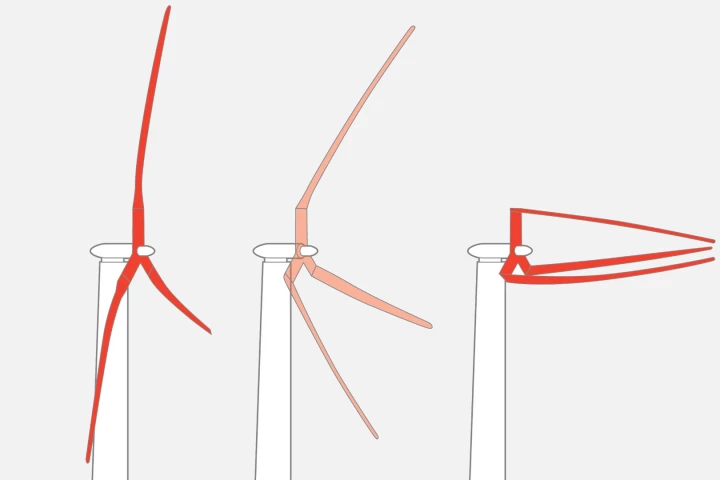 Sandia National Laboratories has revealed its plans for the extreme-scale Segmented Ultralight Morphing Rotor (SUMR). The turbines are built to deal with the extreme conditions of an offshore farm, featuring a folding build to cope with high winds.
 -
 Sandia National Laboratories is working its Mobile Imager of Neutrons for Emergency Responders (MINER) – a nuclear device detector capable of narrowing a search to within a city block without door-to-door sweeps.
Load More