
Repair
-
 See how scientists can now watch DNA repair in real time. A new glowing sensor developed at Utrecht University reveals how cells fix double strand breaks live.
 -
 Researchers have discovered how a metabolite involved in repairing damaged DNA not only controls a person’s sensitivity to cancer therapies but can also protect healthy tissues from damage. The findings may lead to more effective cancer treatments.
 -
 Researchers at UNC have discovered that a common lab molecule, used to label DNA, can trigger a runaway process that eventually leads to cell death. But the team says this could have a positive use too, as a potential cancer treatment.
 -
 Scientists have struggled to develop a single substance that can both speed up wound healing and reduce the formation of scars. Scar reduction medications tend to interfere with the process of healing but now a team has created a patch that can reduce scarring and improve the pace of wound healing.
 -
 Researchers at the University of Illinois have developed a regenerative plastic system that doesn't just self-repair minor cracks in plastic, but regenerates to heal large holes – and not just once, but multiple times.
 -
 Researchers have developed a new technique that brings self-healing capabilities to fiber-reinforced composite materials, like those used in airplanes and automobiles. The system relies on 3D vascular networks that release healing agents when ruptured.
 -
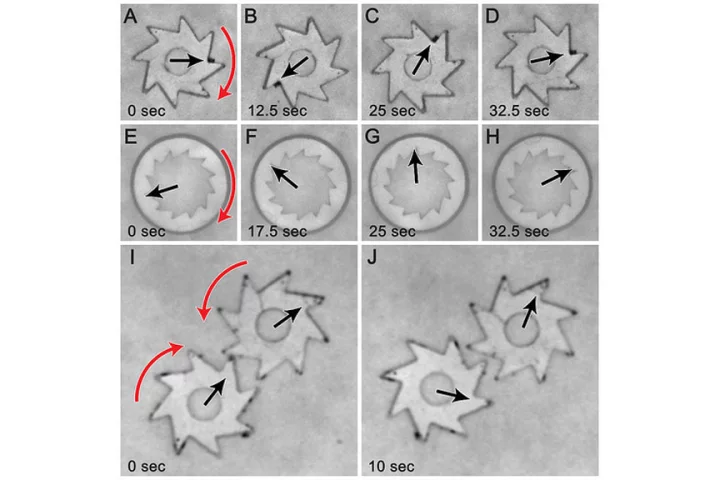 Researchers have discovered that common bacteria suspended in a solution can be made to turn microgears, paving the way for ‘smart materials’ that can dynamically alter their microstructures, repair damage, or power microdevices.
 -
 Bioengineers are attempting to emulate a glue found in the sandcastle worm to help repair broken bones in humans.