
Photonics
-
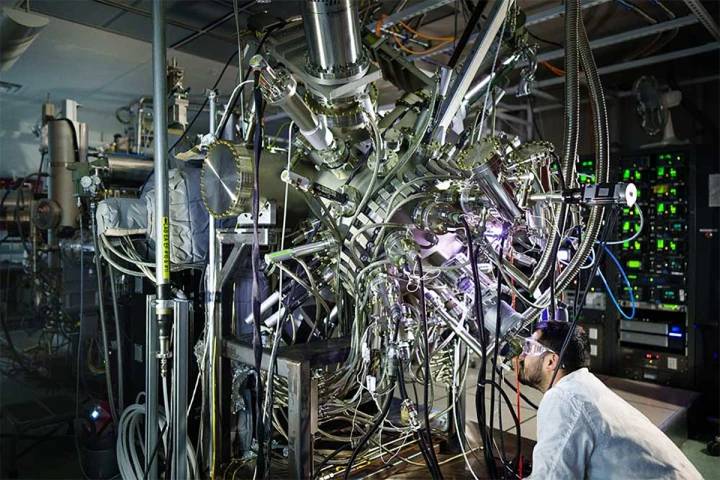 Under specific conditions, lasers can cool things down – and that might just be what we need to tackle way-too-toasty data centers. A new technology called laser-based photonic cooling can target tiny hotspots on chips to zap heat away.
 -
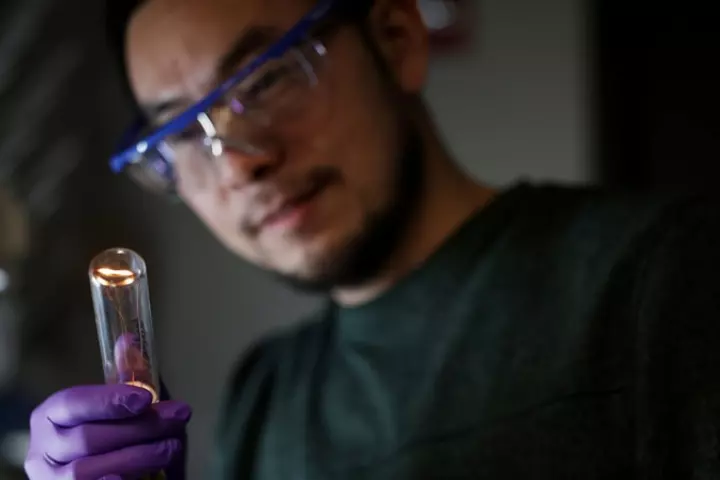 Forget LEDs, researchers from the University of Michigan have developed a new type of incandescent light bulb. The device is capable of emitting elliptically polarized light, described as "twisted" light.
 -
 The first direct visualization of the shape of a photon has been created. These particles of light are impossible to photograph, but UK physicists have now calculated their wave function to produce an accurate image of a photon as it’s emitted.
 -
 Researchers have created a device that uses photonic radar to remotely and accurately monitor breathing, even distinguishing between more than one patient. The device might one day be used in hospitals, aged care facilities, prisons, and at home.
 -
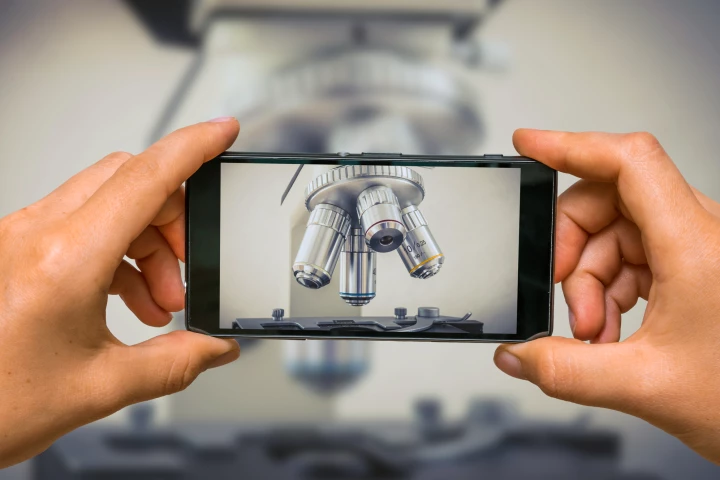 Move over, macro: researchers have created the world’s smallest silicon LED and holographic microscope, and among its uses is a hack that'll let you use your smartphone to view objects as tiny as a single human skin cell in brilliant high resolution.
 -
 Using newly-developed metamaterials, scientists at the University of Buffalo have created a prototype "hyperlens" that may help image objects in visible light with dimensions so small that they were once only clearly viewable through electron microscopes.
 -
 Photonic CPUs could potentially process information at the speed of light – millions of times faster than standard computers available today. University of Utah engineers have moved that possibility one step closer with the claimed creation of the world's smallest silicon photonics beamsplitter
 -
 By exploiting the difference between the speed of two different beams of colored light when traveling through a heated crystalline disk, University of Adelaide researchers claim to have produced the world's most sensitive thermometer – with an accuracy of 30 billionths of a degree.
 -
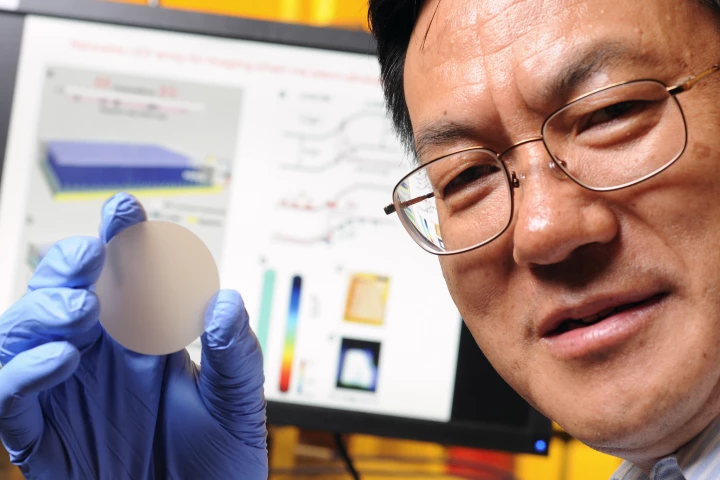 What do electronic signatures, fingerprint scans and touch-sensitive robot skin have in common? All three technologies may soon be advancing, thanks to a new system that turns an array of zinc oxide nanowires into tiny LEDs.
 -
 A team led by the University of St. Andrews has turned a laser into a tractor beam that works on the microscopic level.
 -
 Stanford researchers succeed in making an effective magnetic field that controls light.
 -
 NASA engineers have developed a nanotech-based coating that absorbs on average more than 99 percent of the ultraviolet, visible, infrared, and far-infrared light that hits it.
Load More