
Parkinson
-
 While its movements are slow and gentle, Tai Chi is actually a martial art. Now, a study shows that it can not only help people learn movements grounded in self defense, but it can also help them fight the symptoms of Parkinson's Disease.
 -
 A new stem cell therapy for Parkinson’s disease, in which the donor would also become the transplant recipient, is one step closer to human trials after scientists were able to successfully grow and rebuild neurons in an animal model.
 -
 For around a decade, scientists researching Parkinson's disease have been probing a pathway involved in the way brain cells process energy, and now a mystery around the role of a particular protein has been solved thanks to a new live action view.
 -
 Having studied the brushstrokes in thousands of paintings from famous artists, researchers say that certain variations in the works over the artists' careers can point to an ongoing decline in cognitive function.
 -
 If you've ever tried holding onto a spinning gyroscope, then you'll know how it "fights" you if you try to suddenly tip it over. Well, Imperial College London spinoff company GyroGear is utilizing that same principle in its new GyroGlove, which is designed to minimize hand tremors.
 -
 A team of researchers at La Trobe University is developing a blood test for earlier detection of Parkinson's disease. The team estimates that it could be available within the next five years.
 -
 Scientists have identified a compound that can reverse symptoms of Parkinson's and Alzheimer's diseases. The method hasn't been tested on human patients just yet, but it's been found to be effective in genetically modified fruit flies.
 -
 King's College London (KCL) researchers have identified a gene that regulates nerve function, and could be switched off as part of a new Parkinson's treatment. The breakthrough was made by studying the disease in fruit flies.
 -
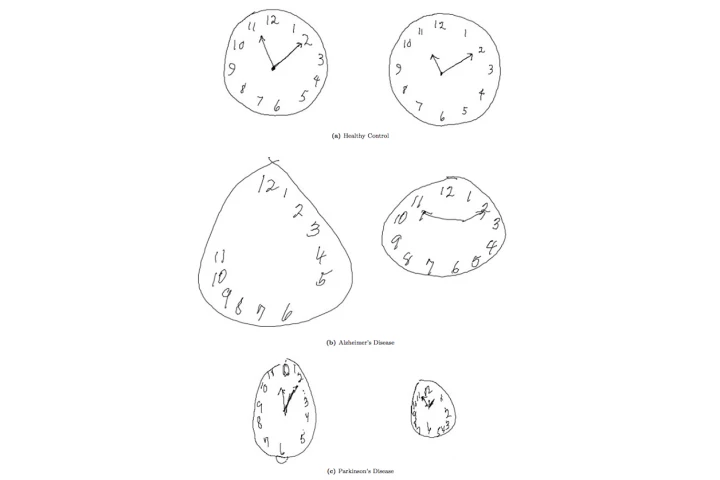 Noting that most current methods of diagnosing cognitive diseases can only detect impairment after the disorders have taken hold, researchers at MIT have combined digital pen technology and some custom software to develop an objective model for early detection.
 -
 Researchers have hacked a Kinect sensor to overcome a symptom of Parkinson's disease known as Freezing of Gait (FOG), where the sufferer's muscles can freeze mid-stride, making them feel like their feet are glued to the ground or resulting in them falling over.
 -
 The symptoms of Parkinson's disease can sometimes lead sufferers to put down their pens forever. The ARC pen is a vibrating writing device that stimulates muscles in the hand, giving those with Parkinson's better control when putting pen to paper.
 -
 One of the symptoms of advanced Parkinson’s disease is an impaired sense of balance. Although this typically isn't very responsive to medication, Swedish scientists are developing an alternative treatment – a wearable device that stimulates the patient's vestibular system.