
Nanowires
-
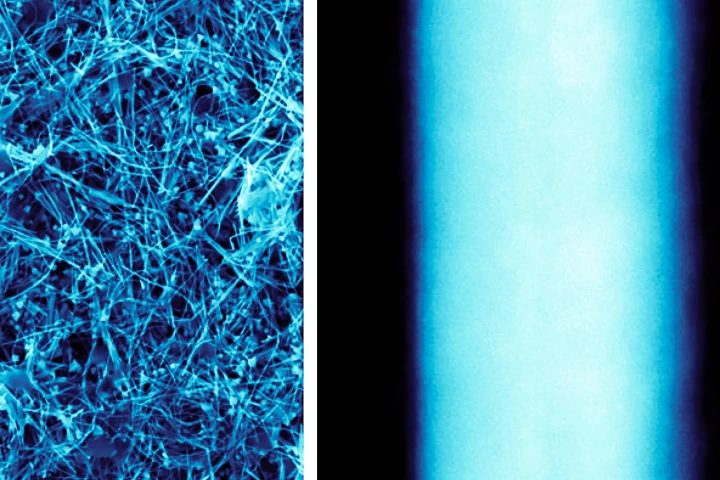 Copper is known for its ability to kill microbes on contact, which is why it's often professionally coated onto commonly touched items. A copper nanowire spray may allow everyday folks to give existing surfaces the same treatment, using a spray can.
 -
 Scientists are coming up with some creative new methods to fight cancer. Now, a new study has found that iron nanowires could deliver a three-pronged attack against cancer cells, using heat, vibrations and drugs together.
 -
 It's never a good thing when donated human blood – or even the blood in our bodies – is infected with bacteria. Scientists at the University of California San Diego, however, are developing a means of removing such blood-borne microbes using tiny ultrasound-powered robots.
 -
 Researchers have broken the efficiency record for nuclear fusion on the micro-scale. Using an ultra-fast, high-powered laser, the results were about 500 times more efficient than previous experiments. The researchers blasted arrays of nanowires to create incredibly hot, dense plasmas.
 -
 Engineers have tested a nano-system that could restore sight through a retinal implant that responds to light by directly stimulating the neurons that send visual signals to the brain. Unlike other systems, the new device requires no external sensors, and can provide a much higher resolution.
 -
 A nano-spacecraft made from a silicon chip could make the journey to Alpha Centauri in just 20 years. The problem is, such a "space-chip" wouldn’t survive the intense radiation and temperature of space, so a NASA and KAIST team is developing a method for helping the chip heal itself on the fly.
 -
 Imagine if instead of installing curtains or blinds, you could simply adjust the opacity of the glass in your windows. Well, that's how smart windows work. Researchers at Harvard University have now developed one of their own, which they say is simpler and cheaper than what's come before.
 -
 Scientists have created a hybrid system of bacteria and semiconducting nanowires that take water, sunlight and carbon dioxide and turn them into the building blocks of biodegradable plastics, pharmaceutical drugs and even biofuel.
 -
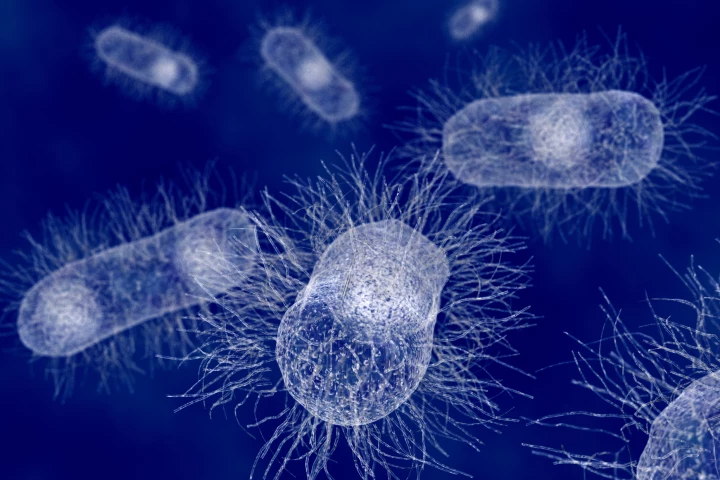 With a well established ability to kill off bacteria, silver has come to play a significant role in the development of antimicrobial materials. The latest effort comes from Australian researchers who have developed an antibacterial fabric capable of killing off infectious bacteria within 10 minutes.
 -
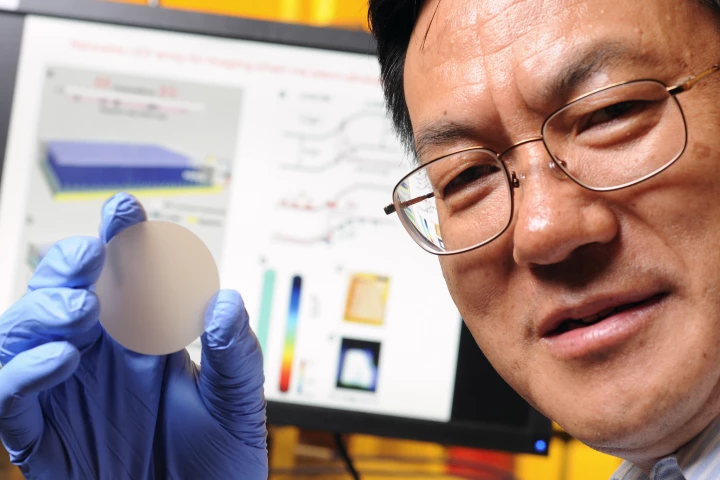 What do electronic signatures, fingerprint scans and touch-sensitive robot skin have in common? All three technologies may soon be advancing, thanks to a new system that turns an array of zinc oxide nanowires into tiny LEDs.
 -
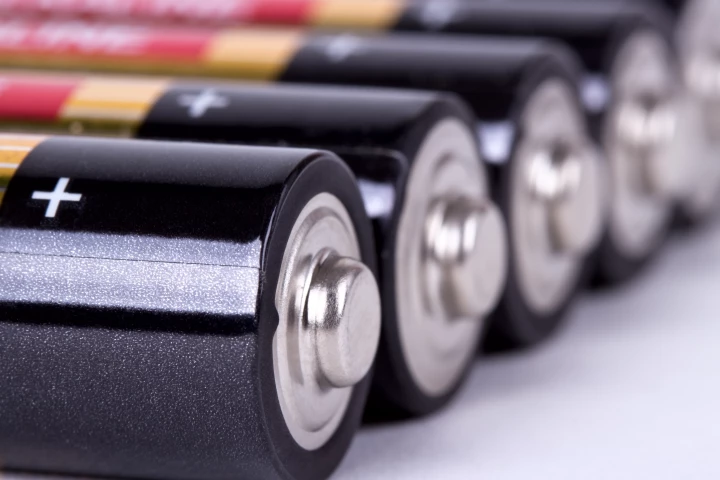 Scientists have used etched silicon nanoparticles to create a lithium-ion battery that can hold three times as much energy as regular li-ions, and that can be recharged in ten minutes.
 -
 Physicists at the Delft University of Technology, Netherlands, have detective the elusive Majorana fermion.
Load More