
Mining
-
 Two billion years before we made history and split the atom, the Earth had already accomplished it and was running its own nuclear reactors. And they operated for hundreds of thousands of years, as the first signs of multicellular life emerged.
 -
 A US startup is looking to our closest satellite to fill a resources gap here on Earth. Interlune and partner Vermeer have revealed a full-scale excavator prototype that forms a key component of its lunar resource Harvester.
 -
 Canadian decarbonization firm Exterra is tackling a critical environmental issue that's not talked about often: cleaning up the mineral waste left behind in asbestos mines after decades of extraction.
 -
 Stumbling on a giant gold nugget and never working again is something we’ve all daydreamed about, but how exactly do they form? A new experiment has found that earthquakes and electricity might be key ingredients.
 -
 Many renewable energy technologies require metals that are mined through environmentally destructive processes. Now, Oxford scientists are investigating a new way to mine valuable metals trapped in hot brines beneath volcanoes.
 -
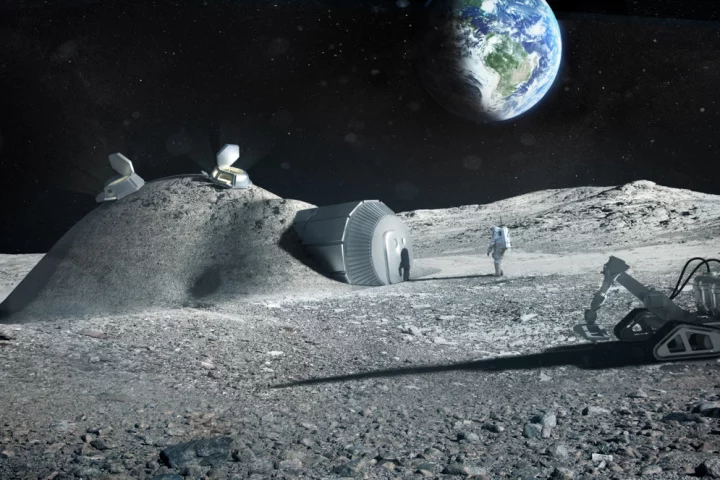 ESA has indicated it's interested in mining the Moon by 2025. To help achieve this, the space agency has awarded a one-year contract to ArianeGroup to look into the feasibility of a mining mission to the lunar surface to support a manned outpost as well as producing fuel for deep space missions.
 -
 In a welcome sacrifice for the good of the planet, a UN International Resource Panel study found that saving the environment may require people work fewer hours in the future. A growing middle class has led to a rapid pace of raw material extraction around the globe.
 -
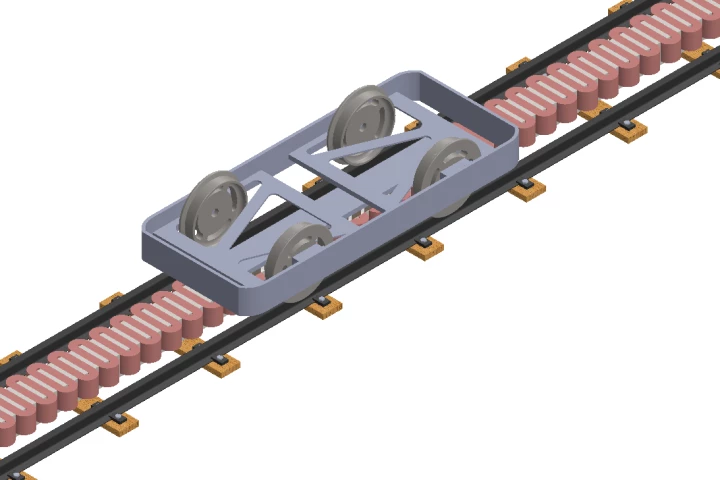 There are already concepts that would see electric vehicles draw power from cables in the road, thus freeing those vehicles up from lugging around heavy batteries. British firm Texchange, however, is going a step farther – it's developing a system where the motor is in the "road," too.
 -
 In the developing world small-scale gold mining and smelting under primitive conditions poses a major health hazard. To help alleviate this, a team from Argonne National Laboratory and the US EPA are developing a prototype mercury capture system (MCS) to reduce heavy metal pollution.
 -
 Scientists from Australia's CSIRO have discovered that eucalyptus trees in the Australian outback are drawing up gold particles from deep underground through their root system and depositing the precious metal in their leaves and branches.
 -
 Australia’s Commonwealth Scientific and Industrial Research Organisation (CSIRO) and Canadian company Mevex have tested a new scanning technique using powerful X-rays that can detect small trace amounts of gold within mineral samples quickly and accurately.