
Mind
-
 Thousands of people who suffer from irritable bowel syndrome swear off a range of food categories to improve their symptoms. One of these categories is gluten, although a new small study shows it might not be the villain many think it is.
 -
 For the first time, scientists have established that our perception of the passing of time can, independently, influence how a wound heals. It opens the door to better understanding the mind-body's connection and its role in healing and recovery.
 -
 A study has found that a therapy program focusing on self-compassion and mindfulness reduced symptoms of post-traumatic stress. The intervention is promising for those who suffer from PTSD symptoms but don't meet the criteria for a formal diagnosis.
 -
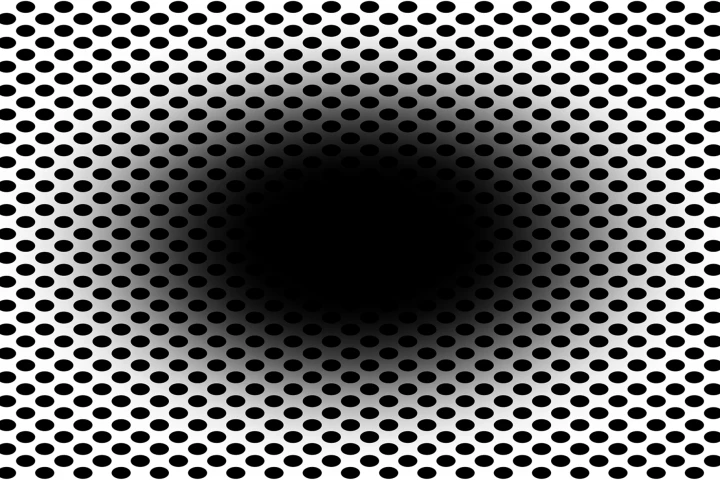 When you view the image above, does it look like black smear in the center is expanding? If it does, that means you're like most people – and your brain may even think that you're entering a tunnel, adjusting your eyes accordingly.
 -
 Led by Dr. Brent Michael Kious, scientists from the University of Utah have come to the conclusion that people living at higher altitudes may have an increased risk of suicide. The researchers do have a theory as to why this might be the case, along with some recommendations.
 -
 It's frustrating to have a clear mental image of something but not be able to exactly get it across in words or a drawing. Now neuroscientists from the University of Toronto Scarborough has developed a way to digitally recreate exactly the image someone is thinking about, by scanning their brain.
 -
 Following some compelling research suggesting brain inflammation is linked to suicidal thoughts, a team of scientists has now used a machine-learning algorithm and brain imaging to accurately identify whether a person is considering suicide.
 -
 Having trouble relaxing? If so, UK-based BioSelf Technology might suggest trying out its new device, called Sensate. It sits against the user's chest throughout the day, buzzing their breastbone when they start getting stressed out.
 -
 Yoga practitioners know firsthand the physical and mental benefits the activity produces, as meditation is often embedded in yoga sessions. Now, yogis have got science to back their claims of well-being and focus.
 -
 It can be quite difficult to determine if someone actually has ADHD, and misdiagnoses are common. Now, however, researchers from Tel Aviv University have announced that analyzing a patient's eye movements may be the key.
 -
 At Radboud University Nijmegen in The Netherlands, scientists have used an MRI scanner and a mathematical model to read observed letters, right out of test subjects’ brains.
 -
 Scientist are using interactive avatars to help schizophrenics gain control of their auditory hallucinations.
Load More