
JWST
-
 It’s not often that we get guests. So when the interstellar intruder 3I/ATLAS came zooming through our Solar System last year, it provided astronomers with a perfect opportunity to study a rock from another part of the galaxy.
 -
 Observations of a far-distant galaxy several times the size of the Milky Way reveal a surprising stillness overcoming the sea of early stars, suggesting mysterious forces brought its rotation to a rather rapid halt.
 -
 Finding alien life won’t be a flying saucer landing at the White House – NASA scientists will hold a press conference to excitedly show off a chart that’s incomprehensible to most people. Now we’re a step closer to that boring but groundbreaking day.
 -
 The James Webb Space Telescope has captured direct images of galaxies being born at the cosmic dawn. This is the first time this has ever been witnessed by astronomers, confirming models for galaxy formation.
 -
 The youngest neutron star detected so far turned 37 years old last week. To celebrate, James Webb Space Telescope has finally found the most direct evidence of it, hiding among the remains of the supernova cloud it was born in.
 -
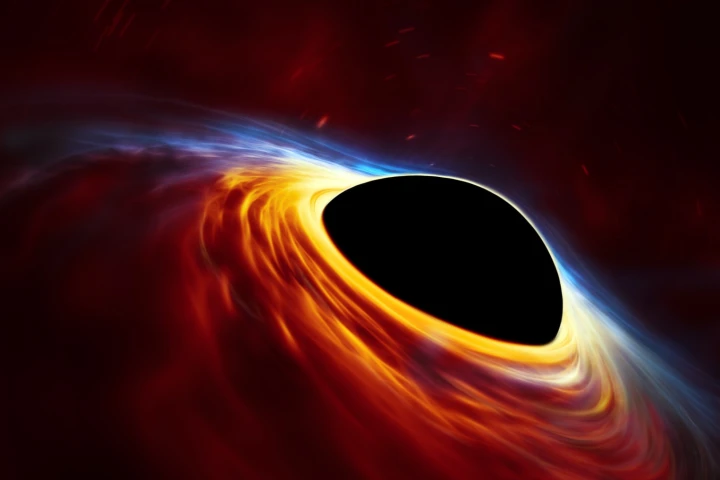 Astronomers have discovered the most distant – and therefore earliest – known black hole. Hiding in a galaxy called GN-z11, this black hole is bigger than should be possible given the age of the universe.
 -
 It feels like every time astronomers get a handle on a cosmic phenomenon, a new one pops up that sends them back to the drawing board. Case in point – Hubble has spotted a burst of light in a region of space where there didn’t seem to be a trigger.
 -
 The James Webb Space Telescope can look farther back in space and time than ever before – and it’s revealed puzzling galaxies that seem to be too advanced for their age. Now astronomers have proposed a new explanation for them – starburst galaxies.
 -
 Hiding within new images of a nebula captured by the James Webb Space Telescope, astronomers have made a puzzling discovery – dozens of Jupiter-sized objects that defy explanation.
 -
 The best places to search for life beyond Earth aren’t planets like Mars – they’re icy moons like Europa. The case for life on this watery world just got stronger, as the James Webb Space Telescope has detected a fresh carbon source there.
 -
 The James Webb Space Telescope has achieved one of the first major science goals announced for it way back in 2017. The infrared instrument has now probed the atmosphere around one of the TRAPPIST-1 exoplanets.
 -
 If a new study holds water it might be the JWST's most important discovery ever. Three bright objects in the distant universe could be the first candidate “dark stars,” hypothetical celestial objects powered by the annihilation of dark matter.
Load More