
Hebrew University of Jerusalem
-
 Pseudoscorpions have been seen hitching a ride on a true scorpion, and it’s the first time this interspecific rideshare has been observed. While they have eight legs of their own, these tiny insects prefer to sit back and relax on their road trips.
 -
 A striking study published in 2017 reported a 50% decline in the average sperm count since the 1970s. Now, a follow-up study is suggesting the decline in sperm counts is accelerating. But not all researchers are convinced the data is as clear as it seems.
 -
 Scientists in Israel have demonstrated a promising new technology for early Parkinson's diagnosis, using a variation of MRI to spot tiny, telltale structures forming deep in the brain as the disease progresses.
 -
 One of the challenges of farming lies in the fact that by the time plants appear to be stressed, it may already be too late to address the problem. A new potato, however, is designed to warn farmers by fluorescing at the earliest stages of stress.
 -
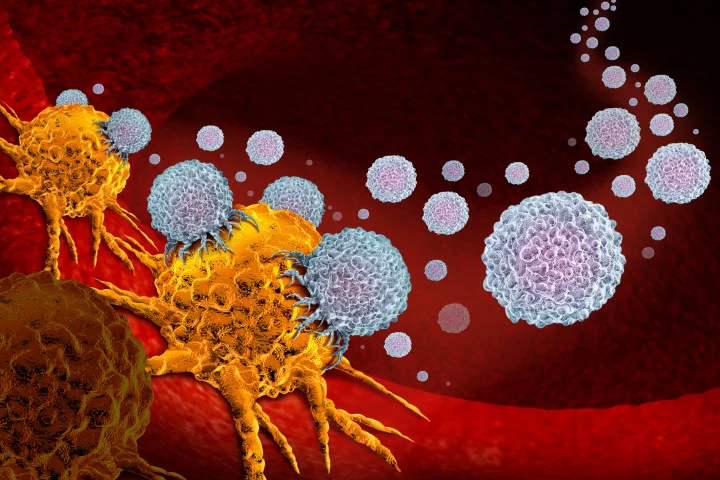 Doctors fight cancer with everything from radiation to chemicals to light-reactive particles, with mixed outcomes. Now, a new study has combined two approaches – chemotherapy and light therapy – into one drug, with promising results.
 -
 Researchers have managed to reconstruct a Denisovan face for the first time, using DNA methylation mapping techniques.
 -
 Is our entire universe just a computer simulation? Theoretical physicists believe they’ve found proof that our universe is far too complex to be captured in any simulation. According to the researchers, the hypothesis is done in by gravitational anomalies, tiny “twists” in the fabric of spacetime.
 -
 A large-scale meta-analysis of 185 studies across 40 years has found a more than 50 percent decline in sperm concentration and total sperm count among men from North America, Europe, Australia and New Zealand. The rate of decline was found to be consistent and is cause for concern if it continues.
 -
 There’s a delicate ecosystem in your gut right now, but a bad burrito can throw it off. Just how pathogens like E. coli take hold isn’t well understood, but researchers have studied how it senses its surroundings and in response, switches its gene expression from “attack mode” to “colonize mode.”
 -
 The Milky Way galaxy is currently racing through space at about 2 million km/h on a journey towards the Shapley Supercluster. But we’re not just being pulled in this direction: Astronomers have now discovered a huge extragalactic void, called the Dipole Repeller, that’s pushing us away.
 -
 Many diabetics have limited feeling in their feet, and thus aren't aware when pressure is being exerted on one area of the foot for a prolonged period. That's why a team from The Hebrew University of Jerusalem is creating SenseGO – pressure-monitoring electronic socks.
 -
 Today's simple metal lightning rods may be on their way to obsolescence. That's because scientists at The Hebrew University of Jerusalem are developing a high-tech alternative that could potentially reach higher and be more effective – laser lightning rods.
Load More