
Haptics
-
 Input devices such as computer mice may be rigid for now, but thanks to new hydraulic haptic tech they could someday be soft n' squishy. And that's not all … they may also "throb" in our hand to provide tactile feedback as we use them.
 -
 A new "artificial skin" simulates a sense of touch via tiny air bladders.
 -
 It was just last year that we heard about the Fundamental Surgery simulator, which utilizes dual haptic feedback arms to provide the "feel" of performing various surgical procedures. The system has now been taken a step further, with the demonstrated integration of whole-hand VR gloves.
 -
 While there are already surgical training systems that use VR headsets to "place" students in an interactive computer-generated operating room, a new simulator goes a step further. It incorporates haptic feedback, allowing users to actually feel the pressure exerted by digital tissue.
 -
 Prostate exams are difficult for med students to learn, thanks to the internal nature of the examination and a lack of willing test subjects. Scientists are developing a robotic rectum that recreates the feel of the real thing and even provides haptic feedback.
 -
 We've already seen interactive technologies that create smells or tactile sensations on command. Now, however, British scientists have developed a system that they claim can be used to make users experience specific emotions – and it does so without even touching the person.
 -
 On the International Space Station, astronauts recently finished putting the European Space Agency's (ESA) Haptics-1 joystick through its paces. The first force-reflecting joystick in space, its purpose is to improve how robots and humans interact in weightlessness.
 -
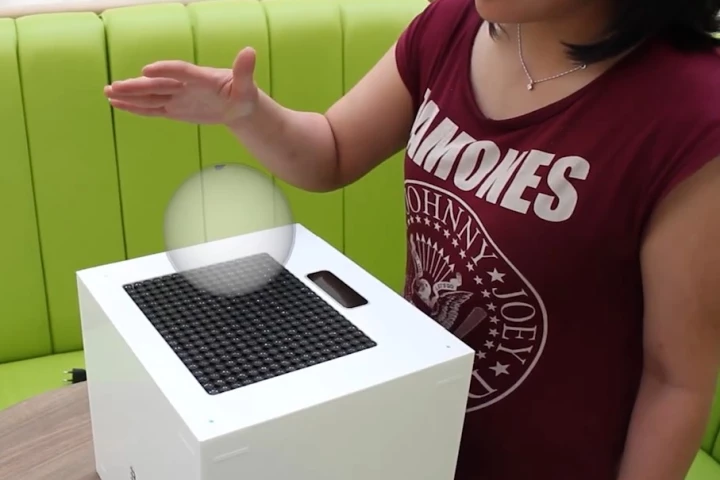 A new technique being developed by researchers at the University of Bristol promises to revolutionize haptic feedback technology by using projected ultrasound to directly create floating, 3D shapes that can be seen and felt in mid-air.
 -
 Holodeck, anyone? Researchers at Bristol University are developing a system known as UltraHaptics that uses ultrasonic force fields to project the tactile sensations of objects in midair. Currently used for a haptic computer interface, the system might eventually enable touchable holograms.
 -
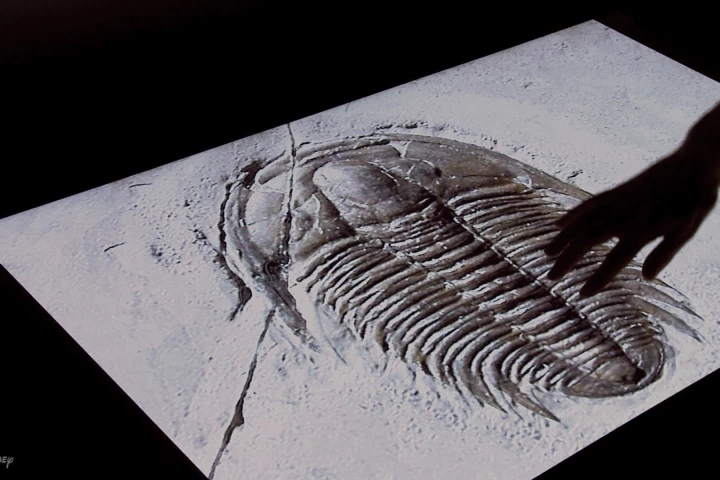 Researchers at Disney Research, Pittsburgh have developed a system that lets users' fingertips feel a simulated bump through a flat tablet or smartphone screen, that corresponds to a bump in the displayed image.
 -
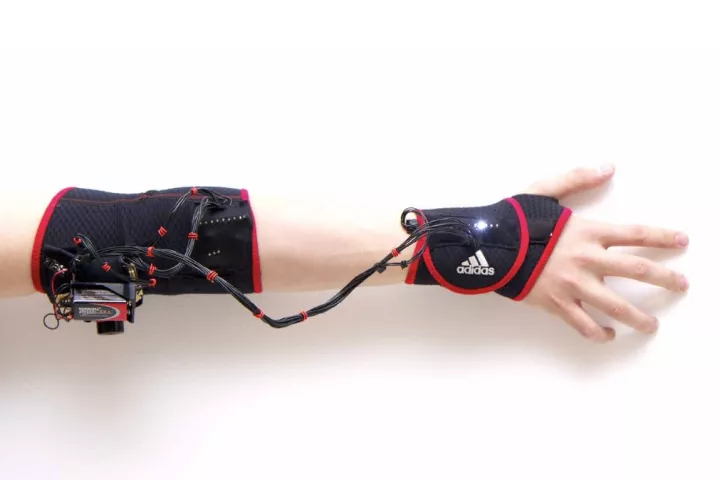 Ghost is a prototype vibrating armband, designed to help athletes with muscle memory.
 -
 Move, designed by Electric Foxy, is a kind of sensorial tank top that monitors movements during exercise to help people improve their performance, with particular emphasis on movement precision.
Load More