
Fluorescent
-
 Scientists have made a major breakthrough in the accuracy and speed at which serious and often deadly pathogen infections can be diagnosed and treated. Often, this is time that is critically important in saving a patient's life.
 -
 Scientists have “painted” with DNA, creating 16 million colors to accurately reproduce digital images with 24-bit color depth. The resulting images are incredible, and represent not just a new art form but potential advances for storing data on DNA.
 -
 This stunning image may look like a particularly lively Jackson Pollock painting, but it’s actually an example of a new cell imaging technique. The subject? A human retina.
 -
 The discovery of extraterrestrial life is most likely to come from tiny fossils on Mars. To aid that search, scientists have developed a portable device called the Biofinder that can highlight organic residue in fossils tens of millions of years old.
 -
 Scientists have developed a new light-activated “photoimmunotherapy” that could help treat brain cancer. The key is a compound that glows under light to guide surgeons to the tumor, while near-infrared light activates a cancer-killing mechanism.
 -
 Researchers in Canada have developed a new tool that can let scientists examine proteins more closely, aiding study of disease and drug development. The team used DNA to create nanoantennas that fluoresce in response to different protein functions.
 -
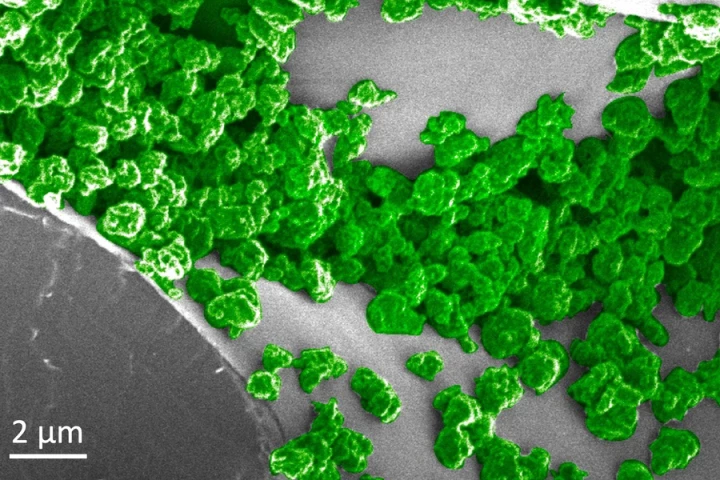 A decent chunk of energy usage goes towards lighting, so scientists at MIT are developing a new kind of passive lighting – glow-in-the-dark plants. In the latest experiments, the team made them glow brighter without harming their health.
 -
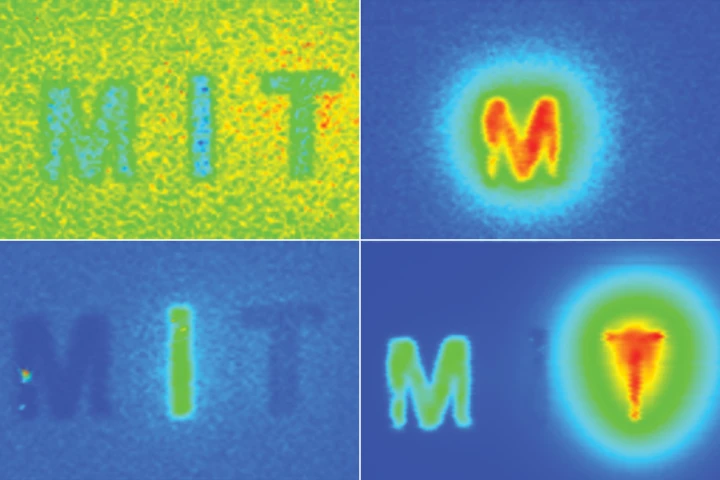 The earlier cancer is detected, the better the odds of treating it, but tumors can be hard to spot until they get to a certain size, at which point it might be too late. Now MIT researchers have developed a new optical imaging system that could be used to spot tiny tumors deep inside the body.
 -
 If scientists can see how bacteria evolves, they might be able to intervene to prevent drug resistance. Now researchers at Indiana University have produced the first direct images of bacteria extending “harpoons” to snare and absorb bits of DNA.
 -
 Chameleons are well-known for their ability to change colors, but scientists have just discovered a new visual trick in the creature’s repertoire. Under UV light many types of chameleons have been found to fluoresce in vibrant patterns, which they may use to communicate with others of their species.
 -
 Researchers have developed tiny, glowing crystals that can both detect and trap toxic heavy metals at the same time. Similar research has been done on structures to either detect or remove such nasty substances, but this appears to be the first capable of doing both.
 -
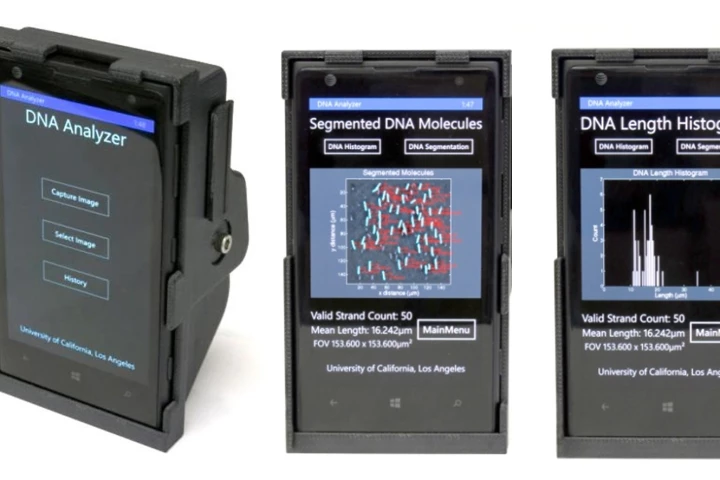 A cheap 3D-printed attachment can turn smartphones into sophisticated microscopes. Armed with the new device, a smartphone would be able to detect single DNA strands and analyze them to diagnose diseases including cancer and Alzheimer’s without bulky and expensive equipment.
Load More