
Eye-tracking
-
 A team of researchers in China has developed a remarkable device to allow people with limited mobility to use computers and experience VR content by moving their eyeballs – and to power the gadget simply by blinking.
 -
 Blinking isn’t just about keeping eyes moist. New research suggests we blink less when listening becomes hard, with each pause reflecting increased focus. The findings hint that blinking may track how hard our brains are working to listen among noise.
 -
 While breathalyzers make it quick and easy to tell if someone is drunk, it takes more time and effort to determine if they're intoxicated by drugs such as cannabis. A new device known as Gaize could reportedly soon change that.
 -
 Autism spectrum disorder (ASD) symptoms generally appear in the first two years of a child’s life. A new study has found that toddlers’ visual attention to geometric images is a reliable biomarker for the early identification of autism.
 -
 A study is describing a biomarker to identify a person’s risk of developing anorexia nervosa. The research proposes measuring levels of anxiety alongside a type of twitching eye movement can identify those with, and at risk of developing, the disorder.
 -
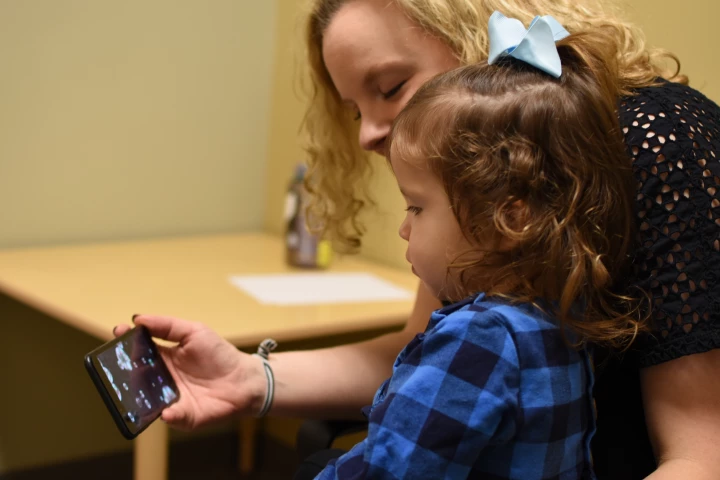 Although it's certainly best to start addressing autism as early as possible, the disorder is often difficult to detect in young children. A new iOS app has been designed to help, by tracking a child's eyes as they watch videos.
 -
 Eye tracking cameras and AI analysis can reveal your identity, gender, age, ethnicity, weight, personality traits, drug habits, emotions, skills, abilities, fears, interests, and sexual preferences, says a rather dystopian research review.
 -
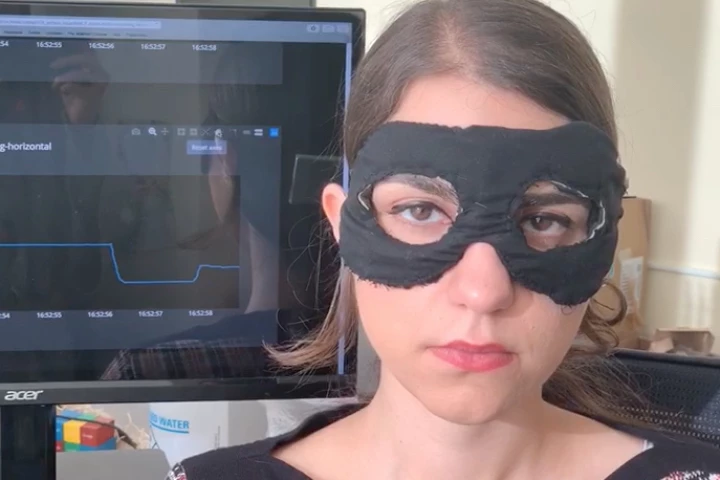 When tracking a sleeping person's eye movements, you typically have to stick hard-wired electrodes onto their face. Soon, however, an unobtrusive flexible mask could do the job – while also measuring their heart rate.
 -
 For some time now, the tracking of eye movements has served as a means of assessing neurological health. A new system is said to do so more precisely than ever, providing highly accurate readings in just 10 seconds.
 -
 The US Food and Drug Administration (FDA) has delivered a Breakthrough Device Designation to a novel eye-tracking technology that claims to offer objective and early diagnosis of Parkinson’s disease. The FDA designation is hoped to accelerate the approval process for the test offering clinicians a new and reliable way to diagnose the degenerative disease at its earliest stage.
 -
 We've seen it in movies many times before … the reluctant witness who looks right at the mug shot of the murderer, and falsely claims that they don't know him. Soon, however, police could know if such people are lying – by watching their eyes.
 -
 Presbyopia is a common form of age-induced far-sightedness. Now a Stanford team has developed a pair of high-tech specs called autofocals, which use fluid-filled lenses, depth-sensing cameras and eye-tracking technology to make sure whatever a wearer is looking at stays sharp.
Load More