
Engineering
-
 China has eclipsed its own – and the US – world record, building a monster underground hypergravity centrifuge that can model scenarios with 1,900 times the gravitational force of Earth, bending space and time with unprecedented power.
 -
 From water-skipping robots to elephant-skin inspired cooling materials, engineers have continued to find inspiration in nature in order to move technology forward for humans. And it's set to take center-stage in the new age of robotics.
 -
 Following on from last year's 34th First Annual Ig Nobel Prize, the 35th First Annual Ig Nobel Prize night took place at Boston University this week, celebrating the joy of science: Real research with some delightfully sideways paths of investigation.
 -
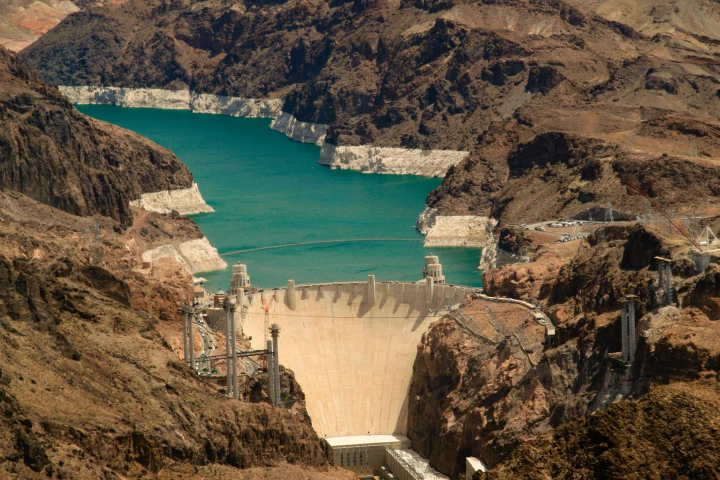 Over the past two centuries, the construction of thousands of dams has done more than just tame rivers – it has shifted the Earth’s North Pole about a meter off its position.
 -
 A platinum fiddle that's just 35 microns in length and 13 microns in width is believed to be the world's smallest violin, measuring just a fraction of a microscopic tardigrade. But before you get too excited, there's one little twist …
 -
 For the first time, engineers have digitally recreated the complex muscular architecture of the octopus arm and its unique movements involving around 200 muscles, which opens the door to developing soft robotics with unprecedented dexterity.
 -
 February 11 marks International Day of Women and Girls in Science. The day celebrates both the work of women across vast scientific disciplines, but also recognizes ongoing gender-based challenges. Here, we pay tribute to 11 stars of STEM today.
 -
 Researchers engineered a probiotic bacteria to release a marker that can be detected in the urine after it comes into contact with bowel cancer, even when it's in the early stages. The novel test may mean avoiding messy poo-based screening tests.
 -
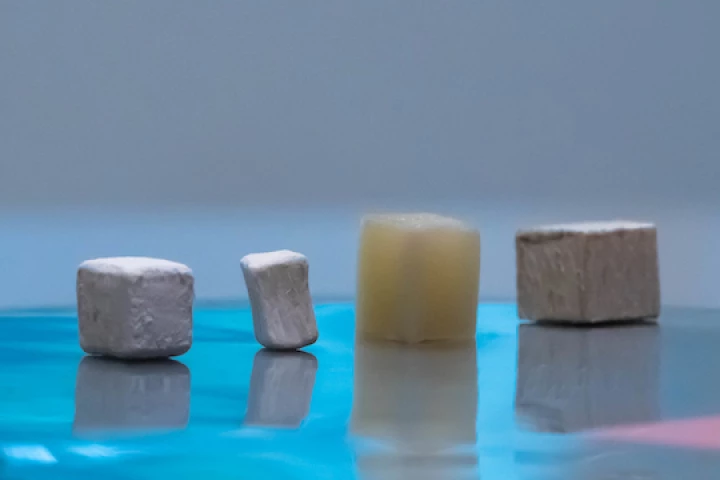 With the world focused on addressing climate change, scientists have had to get creative when it comes to developing sustainable building materials that tackle CO2 emissions. A team has now engineered wood that is stronger and traps carbon dioxide.
 -
 Blue Abyss Ltd. is building the world's largest and deepest indoor pool in Cornwall. Holding as much water as 17 Olympic-sized swimming pools, it will be used for advanced undersea robotics and as the world's first commercial astronaut training facility.
 -
 Surfaces in contact with salty water usually end up with a corrosive layer of salt caked on. Now, engineers at MIT have made these minerals so easy to remove that they often just fall off on their own – by forming “crystal critters.”
 -
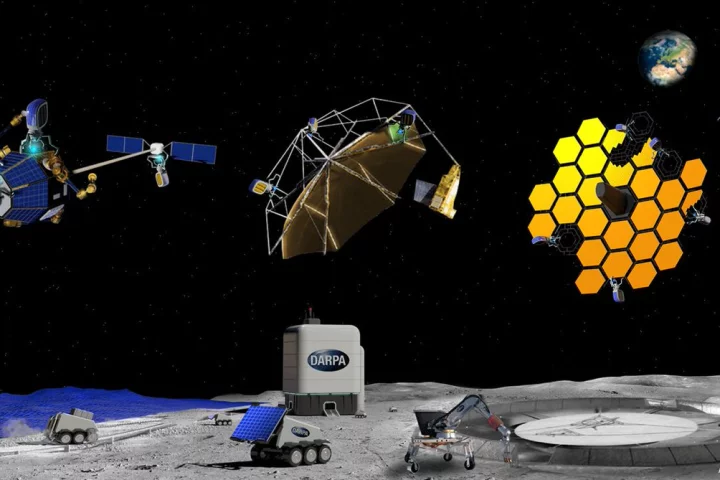 In anticipation of future space projects involving giant structures in orbit and on the Moon, DARPA has announced the start of its Novel Orbital and Moon Manufacturing, Materials and Mass-efficient Design (NOM4D) program.
Load More