
Electronic
-
 Researchers at Massachusetts Institute of Technology have demonstrated an entirely new form of magnetism in a synthesized crystalline material. They're calling it p-wave magnetism, and it could be the key to next-gen computer memory.
 -
 It sounds like a sci-fi movie scene, but scientists have successfully created electrodes in living tissue using a viscous gel of enzymes. It could signal a fresh approach to bioelectronics and, in the future, new therapies for neurological disorders.
 -
 Scientists have developed a new electronic “tattoo” that can monitor a patient’s blood pressure continuously. The e-tattoo is made of graphene and can be worn for long periods without getting in the way, allowing for better health data.
 -
 Superconductivity occurs when electrons in a metal pair up. Scientists in Germany have now discovered that electrons can also group together into families of four, creating a new state of matter and potentially a new type of superconductivity.
 -
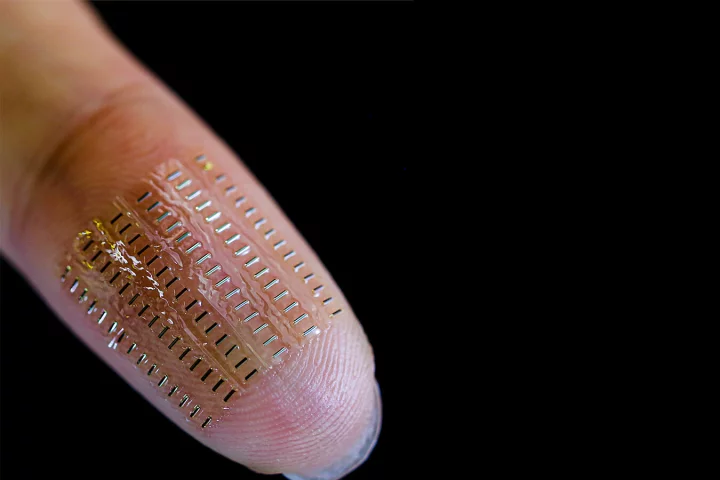 By combining miniaturized electronics with some origami-inspired fabrication, scientists have developed what they say is the smallest microsupercapacitor in existence. It's smaller than a speck of a dust but boasts a similar voltage to a AAA battery.
 -
 Researchers from Johns Hopkins University have found a superconducting material naturally stable in two states at once, which is useful for quantum computers.
 -
 Organ development has traditionally been tricky to study, thanks largely to the difficulty in getting sensors in there without damaging the organs. Now, researchers from Harvard have developed a way to create “cyborg organoids” by integrating nanoelectronics into cell cultures.
 -
 Researchers at the University of California, Riverside have found a way to use viruses to build gold nanobeads, which can then be used to purify water and could eventually help cut the cost and time required to produce electronic components.
 -
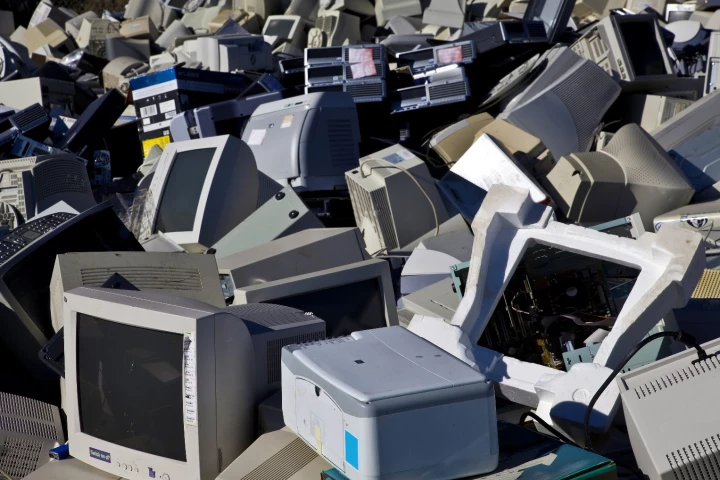 Discarded electronics (or e-waste) brimming with valuable and toxic components is building up in landfills around the world, and it’s notoriously tricky to recycle. Now, researchers have a new way to tackle the e-waste issue: freeze it, grind it into “nanodust” and then sort it out.
 -
 A team of researchers from Tufts University has taken flexible electronics to their next logical step, embedding them in sutures that can monitor the body from the site of the stitching and broadcast their findings to a Bluetooth-enabled device.
 -
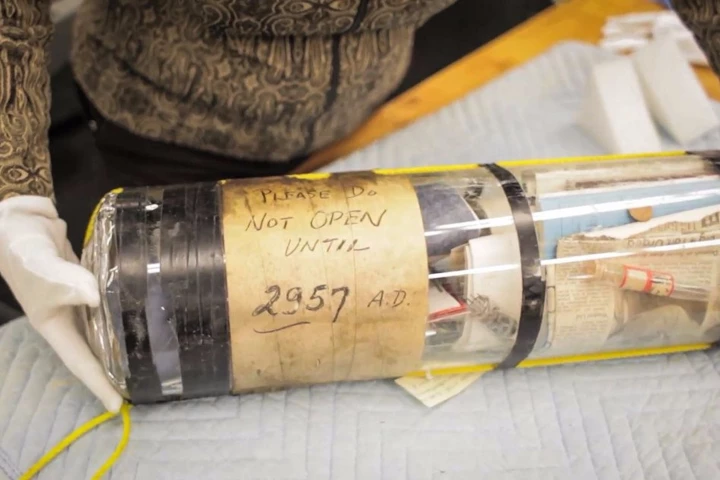 A time capsule that's not to be opened until the year 2957 has been recovered on the MIT campus and contains an experimental electronic component that once gave the transistor a run for its money.
 -
 In some modern day alchemy, researchers have modeled and developed new classes of cheap alloy materials that boast the properties that makes gold so attractive for electronic applications.
Load More