
Education
-
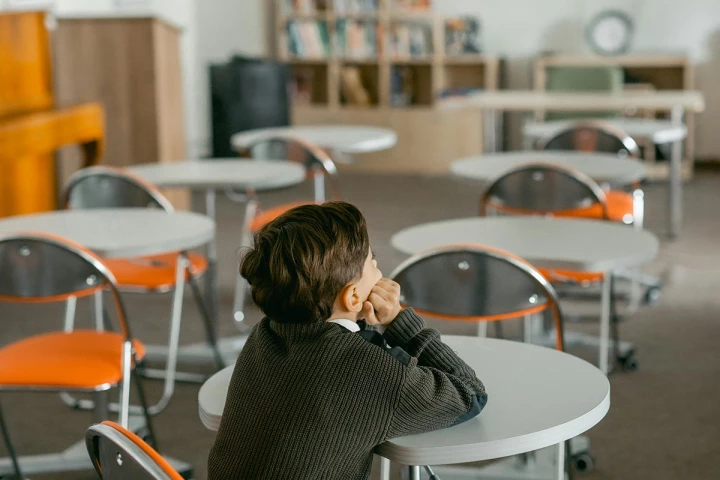 A new study has revealed that kids who face exclusionary discipline at school were at greater risk of developing anxiety and depression. The research highlights the need to rethink how young students who act out are treated by educators.
 -
 The search behaviors of nearly 500,000 people from 50 countries has shed new light on how mood, gender, education, culture and where we live influences how we sate our curiosity and seek knowledge. So we ask: Are you a hunter, busybody or a dancer?
 -
 Students with learning disabilities struggle often require additional, individualized support to fill educational gaps. A team of researchers and experts have found that a cute little robot may help children with learning disabilities stay focused.
 -
 Good news for those who like racing through audiobooks. A study has found learning is not negatively effected when students watch recorded lectures a faster playback speeds. However, comprehension did suffer when playback reached 2.5 times normal speed.
 -
 A new study suggests handwriting on paper leads to greater brain activity and memory retention than using a stylus on a tablet. The researchers hypothesize the spatial details of writing on paper may explain why it enhances the encoding of information.
 -
 Research analyzing brainwave patterns in both children and young adults while they wrote by hand and typed on a keyboard reveals distinct brain activity between the activities, suggesting learning may be more effective when accompanied by handwriting.
 -
 A new study offers one of the first investigations into how effective school closures are in slowing the spread of infectious disease outbreaks. The study also asks when, and how, schools can reopen considering this pandemic may last a year or two.
 -
 Scientists have understood for several years how linking learning to specific odor cues can enhance memory if the same smells are then presented during a specific sleep phase. New researcn has now verified the method in a cohort of school students.
 -
 More than 80 percent of people from the Netherlands, Denmark and Sweden say they can hold a conversation in English. But that falls to below 60 percent in nearby Germany. What could account for the disparity? TV subtitles, apparently.
 -
 The earlier the better has been the general consensus in regards to when a child can best learn a second language, but a new study of over half a million people has found children have the ability to grasp a new language at later ages than previously thought.
 -
 Ever since Henri Becquerel noticed that certain minerals blurred photograph plates, radiation has fascinated and frightened the public. To clear away the fog in the cloud chamber, New Atlas looks at the truth about radiation in our everyday lives.
 -
 A new teaching tool adds an innovative twist to the traditional chemistry model kit. Happy Atoms combines augmented reality with a physical product to educate students about the wonderful world of molecules.
Load More