
Deakin University
-
 When you're checking the freshness of a piece of fish that you plan on eating, you want results right away. That's where a new microneedle-based sensor comes in, as it delivers a yay or nay in less than two minutes.
 -
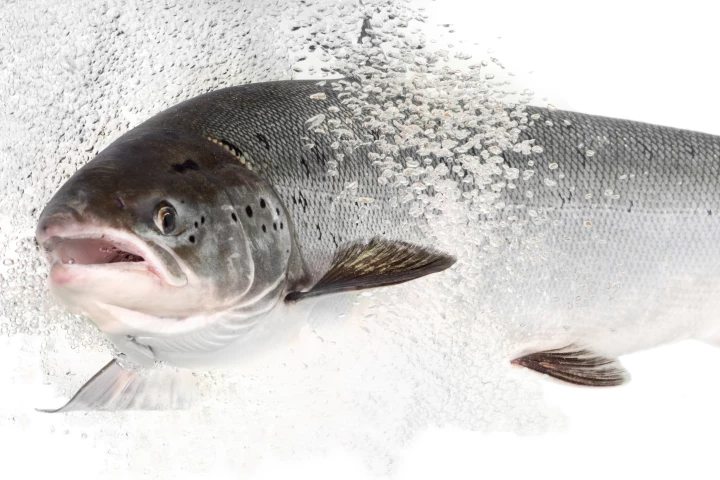 A benzodiazepine seeping into waterways is causing young Atlantic salmon to behave strangely, with fish in the wild migrating more rapidly and taking more risks on their journey from river to ocean. It even seems to be messing up their social lives.
 -
 Human civilization wouldn’t be where it is today if we hadn’t domesticated animals. Now researchers have discovered the first example of an animal domesticating another animal, with a fish species found to recruit shrimp to tend their algae farms.
 -
 Researchers at Australia's Deakin University say they've managed to use common industrial polymers to create solid electrolytes, opening the door to double-density solid state lithium batteries that won't explode or catch fire if they overheat.
 -
 When a cotton gin is used to separate cotton fibers from their seeds, a lot of lint is produced as a waste product. Currently, much of that cotton lint is just burned or put in landfills. Thanks to recent research out of Australia, however, it may soon be converted into biodegradable plastic.
 -
 Although glass is thought of as being eco-friendly because it's recyclable, the fact is that a lot of it doesn't get recycled. Now, however, scientists are suggesting that glass waste could be used to make concrete that's stronger and cheaper.
 -
 It’s currently believed that Aboriginal ancestors made their way to Australia as long as 65,000 years ago, but new evidence may push the timeline back much further. If the Moyjil site does turn out to be human-made, it suggests that people have been living in Australia for as long as 120,000 years.
 -
 Scientists have developed a method that reduces discarded denim to the building blocks for artificial cartilage, something that, with further development, could become an advanced tool for performing joint reconstructions in humans.
 -
 When it comes to the taste of foods, most of us assume that everything we eat is either sweet, sour, bitter, salty or umami. According to a new study, however, carbohydrates have their own unique taste. What's more, people who are particularly able to sense it are more likely to put on weight.
 -
 A new system called HeroSurg, developed by researchers at Deakin and Harvard Universities, is set to increase what surgeons can achieve via robotic surgery, using a haptic feedback system to provide a sense of touch.
 -
 Jellyfish blooms can seriously affect commercial fishing ventures and even cause the shut down of power stations when they form into giant "blooms" in the sea. Researchers at Deakin University in Victoria, Australia, might be on the way to a solution.
 -
 Scientists are working at altering eggs, so that they can create chickens which will proceed to lay hypoallergenic eggs.