
Dartmouth College
-
 Scientists have made history with a device that successfully eavesdrops on the neuronal chatter between the brain and the gut, furthering our understanding of its intrinsic interconnectedness – and how it drives health and disease throughout the body.
 -
 Love them or hate them, chatbots are here to stay. And while an increasing number of people have been turning to bots like Claude and ChatGPT for help, there's only anecdotal evidence as to their mental health usefulness. That is, until now.
 -
 Imagine waking up one day and seeing every face distorted into demonic proportions. That’s reality for patients with a rare condition called prosopometamorphopsia (PMO), and a unique case study has now given us a glimpse through their eyes.
 -
 MoodCapture will use your smartphone camera as you unlock the screen to assess facial expressions and backgrounds for depression severity. While the app is still in development, the team says it represents a breakthrough in personal diagnostic medicine.
 -
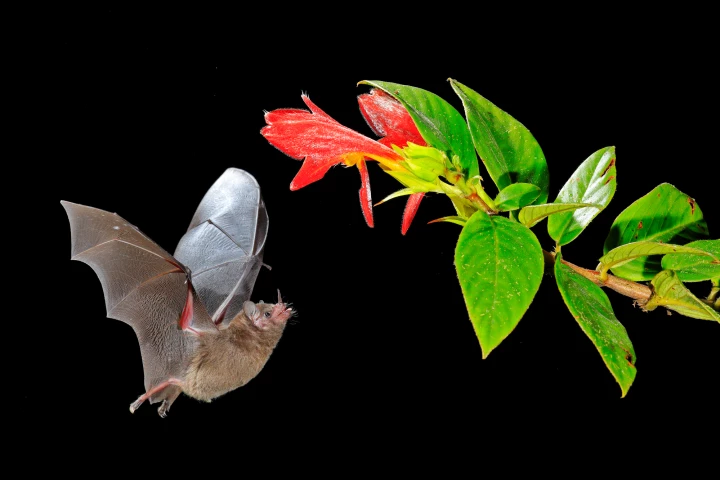 Using high-speed infrared cameras, researchers have discovered that the whiskers on long-tongued bats help them expertly extract nectar from flowers, sometimes as quickly as a half-second. The finding could help inform conservation efforts.
 -
 New research has approached the relationship between exercise and brain health with a long-term view, tapping into a year’s worth of Fitbit data to gauge the impacts of different types of physical activity, and turned up some interesting results.
 -
 Archaeologists have discovered one of the oldest examples of alcohol consumption. Ancient pots dating back 9,000 years have been found to contain traces of an early form of beer, which seems to have been used as part of a ritual honoring the dead.
 -
 Imagine if your tablecloth could alert you to the whereabouts of misplaced items, or track your diet? Those things and more may soon be possible, thanks to a new "smart" fabric being developed at New Hampshire's Dartmouth College.
 -
 How cancer develops is a complex puzzle, involving untold moving parts and chemical reactions. Now, scientists have found how two of these pieces work together to prevent cancer forming, which could unlock new types of cancer treatments.
 -
 An ever-increasing number of research groups are developing tiny robots, capable of performing targeted drug-delivery inside the body. One of the latest such devices incorporates a flapping whale-flukes-like tail, along with wings that fold up or down as needed.
 -
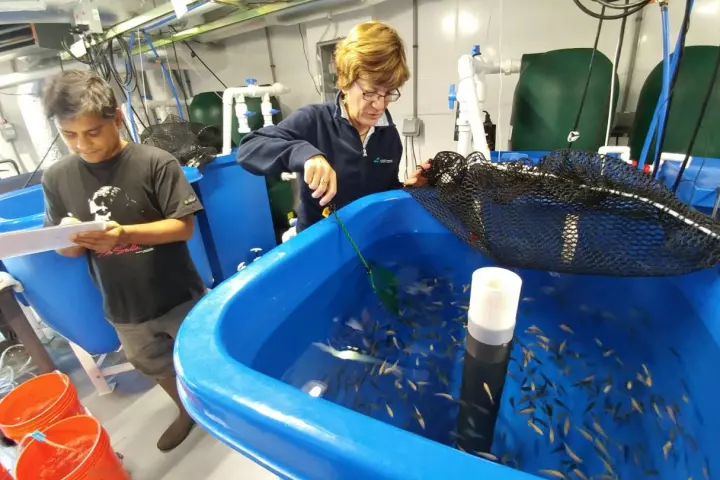 Even though tilapia may be raised on farms, the food that they eat still contains ecologically-important fish that are caught in the ocean, depleting wild stocks. That's why Dartmouth College scientists are now looking at replacing the fishmeal in that food with existing algae meal.
 -
 Researchers at Dartmouth College have developed a handheld "wand" optical tracking system which it says makes back surgery faster, safer and cheaper. Described as "a Google Maps for the body," the system provides real-time 3-dimensional tracking to help guide the surgeon as they operate.
Load More