
City University of Hong Kong
-
 The Disney-esque hues on bluespotted ribbontail rays come from a unique arrangement of nanostructures, say researchers. The findings, along with those gleaned from studying blue sharks, could help lead to new chemical-free color techniques.
 -
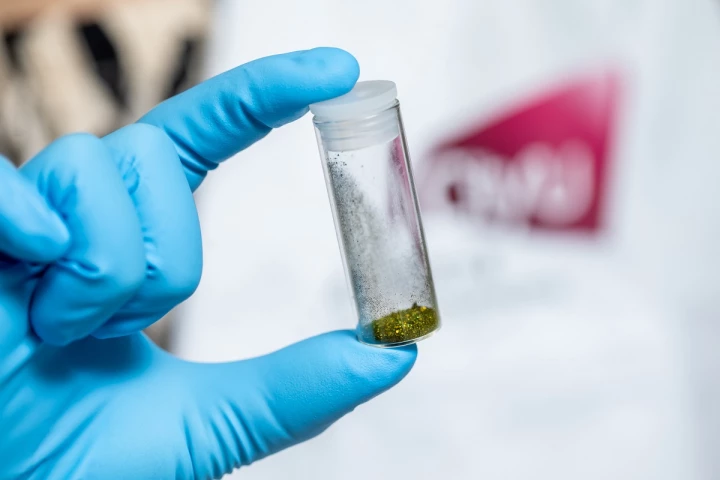 When fighting cancer, chemotherapy is still a bit of a blunt instrument. By combining it with soundwaves, however, researchers have found a way to turn it into more of a scalpel than a club, sparing damage to nearby tissue and the body as a whole.
 -
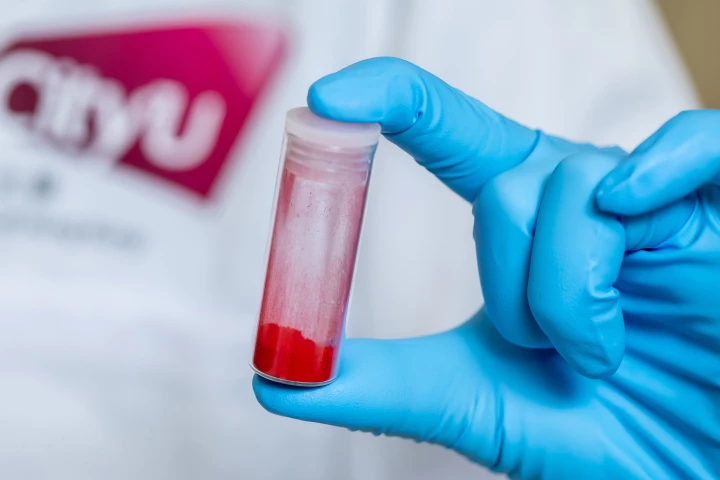 A novel platinum-enhanced, light-activated compound kills cancer cells in a unique way without requiring oxygen, overcoming a limitation with existing light-based cancer therapies. It paves the way for the next generation of anti-cancer drugs.
 -
 When someone has a problematic skin condition, the affected skin is typically either stiffer or softer than normal. A new sensor has been shown to detect such differences, potentially allowing doctors to diagnose problems more quickly and easily.
 -
 Nobody likes needles, but they’re a necessary evil. Microneedle patches are emerging as a painless alternative, and now researchers in Hong Kong have developed a new version of the tech that’s made of ice, for easier manufacture and use.
 -
 Last year gravitational waves were detected from a massive black hole collision. But now astrophysicists propose a new explanation: a collision of two boson stars – hypothetical, invisible objects that could help untangle the mystery of dark matter.
 -
 When natural ocean shoreline is replaced by an artificial seawall, a lot of precious intertidal habitat is lost. A new study, however, indicates that by covering those walls with specially designed tiles, a substitute habitat can be created.
 -
 An ever-increasing number of research groups are developing tiny robots, capable of performing targeted drug-delivery inside the body. One of the latest such devices incorporates a flapping whale-flukes-like tail, along with wings that fold up or down as needed.
 -
 A researcher at City University of Hong Kong (CityU) has developed a self-cleaning coating made up of nanoparticles that removes stains from cashmere by exposing the garment to light.