
Cancer Tissue
-
 A bacterium from the gut of Japanese tree frogs has "exhibited remarkably potent" tumor-killing abilities when administered intravenously, outperforming current standard therapies and paving the way for an entirely new approach to treating cancer.
 -
 When fighting cancer, chemotherapy is still a bit of a blunt instrument. By combining it with soundwaves, however, researchers have found a way to turn it into more of a scalpel than a club, sparing damage to nearby tissue and the body as a whole.
 -
 Three new prostate cancer biomarkers have been identified that improve the visibility of cancer cells used by pathologists to grade the disease’s severity, which could help determine which patients require urgent treatment and those who don’t.
 -
 Scientists at Cambridge have identified a protein that plays a key role in cancer metastasis, which not only hints at a new potential treatment but reveals for the first time that this process isn’t unique to cancer, as previously thought.
 -
 A compelling study is suggesting all cancer cells may have the capacity to enter states of dormancy as a survival mechanism to avoid destruction from chemotherapy. And the mechanism these cells deploy notably resembles one used by hibernating animals.
 -
 Dormant tumor cells can sit quietly for years but exactly what reactivates these sleeping cancer cells is unknown. A new study is offering a novel hypothesis, suggesting stress hormones can trigger a chain of events that reawaken these dormant cells.
 -
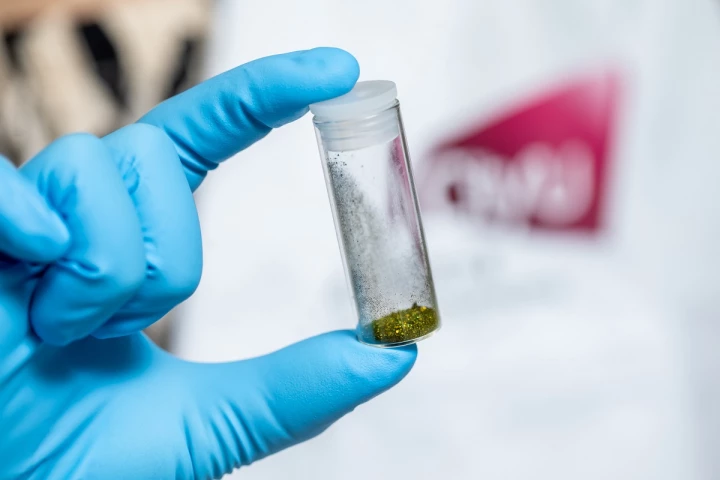
 Gold has shown promise in fighting cancer in many studies, and now researchers have found a way to grow gold nanoparticles inside cancer cells within 30 minutes. From there, the gold can help with imaging and even be heated up to kill the tumors.
 -
 In a move that could revolutionize the development of new cancer treatments, researchers from the University of Newcastle and the Hunter Medical Research Institute (HMRI) have created the world's first virtual platform to host 3D copies of human cancer tissues.
 -
 Billed as "a pill on a string," the Cytosponge is designed to scrape off cells from the length of the oesophagus as it is yanked out after swallowing, offering up a larger sample for inspection for signs of cancer.
 -
 Scientists from the University of Toronto have conducted research into how breast tissue regeneration is regulated, working with the mammary glands of genetically modified mice. The findings suggest that development of the tissue could be manipulated to avoid the effects of aging.