
Bubble
-
 The Sun is the biggest fish in our small pond of a solar system, but it’s a mere minnow compared to the whales that dwell out in the cosmos. New telescope images show a gigantic star casually blowing bubbles 75 times bigger than our Sun.
 -
 The tiny bubbles or effervescence are a big part of the attraction of sipping a glass of champagne but, over time, it loses its fizz. A new study has found that size is everything when it comes to keeping your champagne bubbly for longer.
 -
 Bubbles aren’t known for their long lifespans, usually only giving a few seconds of childlike joy before they pop. A team of French scientists has developed a new way to make bubbles last longer, with the record holder surviving for well over a year.
 -
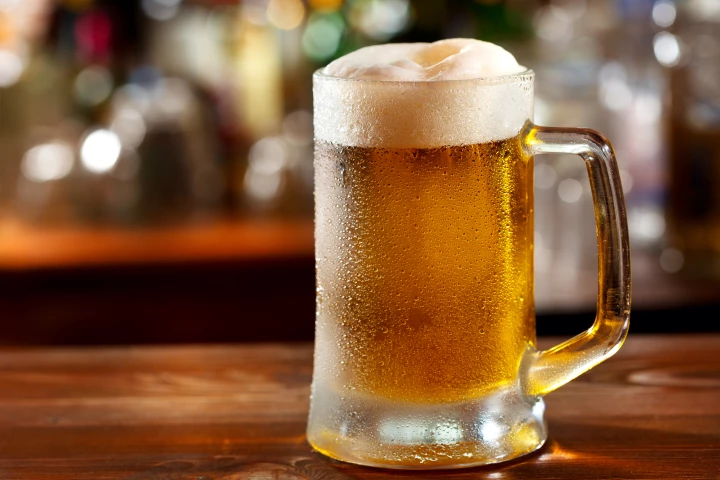 Have you ever wondered how many bubbles there are in your Friday knockoff beer? No? Well scientists apparently have, and in a new study they’ve finally answered the question nobody’s been asking, with a vague “a lot, we guess.”
 -
 Blood clots can be dangerous, and blood thinning drugs aren’t always enough to clear them out. Now, researchers at North Carolina State University have demonstrated an ultrasonic “drill” that can break clots apart with the help of tiny nanodroplets.
 -
 Due to the ongoing worldwide decline in bee populations, farmers are increasingly looking to alternative methods of pollinating fruit-bearing plants. As it turns out, the use of soap bubbles may succeed where things like drones alone have failed.
 -
 Researchers at the University of New South Wales (UNSW) Canberra have tested a new method for sterilizing water using hot bubbles of carbon dioxide, which they've found to be both effective and efficient.
 -
 Get enough bacteria in one place and they settle down into longer-term colonies, building sticky biofilms that protect them from our best cleaning efforts. But now, researchers from the University of Illinois have designed a technique that uses microbubbles as a scrubber to blast biofilms away.
 -
 Researchers at CNBP have developed a new targeted treatment for cancer. Chemotherapy drugs are wrapped in “nano-bubbles” called liposomes, which are then injected into the desired part of the body and made to release their payload on demand, by applying X-ray radiation.
 -
 If there's one thing that sci-fi movies love, it's the idea of 3D displays that people can view from different angles. Well, researchers have created a system in which lasers are used to create bubbles, which in turn make up 3D images within a column of liquid.
 -
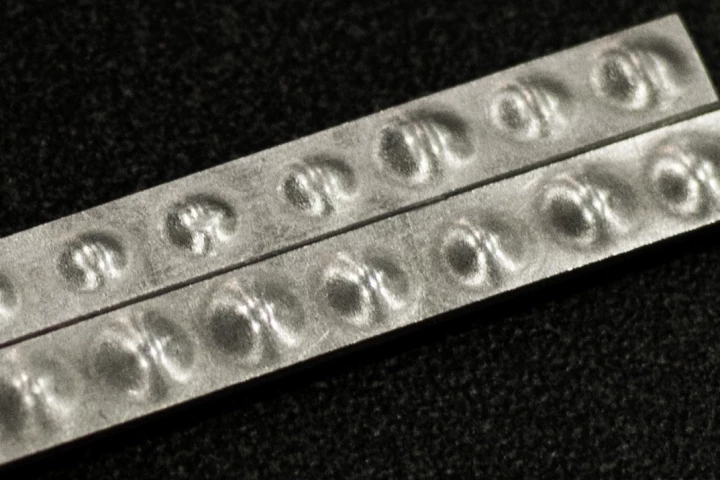 Newly-developed metallic bubble wrap is reportedly lighter and stronger than regular sheet metal.