
Assistive Technologies
-
 There are many approaches you can take to stop smoking, from nicotine replacement therapy to good ol' quitting cold turkey. None of these are easy, but using a smoking cessation app can greatly increase your chances of breaking the habit.
 -
 Love them or hate them, chatbots are here to stay. And while an increasing number of people have been turning to bots like Claude and ChatGPT for help, there's only anecdotal evidence as to their mental health usefulness. That is, until now.
 -
 Folks weakened by osteoarthritis or myositis may need help with everyday tasks like watering plants, filling the kettle or peeling potatoes. The Carbonhand robo-glove is designed to support such activities, and is now available to everyone in the US.
 -
 As their sense of balance deteriorates, seniors are at an increased risk of potentially debilitating falls. A new wearable assistive robot could help, by detecting and preventing such falls before they actually occur.
 -
 Among other things, people with Parkinson's disease suffer from a slowness of movement and a stiffness of the muscles. A new wearable device may help alleviate those symptoms, by buzzing the user in the chest.
 -
 The James Dyson Award is an international competition to encourage students to get creative to solve the world's pressing problems. The national finalists have been announced for 2021, showcasing ideas that help people and the environment.
 -
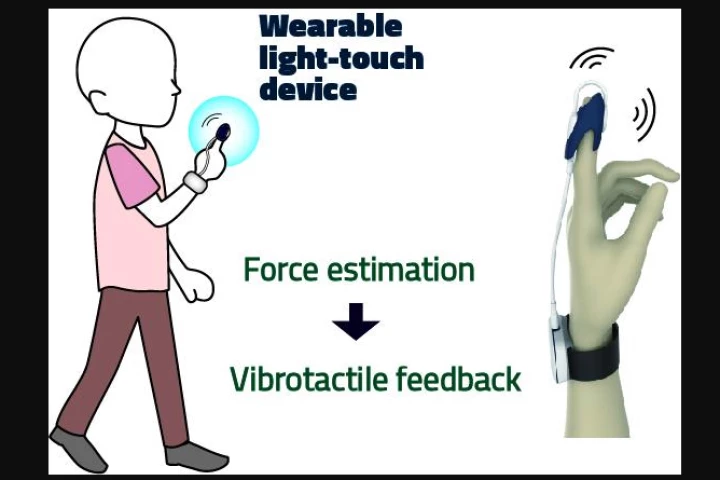 As a senior's sense of balance deteriorates, their chances of experiencing a serious fall increase accordingly. Help may be on the way, however, in the form of a system that buzzes the user's fingertip in order to keep them upright.
 -
 When someone has suffered a stroke, they may have difficulty regaining a proper walking gait. An experimental new device could help, though, by springing up their heel with each step.
 -
 If someone is lacking a hand, a prosthetic appendage can help them perform basic daily tasks. However, what if they've still got both hands, but one of them is paralyzed? Well, that's where NeoMano is designed to come in.
 -
 The International Space Station (ISS) is about to get a strange new crew member. The Crew Interactive Mobile Companion – or CIMON for short – is described by Airbus as a kind of flying brain, and will assist with experiments during the upcoming Horizons mission.
 -
 MIT's "supernumerary robotic fingers" extend from either side of the user's dominant hand, and are attached to a device that's worn around the wrist. The idea behind them is that (among other things) they could allow users to perform tasks that usually require two hands, using only one.