
Air purifying
-
 A new device has been shown to protect wearers from airborne viruses while leaving their face mask-free. It blocks microbes via a curtain of air which has itself been pretreated to kill any viruses present within it.
 -
 Back in the 1970s and 80s, millions of wooden buildings were treated with preservatives that were later found to be neurotoxic and carcinogenic. A special process is now able to neutralize those chemicals, saving the structures from being gutted.
 -
 We all know that trees help clean the air in cities, but which trees do so best? According to new research conducted in Sweden, a mixture of deciduous and coniferous trees will give you the most bang for your buck.
 -
 It has long been known that plants can help mitigate air pollution in urban environments. New research reinforces such findings, showing that "tredges" planted around schoolyards can help protect children from traffic-derived airborne particles.
 -
 LG has updated its PuriCare Wearable Air Purifier mask by incorporating a microphone and speaker to make it easier to talk. The new device will appear first in Thailand in August with other parts of the world to follow.
 -
 New research is suggesting the claim that house plants improve indoor air quality is wrong. The research concludes it would take hundreds of plants in a small space to come close to the air-purifying effects of simply opening a couple of windows.
 -
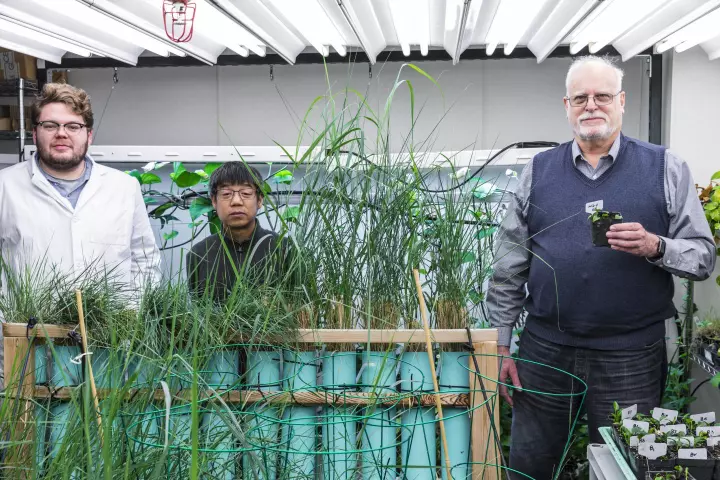 While plants do help clean the air within a home, it is estimated that over 20 per room would be required to make a difference. That likely wouldn't be the case with a new genetically-modified ivy, however, which has proven to be highly effective at removing chloroform and benzene from the air.
 -
 Two new products from Wynd are suggested to be the ultimate in home air purification – Halo, an app-controlled sensor that can monitor specific pollutants in the air, and the Home Purifier, a massive air cleaner that can quickly clear contaminants from large spaces.
 -
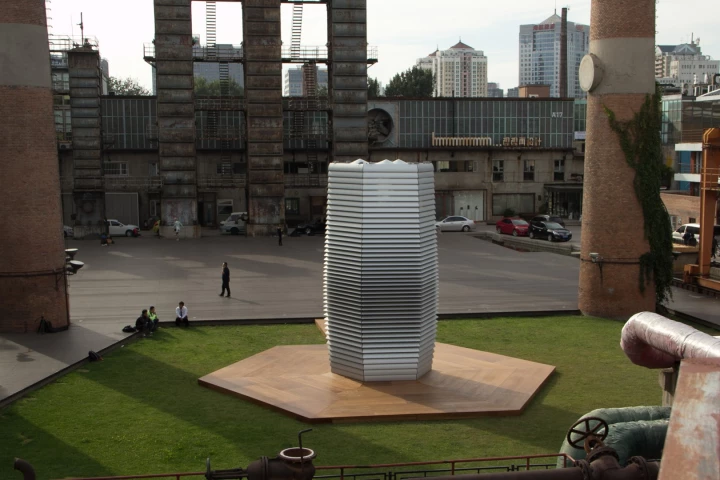 First installed in Rotterdam and Amsterdam, and then moving onto Beijing in 2016, the pollution-sucking Smog Free Tower is now headed for a park in Poland. Part of a wider project aimed to highlight the need for cleaner air in urban centers, the tower will be put to work in Kraków.
 -
 Although only at the proof-of-concept stage right now, scientists in Belgium have come up with a way of capturing polluted air and converting it into power in the form of hydrogen gas, a technology that could prove a two-pronged environmental panacea.
 -
 Peanut shells are generally considered to be a worthless agricultural byproduct. That could be about to change, however, as scientists have developed an air-purifying filter that utilizes the shells.