
Aerodynamics
-
 Capable of swimming at speeds of up to 74 km/h (46 mph), the shortfin mako is the world's fastest species of shark. Scientists now have a new understanding of how it's able to reach such speeds, and they believe that their findings could be applied to improving human technology.
 -
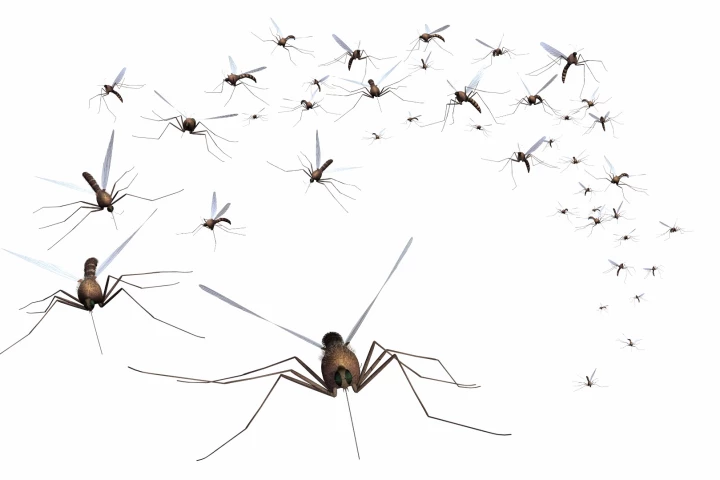 The aerodynamics of mosquito flight have long been a mystery to scientists. Now high speed cameras have revealed their unusual flight behaviors, uncovering two new aerodynamic mechanisms unseen in any other insects.
 -
 Researchers at MIT have developed a smart curved surface that can morph at will to reduce drag, generating a series of small, evenly spaced dimples that make it resemble the outside of a golf ball.
 -
 Under the guise of World Cup fever, scientists across the globe are seizing the opportunity to examine the aerodynamic properties of what will in all likelihood be the most talked-about object on a global scale over the coming weeks, the 2014 World Cup match ball.
 -
 Flying snakes flatten out their bodies after launching themselves from trees, proceeding to glide through the air. Recently, scientists figured out why that technique works as well as it does. Their findings could have some major applications for us humans.
 -
 Professor J.C. Chiao and his postdoc Dr. Smitha Rao of the University of Texas at Arlington have developed a MEMS-based nickel alloy windmill so small that 10 could be mounted on a single grain of rice. They are aimed at very-small-scale energy harvesting applications.
 -
 The Eco-Racing team's entry in the 2013 World Solar Challenge features moving solar panels that track the sun's trajectory to give the car an estimated extra 20 percent more power.
 -
 Blue Origin recently conducted wind tunnel tests on a model of its spacecraft, which may eventually take the place of the space shuttle.
 -
 The veritable fly-on-the-wall spying device, deployable in the meeting rooms of enemy leaders, may be one step closer to realization thanks to a new breakthrough in our understanding of how flapping wings work.
 -
 The bumps on the humpback whale's flippers have inspired a breakthrough in aerodynamic design that seems likely to increase the efficiency of wind turbines, fans, wings and airfoils.