
Aalto University
-
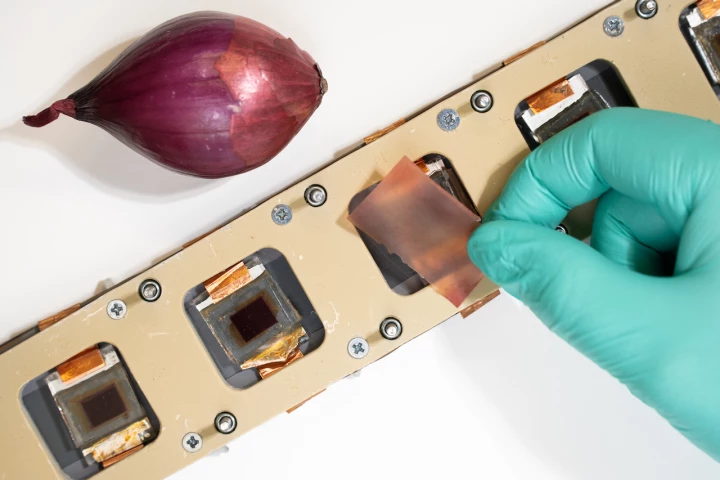 Solar cells are subjected to a lot of harmful ultraviolet light, as they're typically placed for maximum sunlight exposure. A new eco-friendly coating could help protect them from those UV rays, and its active ingredient is extracted from onion skin.
 -
 Old, discarded wind turbine blades don't biodegrade. They do, however, float if sealed. Finnish startup Reverlast is capitalizing on that fact, by taking end-of-use blades and converting them into stylish floating docks.
 -
 Researchers have mapped where and how strongly we experience different kinds of love, covering everything from romantic love to love for strangers. The findings shed light on how context and the object of love affects our subjective feelings of it.
 -
 Using a newly developed VR game, researchers believe they have created a tool that can objectively diagnose ADHD. The system tracks a user's eye movements and has also been proposed as a way of monitoring the efficacy of certain therapeutic interventions.
 -
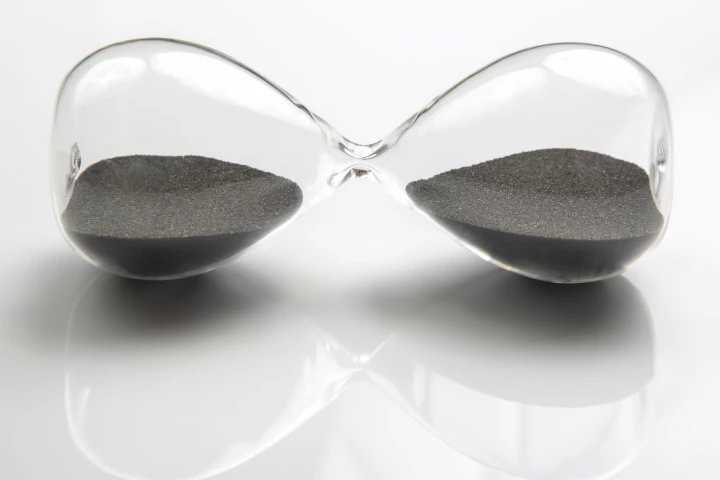 Time crystals are strange phases of matter that appear to break time-translation symmetry. Now scientists have observed two time crystals interacting for the first time, which could be a step towards practical applications like quantum computing.
 -
 For many cavity-prone people, tooth-brushing often just isn't enough. It was with such folks in mind that a new mouthwash-based system was recently developed, which reportedly uses light to kill problematic bacteria.
 -
 Quantum entanglement is the idea that two distant atoms can become so entwined that changes to one can instantly affect the other. Now scientists have managed to demonstrate it on a much larger scale, which is beginning to cross over into our everyday world.
 -
 Ball lightning has been consistently reported for centuries, and yet we still know very little about it. Now, scientists have created quantum ball lightning by knotting together the magnetic spins of atoms, which could help unlock the secrets of the phenomenon, or make more stable fusion reactors.
 -
 When it comes to clothing, being both environmentally-conscious and fashionable can be tricky. Old clothes can be given away, of course, but they still ultimately end up in the landfill. That's why scientists have devised a method of essentially "melting down" old clothes to make new material.
 -
 Researchers at Aalto University have come up with an inexpensive inkjet-printed solar cell that can be made into text or images. Designed to be used with low-power devices, it has already shown performance and durability comparable to that of existing organic dye solar cells.