
3D
-
 The openVertebrate project is a significant milestone for natural history museums, researchers, educators, students, and the public, creating the first digital library to offer free access to stunning 3D images of over 13,000 vertebrates.
 -
 Scientists at Duke University have developed an incredibly powerful new camera that combines dozens of lenses to capture images and video at resolutions of thousands of megapixels, in three dimensions.
 -
 Researchers have developed a platform that allows wireless ingestible devices to be tracked in 3D as they travel through the gut, which may provide a cheaper, less invasive way of investigating disorders that affect gastric motility.
 -
 Scientists at Duke University have created a real-time video that captures the frantic movements of a single virus as it tries to infect a cell. The video shows a part of the process that’s normally hard to see.
 -
 An advanced microscopy technique has snapped “super-resolution” 3D images inside the brains of living mice. The method is so precise it imaged the tiny twigs on the branches of neurons, and could watch how they changed over the course of a few days.
 -
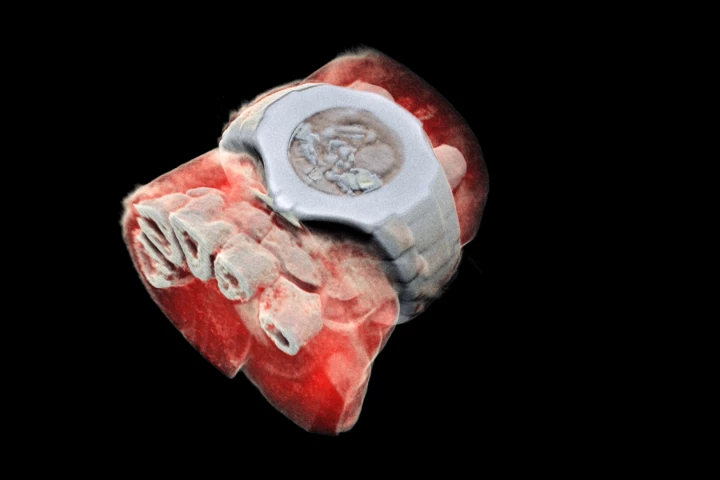 Medical X-ray scans have long been stuck in the black-and-white era. Now Mars Bioimaging has developed a bioimaging scanner that can produce full color, three dimensional images of bones, lipids, and soft tissue, thanks to a sensor chip developed at CERN for use in the Large Hadron Collider.
 -
 In a move that could revolutionize the development of new cancer treatments, researchers from the University of Newcastle and the Hunter Medical Research Institute (HMRI) have created the world's first virtual platform to host 3D copies of human cancer tissues.
 -
 By putting tiny 3D glasses on the bugs, researchers at Newcastle University have found that praying mantises possess a unique, previously unknown type of 3D vision that's based on movement.
 -
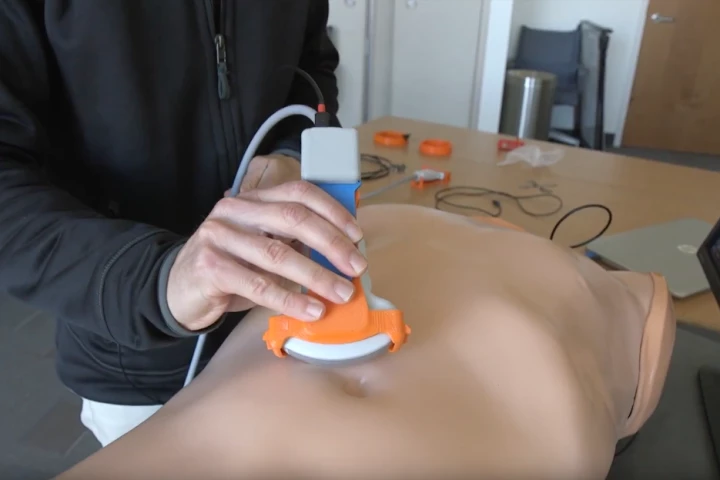 Emergency physician Joshua Broder, with the help of a team from Duke University and Stanford University, has created a clip on device that contains a simple $10 microchip that can turn 2D ultrasound images into more detailed 3D versions that rival the quality of imaging from MRI or CT scans.
 -
 Next time you’re untangling your earbuds, remember that knots may have played a crucial part in kickstarting our universe, and without them we wouldn’t live in 3D. That’s the strange story pitched by physicists in a new paper, to help plug a few plot holes in the origin story of the universe.
 -
 Although most holograms are still pretty tiny, a team from Australia’s RMIT and the Beijing Institute of Technology (BIT) have created the world’s thinnest holographic display, encoding a 3D image onto a material just 25 nanometers thick.
 -
 If there's one thing that sci-fi movies love, it's the idea of 3D displays that people can view from different angles. Well, researchers have created a system in which lasers are used to create bubbles, which in turn make up 3D images within a column of liquid.
Load More