
Wireless
-
 Researchers at Northwestern University have developed a non-invasive wearable electronic ear that's designed to wirelessly monitor what's going on inside a patient's body in real time, and found it to perform with "clinical-grade accuracy."
 -
 Engineers have developed a fully integrated wearable ultrasound device that monitors deep tissues in real-time for up to 12 hours. What's more, it's wireless, meaning that patients can stay mobile while doctors track their vital signs remotely.
 -
 Researchers have developed a platform that allows wireless ingestible devices to be tracked in 3D as they travel through the gut, which may provide a cheaper, less invasive way of investigating disorders that affect gastric motility.
 -
 Transmitting data from medical implants in the body can be tricky, but a new technique can essentially write data to ions in human tissue, where it can then be read from a receiver outside the body at high transmission speeds.
 -
 There is a large disparity between the survival rates of prematurely born babies in the developing world and those in the developed world, but scientists at Northwestern University have developed of new kind of wireless sensor to help bridge the gap.
 -
 A new device, dubbed ReMix, could make it easier to track the location of objects inside the human body. The technology does for objects in the body what GPS does for cars: tells the user where they are. Hence MIT calls this a "GPS for inside your body."
 -
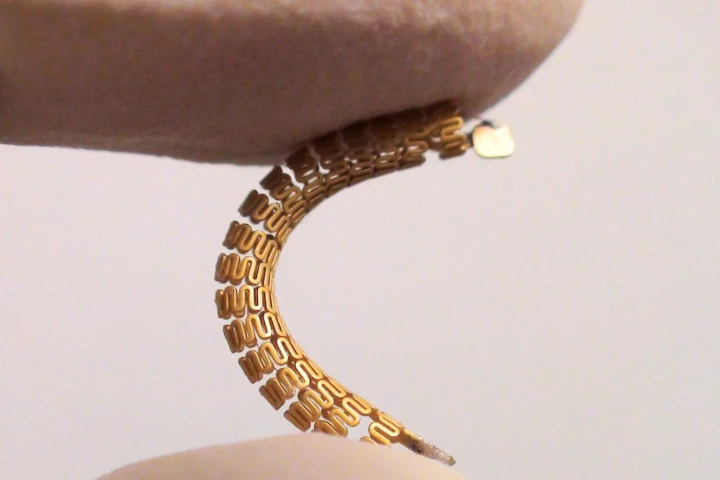 Researchers at the University of British Columbia (UBC) have developed a surgery-ready smart stent that keeps watch for the early warning signs of narrowing arteries, and sends out a wireless signal to alert the patient and doctors.
 -
 Traditional batteries are large, contain toxic chemicals, and need to be periodically replaced, meaning they're not ideal for powering medical implants. But new research from MIT and Brigham and Women’s Hospital has demonstrated a new way to power implanted devices using radio waves.
 -
 There are an ever-increasing number of wireless mobile devices transmitting and receiving data, even though there's only a limited amount of bandwidth available to them. In order to keep their signals from jamming one another, scientists have replicated a system used by a cave fish.
 -
 Researchers have developed a system that bypasses spinal injury by allowing the motor cortex to communicate wirelessly with the lower spine, and demonstrated that it can restore almost normal walking patterns in partially paralyzed macaques.
 -
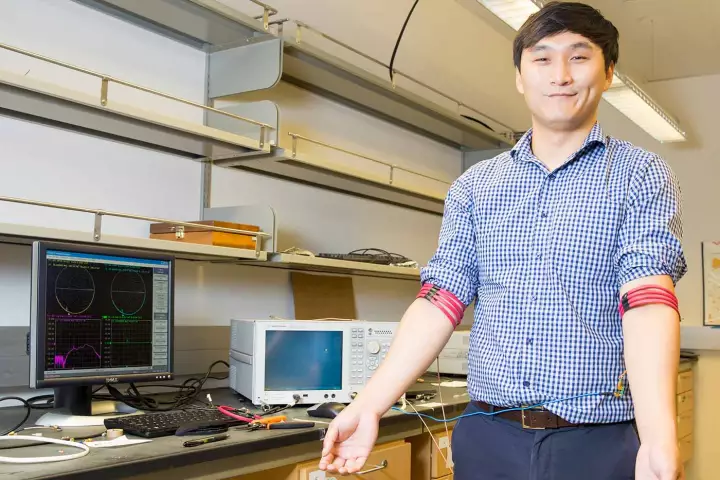 Engineers have come up with a different type of wireless communication that sends ultra low-power magnetic fields through the human body. This makes it extraordinarily more energy efficient and secure from prying eyes than comparable wireless communication technologies.
 -
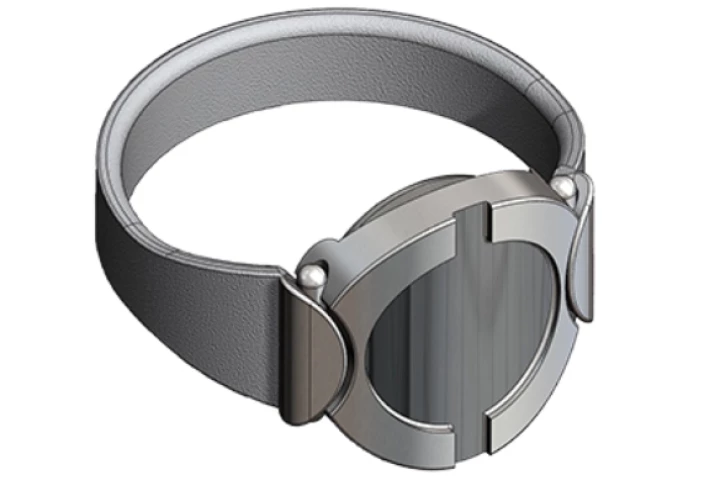 A new device has been developed to add extra ammunition to kicking the nicotine habit in the form of the SmartStop, an electronic wearable that takes nicotine replacement therapy (NRT) to a new level and adds behavioral support, thanks to the possibilities of digital, wireless technology.
Load More