
Whisky
-
 Omega-3 fatty acids sourced from wild-caught fish stocks are valued for their studied health benefits, but this has resulted in a reduction in fish stocks. A Scottish firm is working on a solution, in the form of omega-3s made from whisky waste.
 -
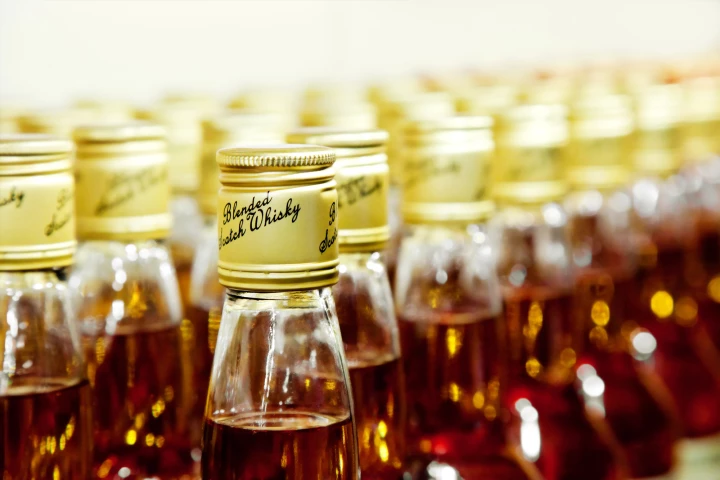 A team of scientists at the University of St Andrews has developed a laser spectroscopy technique that can determine the authenticity of expensive vintage whiskey without having to open the bottle to retrieve a sample for analysis.
 -
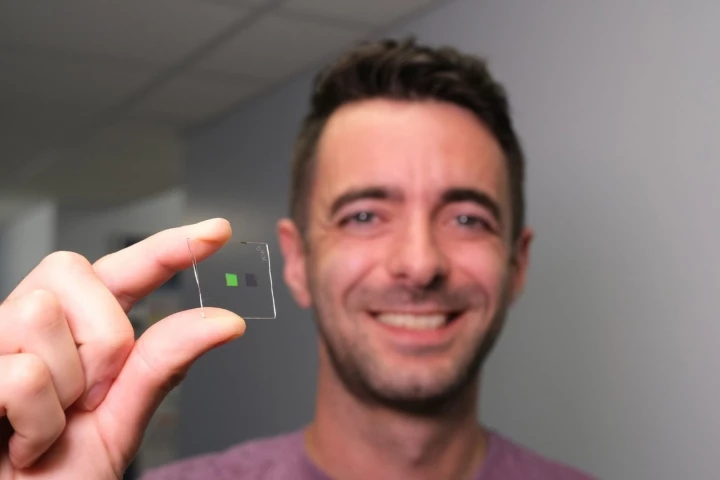 A tiny artificial tongue which can identify individual whiskies by taste has been invented by a team of Scottish engineers . The device could mean big things for drink makers wanting to ensure a consistent product, and protect their precious brands from counterfeiters at the same time.
 -
 For many people, adding anything to a single malt whisky is close to sacrilege, but adding a drop or two of water to lesser blends enhances the flavor. The question is, why? At Sweden's Linnaeus University, researchers have come up with an answer from a molecular perspective.
 -
 Different types of whiskies can be chemically very similar, to the point that standard tests sometimes can't tell them apart. With that in mind, researchers have developed what's being described as a synthetic tongue – it scientifically differentiates between whiskies via their "flavor."
 -
 In a move that Star Trek's Mister Scott would approve of, Scottish distiller Ballantine’s has developed a glass for sipping whisky in zero gravity. The cleverly conceived Space Glass might well be a more attractive proposition for astronauts than plastic bags and straws.
 -
 Scottish start-up Celtic Renewables, based in Edinburgh, has achieved proof of concept in producing biofuel and other useful products from the waste by-products of the country’s £4.3 billion (US$6.8 billion) whisky industry.