
wearable electronics
-
 Scientists have built an artificial neuron that’s so realistic it fires, learns, and responds to chemical signals just like the real thing – a breakthrough that could transform computing, medicine, and the way that tech merges with biology.
 -
 While many parents extol the virtues of breastfeeding, it can be hard to tell how much milk a breastfeeding infant is consuming. A new wearable device addresses that problem, using an electrical current to gauge milk intake in real time.
 -
 As the daylight hours shrink and temperatures drop, it's easy to spend more time indoors. But new research has shown that by self-monitoring time out in the sunshine – also linked to physical activity – can help treat seasonal mood disorder symptoms.
 -
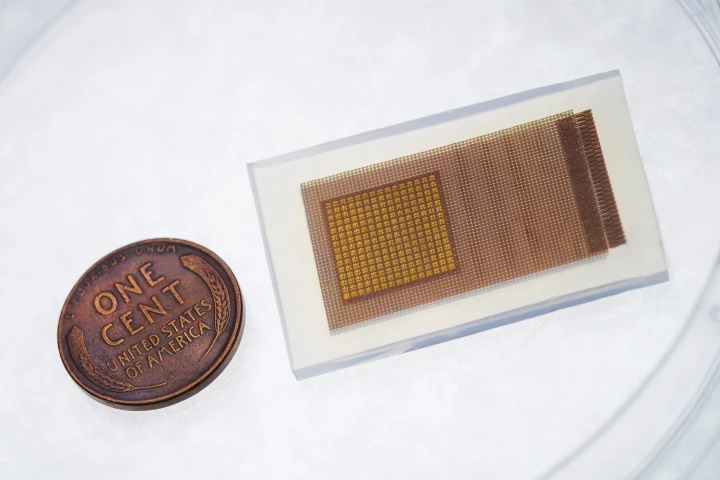 A wearable ultrasound patch could soon be saving lives, by monitoring the blood flow in hospital patients' brains. The device is only about the size of a postage stamp plus it works continuously, unlike traditional methods.
 -
 Soft robotic devices often need to sense both mechanical deformation and changes in temperature, requiring multiple integrated sensors. ChromoSense technology, however, combines both functions in one simple, robust, color-changing device.
 -
 Researchers at Northwestern University have developed a non-invasive wearable electronic ear that's designed to wirelessly monitor what's going on inside a patient's body in real time, and found it to perform with "clinical-grade accuracy."
 -
 When a respiratory patient's COPD flares up, the outcome can be highly debilitating – potentially even fatal. A new wearable known as the Sylvee is claimed to detect such exacerbations early, so they can be dealt with before it's too late.
 -
 People suffering from dementia not only get confused, they can also become highly anxious and even aggressive. In order to catch such behaviors before they escalate out of control, a British scientist has developed a pair of sensor-packin' socks.
 -
 Serving multiple useful purposes, brain-computer interfaces (BCIs) usually incorporate scalp-applied or even brain-implanted electrodes. A new less-invasive BCI, however, can simply be stuck in the patient's ear canal as needed.
 -
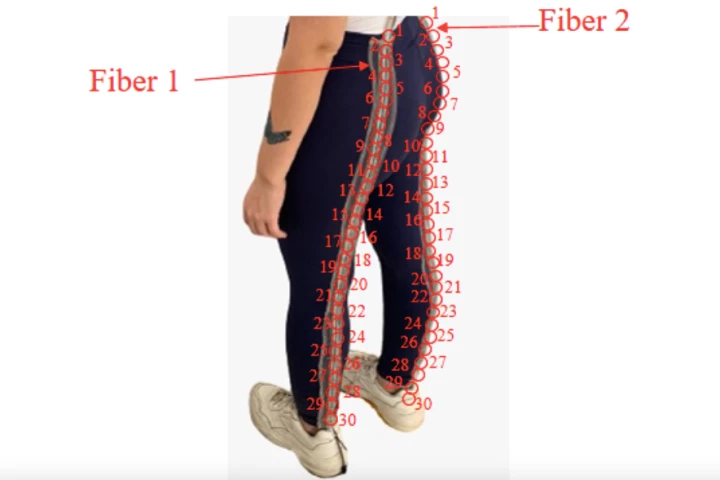 While it's often important for doctors to monitor a patient's physical activity throughout the day, placing cameras in their home is an obtrusive way of doing so. Scientists have now developed an alternative, in the form of activity-tracking pants.
 -
 Researchers have developed a wearable, noninvasive sensor that monitors for a biomarker of inflammation in the wearer’s sweat. They say the device could be used at home by people with chronic inflammatory diseases.
 -
 Researchers have developed a mobile, noninvasive, ultrathin, stretchable, battery-operated electronic tattoo that simultaneously measures the heart’s electrical and mechanical activity, offering a new way of diagnosing and monitoring heart disease.
Load More