
Wageningen University
-
 For the first time, scientists have identified ancient cannabis enzymes dating back millions of years – and discovered they were more efficient at producing the plant’s bioactive compounds like THC and CBD. The team then resurrected them in the lab.
 -
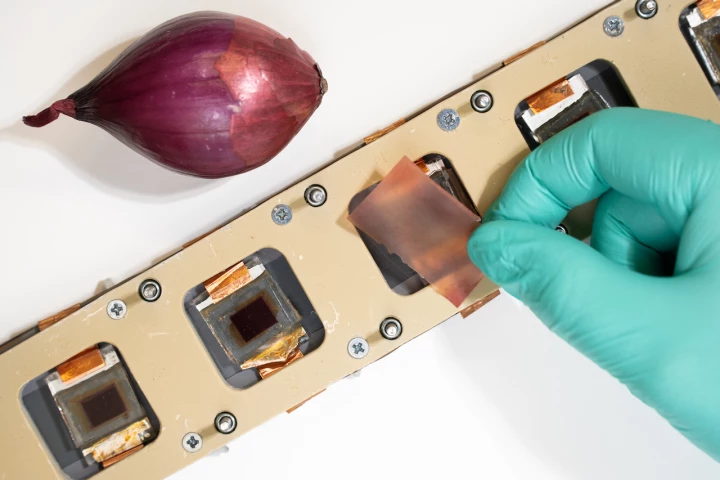 Solar cells are subjected to a lot of harmful ultraviolet light, as they're typically placed for maximum sunlight exposure. A new eco-friendly coating could help protect them from those UV rays, and its active ingredient is extracted from onion skin.
 -
 When most people think of duckweed, they likely picture a green film growing across the surface of a stinky, stagnant slough. The protein-rich plant may soon be on your plate, however, as it's been approved for human consumption in Europe.
 -
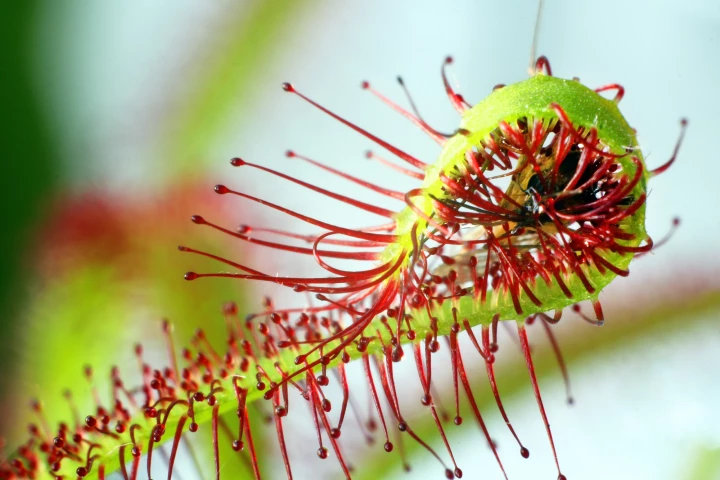 Inspired by a carnivorous plant, scientists have created a sticky spray that could kill pest insects as effectively as traditional toxic pesticides. And what's more, it's derived from plain ol' vegetable oil.
 -
 While it might run counter to conventional wisdom, if you are lactose intolerant, you might want to drink some milk every day to ward off diabetes. So says a new study that looked at a genetic variant involved in the effect.
 -
 Even though logging is prohibited in many of the world's forests, that doesn't stop some companies from logging in those areas anyways, then lying about the origins of the timber. Such groups may soon be foiled by the wood's chemical fingerprint.
 -
 Shipping fertilizer to colonies on Mars could be quite a hassle – it would be better if the colonists could grow crops using whatever's on hand. The continuation of an existing study now indicates that urine might in fact serve as a good fertilizer.
 -
 If humans are ever going to colonize Mars, we need to make sure we can grow food locally. Now a team from Wageningen University & Research has found that earthworms might soon need a name change: these creatures crucial for making soil fertile, can thrive and reproduce in simulated Martian soil.
 -
 Scientists from Wageningen University in the Netherlands previously tried growing food plants in simulations of both lunar and Martian soil. Although those tests proved unsuccessful, that wasn't the case the most recent time around.
 -
 A new Plant-Microbial Fuel Cell technology developed at Wageningen University & Research in The Netherlands generates electricity from the roots of living plants without affecting their growth.