
Video
-
 Thanks to advances in generative AI, seeing video of an event is no longer proof that it really happened. There could be new hope on the horizon, however, in the form of a system that watermarks videos using fluctuations in the on-location lighting.
 -
 We all know the equation – hydrogen plus oxygen equals water. But now scientists have captured molecular-scale video of that famous meeting in action, which could lead to a new way to generate large amounts of drinking water.
 -
 A new international study has revealed that the prevalence of image-based abuse, so-called ‘sextortion,’ among adult men and women is more common than was first thought, with a high degree of overlap between perpetrators and victims.
 -
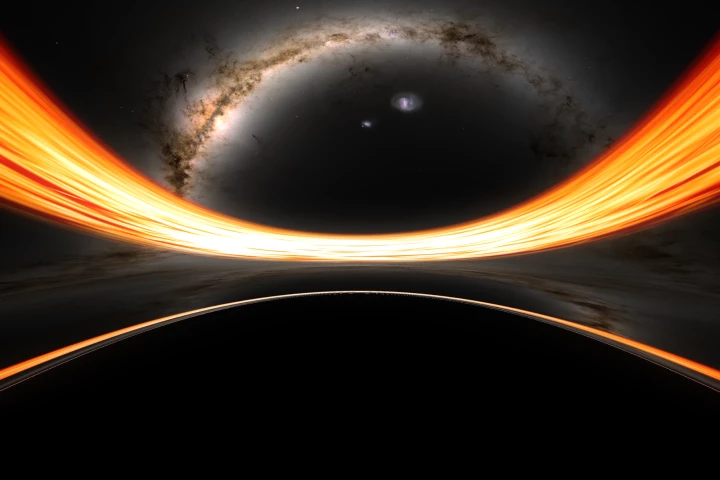 What would it look like to fall into a black hole? It’s a question basically everyone has pondered, and now NASA has finally given us a first-person view of the experience with scientifically-accurate visualizations produced by a supercomputer.
 -
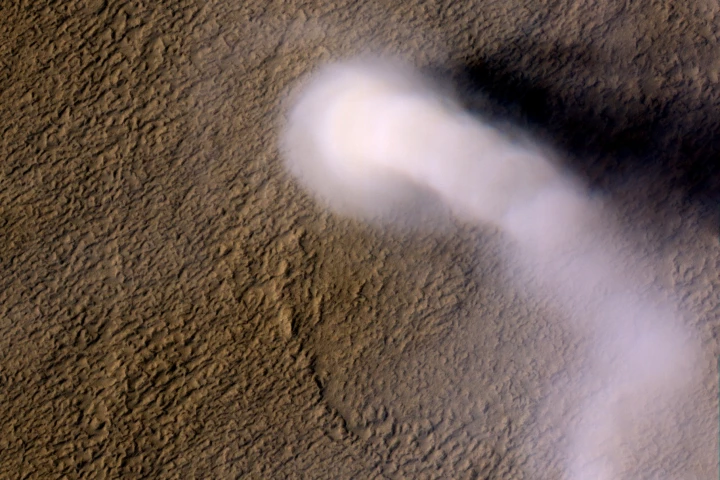 Dust devils are a common occurrence on Mars, but Perseverance has now captured one from up close for the first time. The NASA rover recorded video from right inside the dust devil, as well as the first audio of the phenomenon on the Red Planet.
 -
 The EctoLife Artificial Womb Facility envisages a controversial new way to be pregnant, with the baby growing in an idealized, but completely inhuman environment: transparent "growth pods" arranged by their hundreds in human baby farming operations.
 -
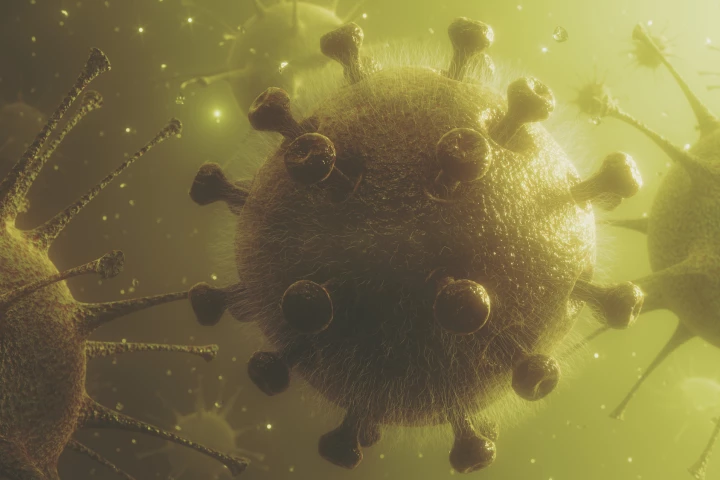 Scientists at Duke University have created a real-time video that captures the frantic movements of a single virus as it tries to infect a cell. The video shows a part of the process that’s normally hard to see.
 -
 A new study published in Nature has homed in on how videoconferencing technologies affect the quality of creative collaborations. The results indicate virtual tools may not be as effective in generating new and unique ideas as in-person interactions.
 -
 Our mental images of the extinct thylacine, or Tasmanian tiger, are tinged in greyscale, since that’s the main way we’re used to seeing them. But now, one of the most famous videos of the animal, shot in 1933, has been professionally colorized in 4K.
 -
 The world of atoms and molecules is tricky to study, not just because it’s so small but because events occur so quickly at that scale. Now, researchers have captured slow motion video of the movements of single molecules at 1,600 frames per second.
 -
 The Tasmanian tiger may be gone, but it’s not forgotten. New footage of the extinct marsupial has emerged from the vault of the National Film and Sound Archive of Australia (NFSA), showing the last known member of the species in a dingy cage.
 -
 A study is suggesting the global popularity, or virality, of a video can be predicted by looking at how certain areas of a person’s brain are activated while they view the first few seconds of footage. The technique has been dubbed neuroforecasting.
Load More