
University of Nebraska
-
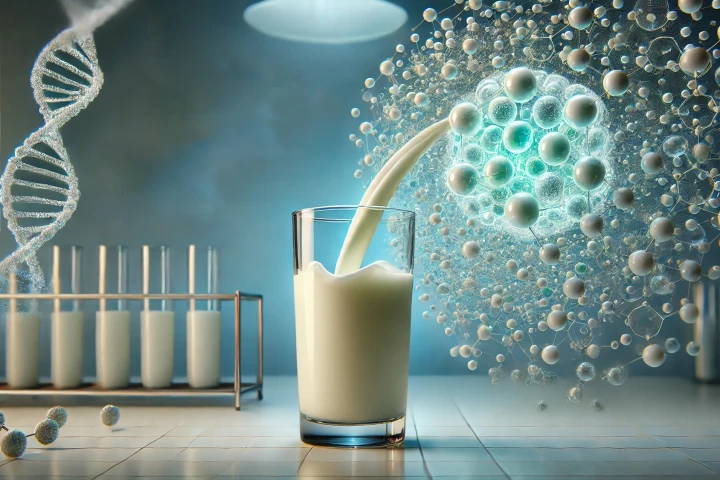 A couple of University of Nebraska professors have launched a startup company with the goal of bringing to market an innovative method for delivering drugs and other therapeutics to targeted locations in the human body. The key ingredient? Milk.
 -
 By combining brain scans and nutritional intake data, a study has found a nutrient profile that puts the brakes on brain aging. What's more, that profile matches an easy-to-follow popular eating plan that's been proven to convey multiple benefits.
 -
 We now know just how the earliest land plants, ancient algae, conquered terrestrial Earth hundreds of millions of years ago and laid the (literal) groundwork for all subsequent life. It highlights the fascinating genetic strategies of plant evolution.
 -
 Unusually high levels of lead and uranium has been found in the urine of teenagers who frequently use e-cigarettes. But experts have warned that, due to research flaws, not enough has been done to ensure the link isn't just smoke and mirrors.
 -
 Six doctors in Nebraska have successfully operated a surgical robot aboard the ISS. This time, the operation was on only rubber bands, but the milestone could have meaning for future missions to Mars or for rural operating rooms here on Earth.
 -
 Among the cargo that just blasted off from Cape Canaveral, Florida, bound for the ISS were two firsts: the world’s first metal 3D printer designed especially for use in orbit and the first miniaturized surgical robot to be sent to the station.
 -
 Name a type of organic matter and chances are some type of organism has evolved to eat it. Plants, meat, algae, insects and bacteria are all consumed by different creatures, but now scientists have discovered something new on the menu – viruses.
 -
 Although plain popcorn is a relatively healthy snack, it's still not one that most people would think of as being very nutritious. That could change, however, as a new variety reportedly offers nearly twice the normal levels of an important nutrient.
 -
 The treatment of chronic wounds often involves the application of different medications, at different stages in the healing process. A new electronic bandage could allow this to happen, but without having to be removed for each application.
 -
 Physicists have created the brightest light ever produced on Earth, and it could be the first step towards more powerful X-rays. The researchers focused their Diocles Laser to a brightness a billion times that of the Sun, and found a change in the fundamental physics of how light enables vision.
 -
 After a male fishing spider mates, he dies and his female partner eats him. New research out of the the University of Nebraska-Lincoln postulates that the macabre ritual might have to do with ensuring healthy and abundant offspring.
 -
 The PoNS device is designed to restore lost brain functions by stimulating the patient's tongue.
Load More