
Titanium
-
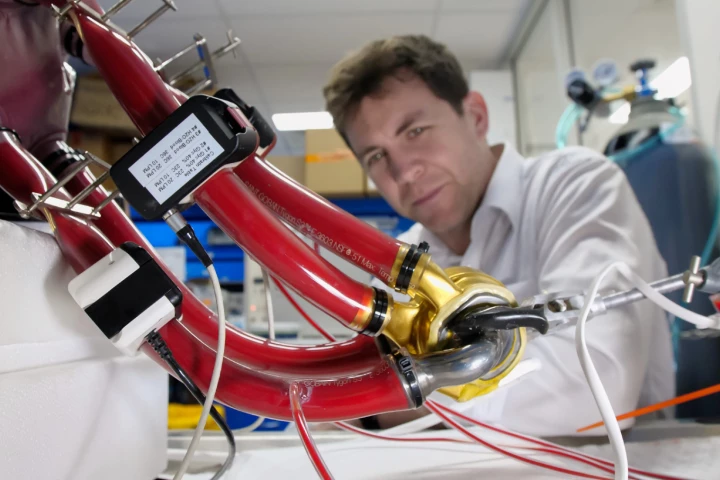 A man has lived for more than 100 days with a maglev heart beating inside his chest. In a landmark moment, he was discharged earlier this year, becoming the first person in the world to leave the hospital with the device embedded in his body.
 -
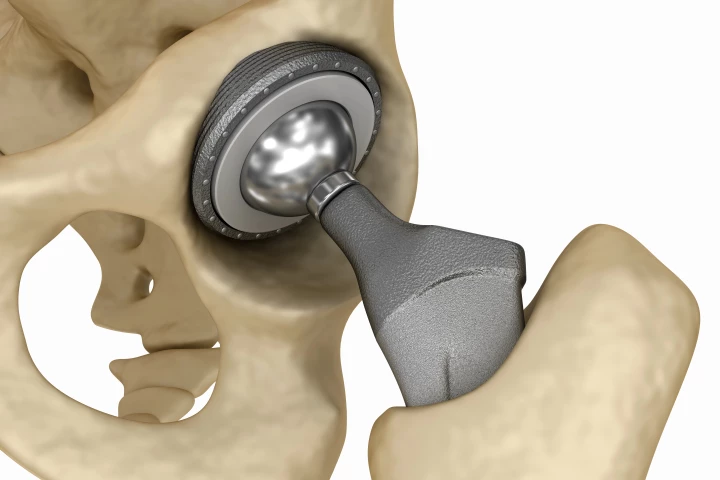 While titanium hip and knee implants do restore mobility to a great many people, they're still subject to failure. A new alloy could help change that, simply by adding a smidge of bendy, bacteria-killing gallium to the mix.
 -
 For the first time, the fully mechanical heart made by BiVACOR, which uses the same technology as high-speed rail lines, has been implanted inside a human being. The feat marks a major step in keeping people alive as they wait for heart transplants.
 -
 Scientists at Berkeley Lab have used a titanium beam to make atoms of element 116. This new way to make the super rare element stands as a proof-of-concept that they could soon potentially create the undiscovered element 120, which may be stable.
 -
 While titanium implants such as artificial hips can greatly improve patients' lives, they're also subject to serious bacterial infections. An experimental new antibacterial titanium alloy, however, could make such problems a thing of the past.
 -
 Inspired by dragonfly wings, researchers have developed a drug-free way to kill off drug-resistant microbes that commonly cause hospital-acquired infections. It's a novel and effective way of tackling the problem of antibiotic-resistant superbugs.
 -
 Fog nets are a literal lifesaver in arid regions with regular fog – but unfortunately they can also capture airborne pollution. Scientists at ETH Zurich have now developed fog nets that can use sunlight to break down hazardous molecules.
 -
 Collectors of trading cards are always hunting for rare shiny variants – and now astronomers have found the exoplanet equivalent. The shiniest planet ever found, LTT9779 b, is an ultra-hot, cosmic disco ball thanks to clouds made of glass and titanium.
 -
 It can be tricky enough getting titanium implants to bond with the surrounding bone, but when the patient has osteoporosis, things get even harder. An experimental coating may help, though, by first boosting and then blocking inflammation.
 -
 Titanium is very biocompatible, which is why it's so often used for medical implants. That said, chemical compounds in the metal sometimes do result in implants being rejected by the body. Scientists at RMIT University are attempting to address the problem, by coating such implants with diamonds.
 -
 Exoplanets are a constant source of surprise and wonder, and now astronomers have noticed something strange about a gas giant called WASP-19b. In the upper atmosphere of this “hot Jupiter” sits a layer of titanium oxide, which has flipped the usual atmospheric temperature structure on its head.
 -
 While not quite as significant as the one-time accidental discovery of penicillin, 2016 did have its share of chance findings in the scientific community. Here we take a look at five of them.
Load More