
Tires
-
 Researchers have found that tire wear and tear is a major contributor to urban waterway pollution, producing particulate matter that includes microplastics. But they also found effective ways of reducing this type of potentially harmful pollution.
 -
 Because they're made of vulcanized rubber, old tires can't simply be melted down and used to make new tires. Such is reportedly not the case, however, with new rubber-free tires made from eco-friendly elastomers.
 -
 A new study shows that lettuce readily takes up particles produced from rubber car tires as they roll along our roadways. The research is part of a growing body of evidence that materials we use everyday are flowing back into our food supply.
 -
 Changing up the recipe could help roads last longer. Researchers in Australia have now shown another advantage of adding rubber from old tires to asphalt – extra Sun protection that could help roads last up to twice as long before cracking.
 -
 While we may think of car exhaust as being a major source of air pollution, automobile tires also hugely contribute to microplastics pollution. A new vehicle-mounted device could help, by gathering the rubber particles that those tires shed.
 -
 Scientists have come up with a new way to break apart key components from old care tire material for re-use. While currently expensive, with further work it could provide the basis for new and improved tire recycling methods.
 -
 Although concrete doesn't burn, it can "spall" when subjected to extreme heat – this means that surface layers of the material break off, potentially causing structures made of it to collapse. According to a new study, however, fibers obtained from discarded tires can help keep that from happening.
 -
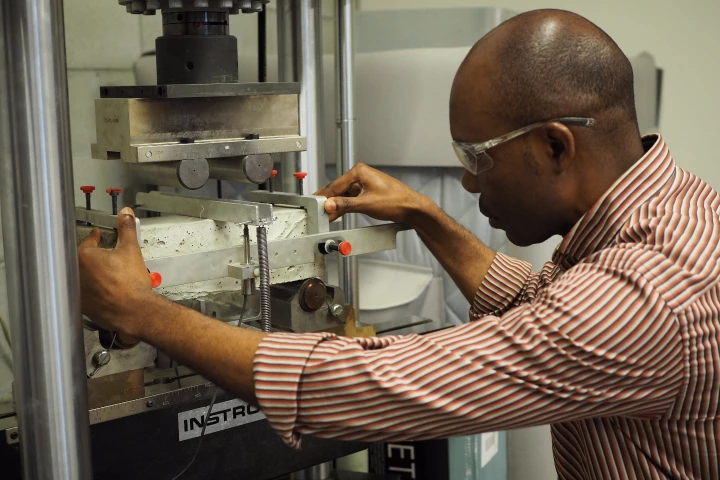 For some time now, crumbs of rubber from ground-up tires have been used to produce a more resilient form of asphalt. Researchers from the University of British Columbia are taking things in a different direction, however, by using polymer fibers obtained from old tires to make concrete stronger.
 -
 An automobile tire is composed of about 30 percent carbon black, which adds durability to the rubber. Carbon black is petroleum-based, however, meaning that it isn't entirely eco-friendly. That's why scientists have been experimenting with an alternative – namely egg shells and tomato skins.
 -
 Scientists are claiming a chemical breakthrough that replaces the key molecule in conventional tires with one sourced from grass and trees instead, all without affecting the tire's color, shape or performance.
 -
 When we hear about tires being recycled, it's usually their latex content and/or their steel fibers that are being harvested. They also contain fabric, which hasn't been nearly as useful. That may now be changing, however, as scientists have created a building material using tire fabric.
 -
 Researchers with the Grand Challenges Canada initiative have created a highly-effective mosquito trap, each one of which is made from a single discarded tire.
Load More