
Time
-
 If you're going to Mars you'd best take along a jar of anti-aging cream because while you're there you're going to age faster than on Earth thanks to the Theory of Relativity. It's only 477 millionths of a second per day, but that tends to add up.
 -
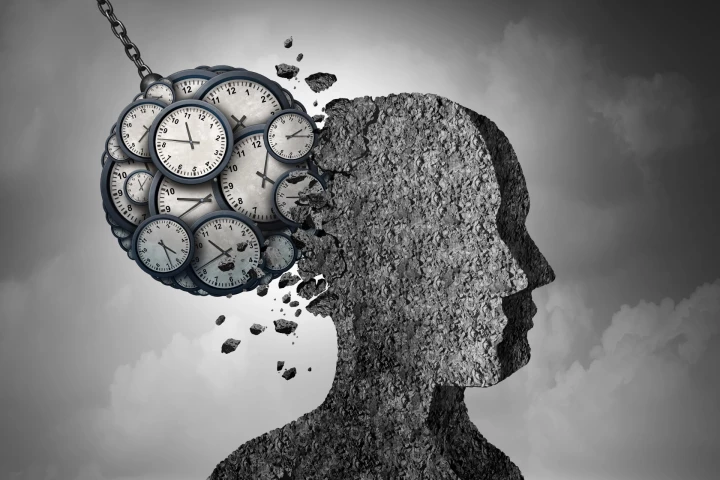 Time availability can impact the development of dementia perhaps as much as diet and exercise, according to a panel of scientists. The group says its research should cause a paradigm shift in the diagnosis and treatment of the condition.
 -
 If, like me, you can't go a day without making sure your watch is synced to the second, you'll be delighted to learn that a new atomic clock has broken the record with an accuracy of 5.5 x 10⁻¹⁹ – gaining or losing one second in 57.6 billion years.
 -
 Atomic clocks are our most accurate timekeepers, losing only seconds across billions of years. But nuclear clocks could steal their thunder, speeding up GPS and the internet. Now, scientists have built and tested the first prototype nuclear clock.
 -
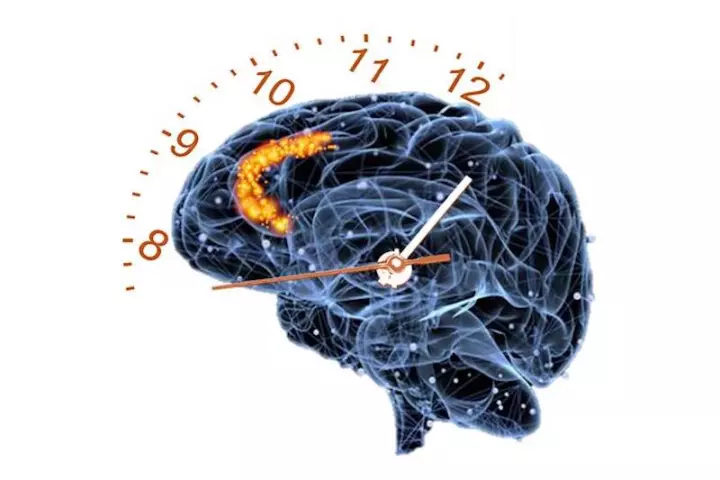 Time is relative – we’re all familiar with that feeling that time drags when we’re bored and flies when we’re busy. New analysis of brain activity patterns shows how our brains track time, and some intriguing insights into how cells handle it.
 -
 Scientists have developed the most accurate atomic clock – if you ran it for twice the current age of the universe, it would only be off by one second. This could not only improve services like GPS, but help scientists probe how gravity affects time.
 -
 It's no surprise that regular exercise can improve a variety of health metrics. But a new study shows that when you work out is as important as exercise itself, especially when it comes to controlling your blood sugar levels.
 -
 Time crystals are a strange state of matter with properties that sound impossible, but they have been created. Now, German scientists have made one that lasts 10 million times longer than in previous experiments.
 -
 For the first time, scientists have established that our perception of the passing of time can, independently, influence how a wound heals. It opens the door to better understanding the mind-body's connection and its role in healing and recovery.
 -
 If you’ve ever felt like you need more hours in the day, well how does 60 sound? A new study suggests we’d have 60-hour days by now if a stalemate between the Sun and Moon hadn’t interfered with Earth’s rotation for over a billion years.
 -
 Scientists using quasars as cosmic clocks have observed that when the universe was just a billion years old, time ran five times slower, helping to confirm Einstein's general theory of relativity and the expansion of the universe.
 -
 The heart has long been called our "ticker." A new study shows why that might be the case even more than we previously imagined. Researchers have demonstrated that our perception of time shifts with the length of our heartbeats.
Load More