
Thought-control
-
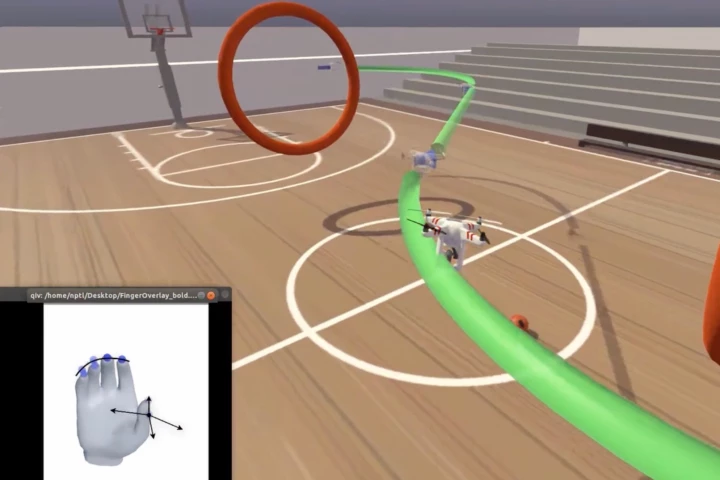 Brain-computer interfaces may allow paralyzed people to perform basic tasks, but there's more to life than eating and typing. That's where a new BCI comes in, as it has allowed a man to fly a virtual drone just by thinking of moving his fingers.
 -
 While a number of groups are developing thought-controlled prosthetic hands, most of the devices require fiddly electrodes to be implanted in the amputee's body. Such is not the case with a new system, however, which works with implanted magnets.
 -
 There may be new hope for stroke victims and other "locked-in" people who are unable to communicate by conventional means. It comes in the form of the experimental new BrainGPT system, which is able to read users' thoughts and convert them into readable text.
 -
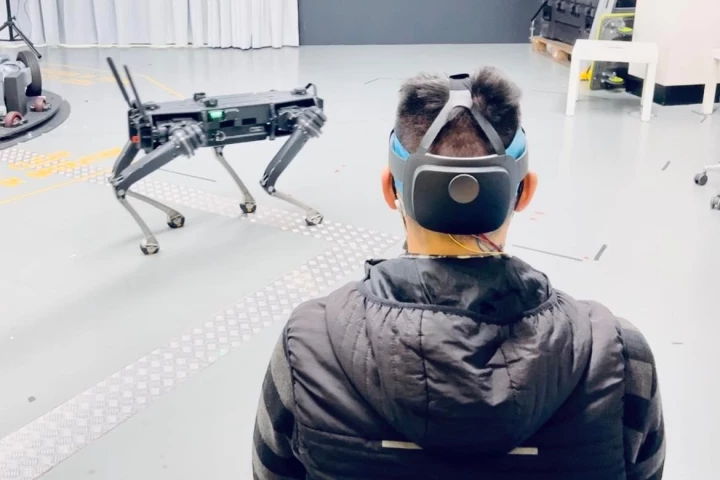 Although it is possible to control devices using brain waves, doing so involves having electrodes and conductive gel applied to one's head. Now, however, scientists have developed a new type of "dry" electrode – and it's been used to control a robot.
 -
 In recent years, a brain-computer interface (BCI) developed by the US BrainGate consortium has allowed people to control a robotic arm and to type, using only their thoughts. Now, a group of paralyzed volunteers has utilized the technology to perform various functions on a tablet.
 -
 Researchers have developed an algorithm that enabled a man whose right hand had been amputated to grasp objects using a bionic hand controlled by his thoughts. While we've seen similar accomplishments in recent years, the new technique is non-invasive, capturing brain activity via a scalp EEG.
 -
 Research at East Tennessee Sate University (ETSU) has suggested that brain-computer interfaces (BCIs) could help brainstem stroke patients suffering from locked-in syndrome to find their voice again, with very specific brainwaves serving as a typing finger for a virtual keyboard.
 -
 In what is being dubbed as a world first, a quadriplegic man has been given the ability to move his hand and fingers using a device implanted in his brain. Using his own thoughts, the device, dubbed "Neurobridge", effectively bypasses his damaged spinal cord to directly operate his muscles.
 -
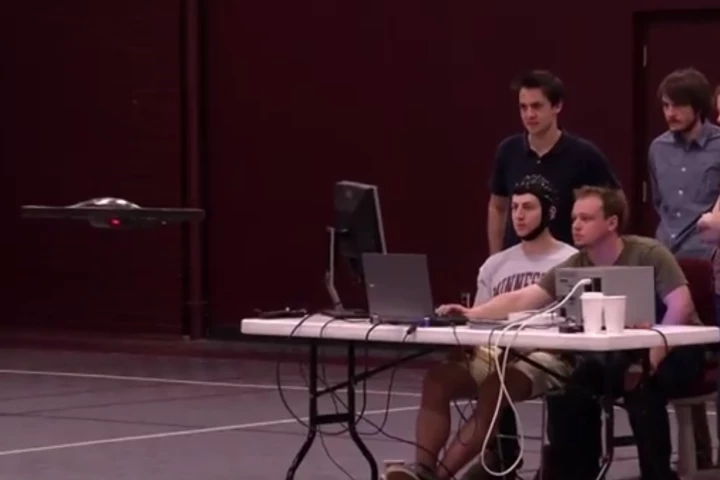 Researchers at the University of Minnesota have done away with all that tedious joystick work by developing a mind-controlled quadcopter that users can manipulate by imagining they are opening or closing their fists.