
Tactile
-
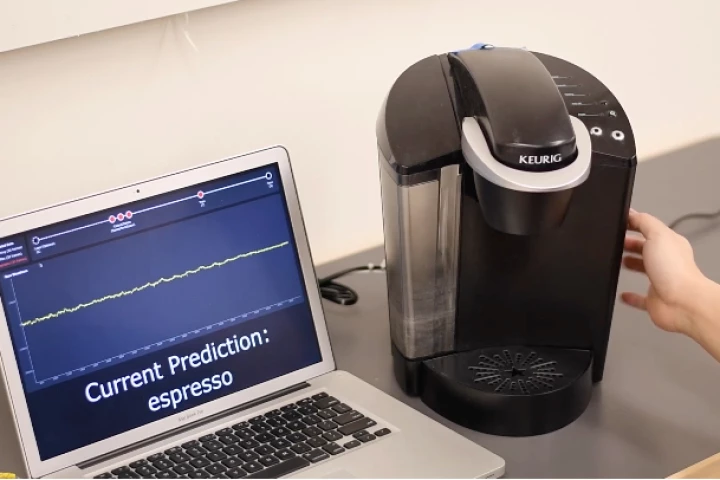 Using touchscreens or buttons to control devices isn't always practical, and voice commands may not work in loud environments. A new system offers an alternative, in that it utilizes acoustic waves which travel across the surface of existing objects.
 -
 When someone injures a nerve in a body part such as a finger, it's not uncommon for that part to end up with a permanently decreased sense of touch. A self-powered implantable sensor, however, could one day restore sensitivity to such injured areas.
 -
 Researchers are developing an artificial nervous system for robots, a tool they believe will better equip these machines to avoid damage and preserve their well-being.
 -
 Dennis Aabo Sørensen may be missing a hand, but he nonetheless recently felt rough and smooth textures using a fingertip on that arm. The fingertip was electronic, and was surgically hard-wired to nerves in his upper arm.
 -
 Scientists at Karlsruhe Institute of Technology have developed a method of concealing objects from the sensation of touch that would finally meet the exacting standards of Hans Christian Andersen's fairy tale princess, who felt a single pea prodding her beneath 20 mattresses and 20 feather beds.
 -
 A common ailment among stroke patients and the aging, treating a degenerative sense of touch has proven a complex task. A stimulation glove designed to improve tactile perception through small electrical pulses could provide a wearable solution that's unimposing enough for everyday use.
 -
 Researchers from the Faculty of Engineering at Israel's Bar Ilan University have developed a prototype contact lens which processes digital images and translates them into tactile sensations to be felt on the user's cornea, allowing them to form a picture of their physical surroundings.
 -
 Holodeck, anyone? Researchers at Bristol University are developing a system known as UltraHaptics that uses ultrasonic force fields to project the tactile sensations of objects in midair. Currently used for a haptic computer interface, the system might eventually enable touchable holograms.
 -
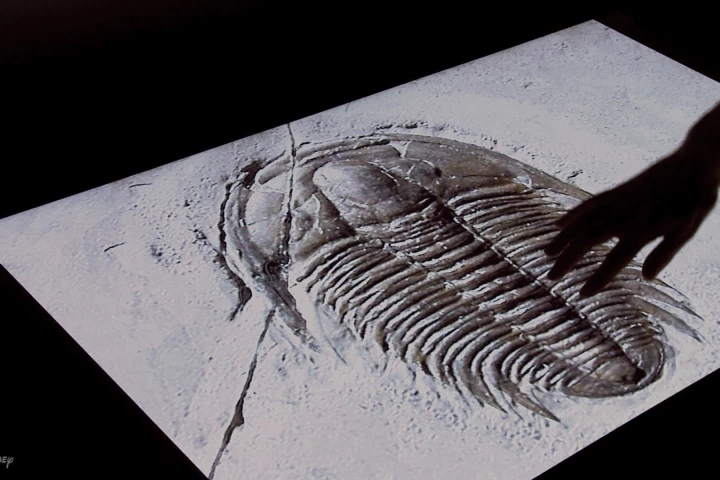 Researchers at Disney Research, Pittsburgh have developed a system that lets users' fingertips feel a simulated bump through a flat tablet or smartphone screen, that corresponds to a bump in the displayed image.
 -
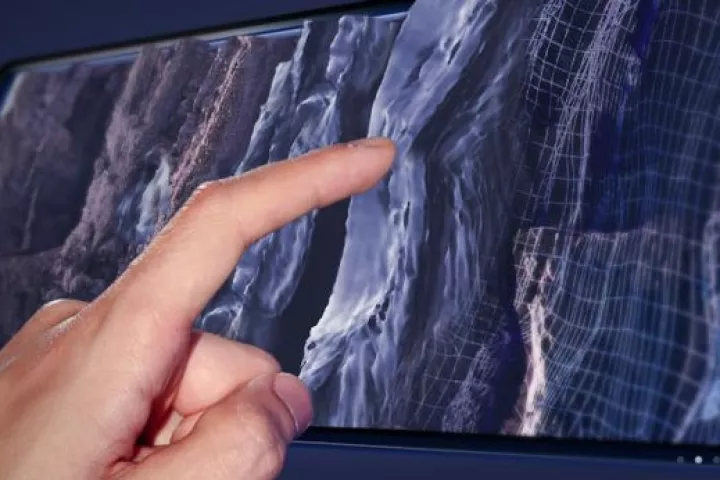 Tech company Senseg is working on a way for you to be able to feel textures on a flat screen display.
 -
 Disney researchers have developed a new tactile technology called Surround Haptics that uses a low-resolution grid of vibrating actuators to generate high-resolution, continuous, moving tactile strokes across a person's skin.
 -
 Scientists have successfully wired a state-of-the-art artificial hand to existing nerve endings in the stump of a severed arm to create an intelligent artificial prosthetic hand with all basic features displayed by a real one.