
Swinburne University of Technology
-
 Astronomers have witnessed a phenomenon never seen before, a luminous fast blue optical transient (LFBOT) emitting more energy than hundreds of billions of stars the size of the Sun. Dubbed the Tasmanian Devil, it threw out energetic flares for months.
 -
 The James Webb Space Telescope keeps challenging our models of the universe, seeing farther away than ever before. Now it’s discovered “impossibly” gigantic galaxies that contain more mass than was thought to exist in the whole universe at that time.
 -
 If you’ve seen the first images from the James Webb Space Telescope this week, you might have heard the term “gravitational lensing” being thrown around. But what does it mean exactly? And how can it help this new telescope make discoveries?
 -
 Astronomers have discovered a “cosmic ring of fire” – a galaxy shaped like a gigantic donut. This extremely rare galaxy was likely caused by a collision with a smaller galaxy that can still be seen lingering near the scene of the accident.
 -
 Paleontologists in Australia have uncovered a strange new species of dinosaur. It's an elaphrosaur, placing it in the theropod family along with the Tyrannosaurus rex and Velociraptor – but this one had a long neck, no teeth and an unusual diet.
 -
 Melbourne folk do love their coffee, and one day the beverage mightn't be just pepping them up for a day's work. Swinburne University researchers have scoured the campus' cafes for coffee grounds and used them as part of the mix for a more sustainable road material.
 -
 A team from the Swinburne University of Technology are developing a graphene microlens one billionth of a meter thick that can take sharper images of objects the size of a single bacterium
 -
 We've heard about wound dressings that kill bacteria, but Australian researchers are taking a different approach. They're creating a dressing material that attracts bacteria out from within the wound, so that the material and the microbes can then just be pulled off and discarded.
 -
 Scientists have discovered that the nanostructure of cicada wings allow them to kill bacteria.
 -
 The Airdrop irrigation concept is a low-tech design that harvests water from the air. The Airdrop irrigation concept is a low-tech design that uses the simple process of condensation to harvest water from the air
 -
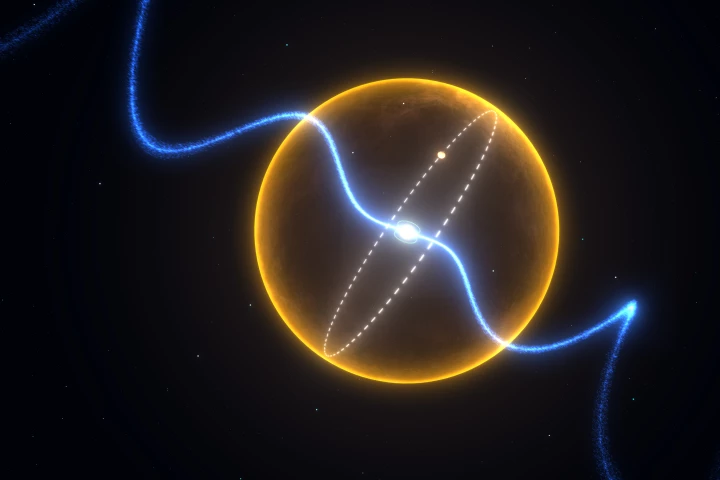 An international research team has discovered a small planet they think may be made of diamond.